Technology · AI
KLA Lifts Wafer Equipment Market Forecast After Record Quarter
The semiconductor manufacturing equipment maker raised its outlook on sustained AI infrastructure investment and advanced packaging demand, projecting record revenue ahead.
KEY TAKEAWAYS
- ·KLA reported fourth-quarter results above guidance and raised its outlook for the global wafer fabrication equipment market, driven by AI infrastructure and advanced packaging investment.
- ·The company forecast record revenue for the current quarter, reflecting sustained demand from foundries and memory manufacturers expanding capacity for AI accelerators and high-bandwidth memory.
- ·Asia remains the primary growth region, with Taiwan, South Korea, and China leading equipment orders, while Japan and Southeast Asia add capacity in advanced nodes and packaging.
Fourth-Quarter Results Beat Expectations
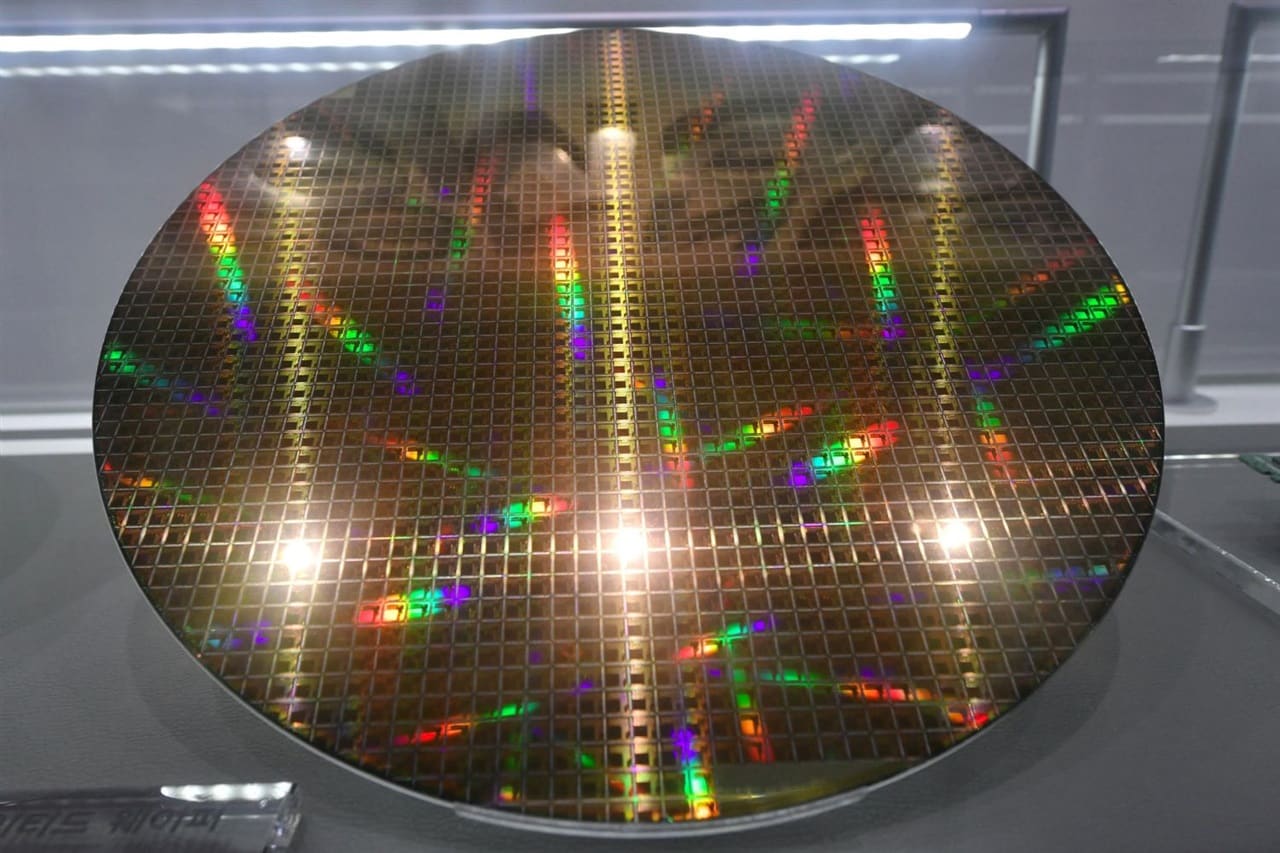
KLA delivered fourth-quarter results that exceeded its earlier guidance, driven by continued investment across artificial intelligence infrastructure and advanced semiconductor manufacturing. The company reported stronger-than-expected performance across its process control and metrology equipment segments, which serve chipmakers producing leading-edge nodes and high-bandwidth memory.
The Santa Clara-based equipment supplier attributed the upside to accelerating orders from foundries and memory manufacturers expanding capacity for AI accelerators and data center components. Fourth-quarter revenue reflected robust demand for inspection and measurement tools used in extreme ultraviolet lithography processes and advanced packaging lines.
Raising the Market Outlook
Following the quarterly beat, KLA increased its outlook for the global wafer fabrication equipment market. The revised forecast reflects management's view that capital spending by semiconductor manufacturers will remain elevated through the remainder of the calendar year, supported by hyperscaler investment in AI compute infrastructure.
Advanced packaging emerged as a particularly strong driver. As chipmakers shift toward chiplet architectures and 3D integration to improve performance and power efficiency, demand for process control equipment that ensures tight tolerances in hybrid bonding and through-silicon vias has surged. KLA's inspection platforms are used to detect defects at sub-nanometer scales, a critical requirement as packaging densities increase.
The company also cited sustained investment in gate-all-around transistor manufacturing, which requires more inspection steps than previous FinFET generations. Samsung, TSMC, and Intel are all ramping production on GAA-based nodes, and each additional process step translates into higher equipment intensity per wafer start.
Record Revenue Forecast for Current Quarter
KLA forecast record revenue for the current quarter, signaling that the momentum from Q4 will carry forward. The guidance implies sequential growth across both its semiconductor process control and specialty semiconductor process divisions.
Management commentary highlighted strength in both logic and memory segments. On the logic side, foundries are adding capacity for 3-nanometer and 2-nanometer production, while on the memory side, high-bandwidth memory manufacturers are expanding output to meet AI training and inference workloads. HBM production requires tighter process control due to the vertical stacking of DRAM dies, driving higher adoption of inline metrology and defect inspection systems.
The current-quarter guidance also reflects ongoing shipments to Chinese manufacturers, which continue to invest in mature-node capacity despite export control restrictions on advanced lithography tools. While leading-edge equipment sales to China remain constrained, demand for process control tools used in 28-nanometer and above processes has remained resilient.
Asia Remains the Epicenter
Asia continues to account for the majority of KLA's revenue. Taiwan, South Korea, and China represent the largest markets, driven by TSMC's capacity expansions in Hsinchu and Tainan, Samsung's memory and foundry investments in Pyeongtaek and Hwaseong, and YMTC's NAND production ramp in Wuhan.
Japan has also emerged as a growth market following government subsidies for domestic semiconductor manufacturing. Rapidus, the state-backed foundry consortium, is building a 2-nanometer fab in Hokkaido and will rely on process control equipment from KLA and peers to achieve target yields. Tokyo Electron and KLA have both announced plans to expand service and support operations in the region to support the buildout.
Southeast Asia is seeing increased activity as well, with packaging and test facilities in Malaysia, Singapore, and Vietnam adding inspection capacity. These sites handle final assembly for chips destined for AI servers, automotive systems, and mobile devices, and tighter quality requirements are driving equipment upgrades.
What Comes Next
KLA's raised outlook offers a read-through on broader semiconductor capital spending trends. If the current-quarter forecast holds, it would mark the third consecutive quarter of sequential revenue growth for the company, a signal that the equipment cycle is extending beyond initial expectations.
Investor focus will now turn to sustainability of AI-driven demand and the timing of any potential digestion period. While hyperscalers have committed to multiyear infrastructure buildouts, equipment suppliers historically experience lumpiness as fabs complete initial tool installations and shift to production mode. KLA's guidance implies that the current wave of capacity additions is still in the early stages, with tooling orders continuing to flow.
The company's performance also provides a barometer for the health of the advanced packaging ecosystem. As more chip designers adopt heterogeneous integration, the process control market for packaging is expected to grow faster than traditional front-end equipment over the next several years. KLA's ability to sustain record revenue levels will depend in part on its success in capturing share in this emerging segment.
RELATED STORIES
AI Demand Tightens Memory Markets as HBM4 Production Strains Supply
Cheng Wei-Lun · 3 min

Taiwan's AI Supply Chain Posts Record $89.7 Billion in August Revenue
Jun-ho Seo · 2 min
Integrated Systems Will Drive Next Wave of AI Growth, Says TSMC
Cheng Wei-Lun · 4 min
Indian AI Firm Commits $8 Billion to Nvidia Infrastructure Buildout
Priyanka V. Rao · 3 min
Spot something wrong? Email editor@briefasia.com. We log every correction publicly.