Technology · Products
Kioxia Projects Record Quarterly Profit as AI Boom Fuels Memory Demand
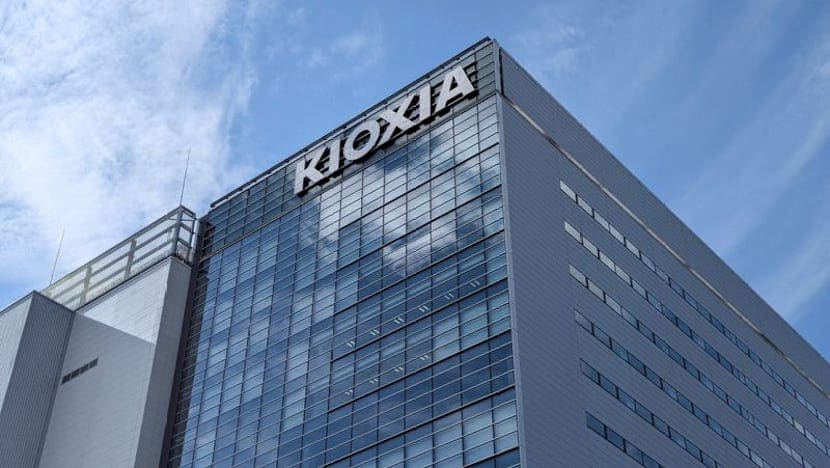
The Japanese chipmaker expects $11.78 billion in operating profit for the July-September quarter, driven by surging orders for memory chips used in artificial intelligence applications.
KEY TAKEAWAYS
- ·Kioxia expects operating profit of 1.89 trillion yen ($11.78 billion) for the July-September quarter, up 49 percent from the previous quarter's 1.27 trillion yen.
- ·The Japanese chipmaker announced an 800 billion yen share buyback program for up to 30 million shares and a three-for-one stock split effective October 1.
- ·Surging AI infrastructure investment is driving unprecedented demand for NAND flash memory, with contract prices up over 40 percent year-over-year in some categories.
Explosive Growth in Memory Sector
Kioxia announced Friday it expects operating profit of 1.89 trillion yen ($11.78 billion) for the July-September quarter, marking a significant jump as artificial intelligence infrastructure buildout drives unprecedented demand for memory chips across Asia and global markets.
The forecast represents a 49 percent increase from the 1.27 trillion yen the Japanese memory manufacturer posted in the April-June quarter, according to the company. The projection falls slightly below the average analyst estimate of 1.95 trillion yen compiled by LSEG, based on surveys of eight market analysts.
Kioxia's outlook underscores the rapid transformation sweeping through Asia's semiconductor landscape, where memory chip makers are experiencing a sharp reversal from the inventory glut that plagued the industry through much of 2023 and early 2024. The Tokyo-based company, one of the world's largest producers of NAND flash memory, has emerged as a primary beneficiary of the AI server boom that has sent hyperscalers and cloud providers scrambling for high-capacity storage solutions.
Capital Deployment and Shareholder Returns
Alongside its profit forecast, Kioxia disclosed plans to buy back up to 30 million shares for a total value of 800 billion yen. The move signals management confidence in sustained earnings momentum and reflects the cash generation capacity the company has built during the current memory upcycle.
The buyback program represents one of the largest capital return initiatives in Japan's semiconductor sector this year. For context, Kioxia's market capitalization has surged as institutional investors have rotated into memory plays following two quarters of accelerating profitability.
The company also announced a three-for-one stock split effective October 1, a technical adjustment aimed at improving share liquidity and broadening the investor base. Stock splits have become increasingly common among Japanese technology firms as the Tokyo Stock Exchange has pushed listed companies to enhance shareholder value and market accessibility.
Asia's Memory Chip Renaissance
Kioxia's results mirror a broader trend across Northeast Asia's memory industry. Samsung Electronics and SK Hynix in South Korea have similarly reported surging profits as high-bandwidth memory (HBM) and enterprise SSD demand outstrips supply. Micron Technology, which operates major production facilities in Singapore and Taiwan, has also guided to record revenues in recent quarters.
The shift stems from architectural changes in AI data centers, where memory content per server has doubled or tripled compared to traditional compute workloads. Training large language models and running inference at scale requires vast arrays of NAND storage and DRAM, creating a structural demand tailwind that analysts expect to persist through 2027.
Industry data shows that memory chip prices have climbed steadily since the second half of 2024, with NAND contract prices up more than 40 percent year-over-year in some product categories. Kioxia, which specializes in 3D NAND technology, has benefited from tight supply conditions in high-layer-count chips used in enterprise and data center applications.
Strategic Positioning in a Tight Market
Kioxia's manufacturing footprint spans multiple fabrication plants in Japan, including advanced facilities in Yokkaichi and Kitakami. The company has invested heavily in transitioning to 200-plus layer NAND architecture, a technical leap that increases storage density and reduces per-bit production costs.
The capital intensity of leading-edge memory manufacturing has consolidated the industry around a handful of players. Kioxia competes primarily with Samsung, SK Hynix, Micron, and Western Digital's flash business. Market share dynamics have remained relatively stable, but pricing power has shifted decisively toward suppliers as utilization rates approach full capacity.
Looking ahead, Kioxia faces the challenge of sustaining profitability as new capacity comes online across the industry in 2027. The company has not disclosed detailed capital expenditure plans for the next fiscal year, but industry observers expect continued investment in advanced node transitions and capacity expansion to meet AI-driven demand.
The memory cycle historically swings between oversupply and shortage, driven by the lumpy nature of fab construction and the commoditized character of DRAM and NAND products. Whether the current upcycle extends beyond 2026 will depend on the pace of AI adoption, macroeconomic conditions in key end markets, and the discipline suppliers exercise in adding new production lines.
RELATED STORIES
Kioxia Rules Out SK Hynix Merger, Focuses on Stabilising Memory Chip Prices
Tran Quoc Bao · 3 min
Kioxia Rules Out SK Hynix Manufacturing Partnership Despite Memory Boom
Jun-ho Seo · 3 min
Preferred Networks Eyes Public Listing to Scale AI Chip Production
Aiko Nakamura · 2 min
Kioxia Pushes Flash Memory to Replace DRAM Amid Market Squeeze
Jun-ho Seo · 3 min
Spot something wrong? Email editor@briefasia.com. We log every correction publicly.