Finance · Deals
Keppel REIT Distributes S$0.0261 Per Unit in First Half Despite 25% Jump in Income
The Singapore trust is selling its Tokyo office building for US$70 million while maintaining 96% portfolio occupancy across its Asian assets
KEY TAKEAWAYS
- ·Keppel REIT distributed S$0.0261 per unit for H1 2026, down 4% year-on-year, while distributable income climbed 25% to S$119.6 million due to an enlarged unit base.
- ·The trust is selling its Tokyo Ginza office building for 11.5 billion yen, a 28.4% premium over the 2022 purchase price, with completion expected in Q3 2026.
- ·Portfolio occupancy remains at 96% post-sale with positive rental reversions of 12.8%, while aggregate leverage stands at 40% with 62% of debt on fixed rates.
Distribution Mechanics vs Operating Reality
Keppel Real Estate Investment Trust paid out S$0.0261 per unit for the six months ended June, down 4% from S$0.0272 a year earlier. The decline stems from a larger unit count following equity fundraising, not weaker operations. Distributable income from operations climbed 25.2% year-on-year to S$119.6 million, up from S$95.5 million in the first half of 2025.
Including a S$10 million anniversary distribution, total distributable income reached S$129.6 million, a 22.8% increase. The trust announced an ex-dividend date of August 5, with payment scheduled for September 15.
Property Income Driven by Australian Mall
Property income rose 16.7% to S$159.3 million in the first half, compared with S$136.5 million a year prior, according to the manager. Top Ryde City Shopping Centre in Sydney contributed most of the growth. Net property income attributable to unitholders stood at S$112.1 million, up 13.3% from S$98.9 million.
The trust signed over 1.1 million square feet of leases during the period. Demand centered on banking, insurance, financial services, and technology sectors. Rental reversions remained positive at 12.8% across the portfolio in the first half.
Tokyo Office Exit at 28% Premium
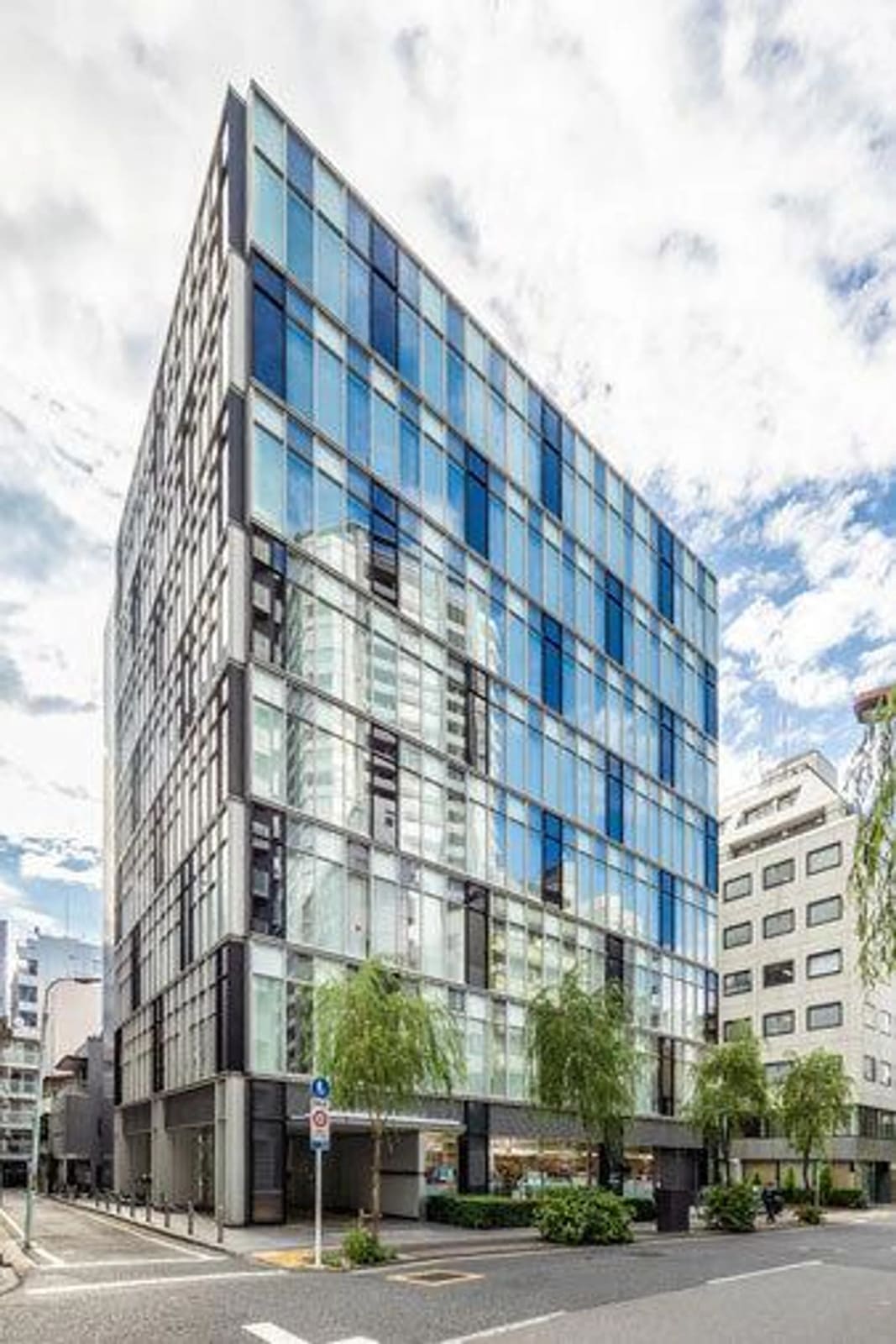
Keppel REIT is selling its majority stake in KR Ginza II, a freehold eight-story office building in Tokyo's Ginza district, for 11.5 billion yen (US$70.2 million). The property spans 3,594 square meters of net lettable area and was acquired in November 2022.
The sale price represents a 28.4% premium over the original purchase price and sits 9.7% above the property's July 10, 2026 valuation. A listed Japanese real estate company is buying the asset, with completion expected in the third quarter of 2026.
The divestment aligns with Keppel REIT's strategy to recycle capital from mature assets in markets where pricing has recovered. Tokyo office values have rebounded as international investors return to Japan's commercial real estate sector, supported by the yen's stabilization and stable tenant demand.
Balance Sheet and Portfolio Metrics
After the Ginza sale, portfolio committed occupancy remains at 96%, with a weighted average lease expiry of 4.5 years. Aggregate leverage stood at 40% as of June 30, with 62% of total borrowings on fixed rates. Weighted average cost of debt was approximately 3.3% per annum, and the interest coverage ratio was 2.7 times.
The trust's capital structure reflects measured gearing in an environment where Asian REITs face rising refinancing costs. Keppel REIT's debt profile, with a majority on fixed rates, provides insulation against further rate volatility as central banks across the region hold policy rates elevated.
Singapore and Regional Leasing Outlook
Keppel REIT's Singapore office portfolio continues to benefit from flight-to-quality dynamics, particularly among financial services and technology tenants consolidating into premium buildings. The trust's Marina Bay assets anchor its Singapore exposure, which remains the largest geographic allocation.
Across the broader portfolio, the trust holds a mix of office and retail assets in Australia, South Korea, and Japan. The Australian retail component, led by Top Ryde City, has delivered steady income as consumer spending normalizes post-pandemic. South Korea office demand remains uneven, with Seoul's core business districts seeing divergent leasing velocity depending on building grade.
The rental reversion figure of 12.8% suggests landlords retain pricing power in select markets, though the metric varies widely by asset class and location. Office assets in Singapore's central business district have seen stronger reversion rates than suburban or secondary market properties.
What the DPU Trajectory Signals
The 4% decline in distribution per unit, despite a 25% rise in absolute distributable income, underscores the dilutive effect of recent equity issuance. Keppel REIT raised capital earlier this year to fund acquisitions and reduce leverage, expanding the unit base. For income-focused investors, the trade-off is lower near-term yield in exchange for a stronger balance sheet and acquisition capacity.
Looking ahead, the trust's ability to maintain or grow per-unit distributions will depend on deploying the equity proceeds into accretive acquisitions or organic rental growth outpacing the dilution effect. The Tokyo sale provides dry powder for redeployment, likely into higher-yielding assets in Singapore or Australia where the trust has operational scale.
Units of Keppel REIT closed at S$0.89 on July 28, up 0.6% or S$0.005, reflecting investor confidence in the trust's asset recycling strategy and stable occupancy metrics.
RELATED STORIES
Singapore REITs Raise S$4.5 Billion in Nine Months as Fundraising Momentum Extends Into 2026
Priyanka V. Rao · 3 min
Blackstone's AirTrunk Lines Up S$2 Billion Loan for Singapore REIT IPO
Anand Sundaram · 3 min

Blackstone's AirTrunk Pursues $1.6 Billion Loan Ahead of Singapore REIT Listing
Jun-ho Seo · 3 min

DBS Doubles Down on Asia, Ruling Out Global Expansion
Anand Sundaram · 3 min
Spot something wrong? Email editor@briefasia.com. We log every correction publicly.