Asia · Business
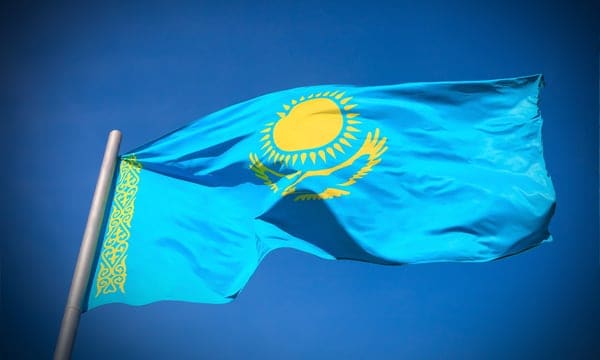
Kazakhstan Increases State Control Over Critical Minerals Producer ERG
Recent moves at the country's largest mining conglomerate signal a shift toward greater government influence in strategic resource sectors
KEY TAKEAWAYS
- ·Kazakhstan has strengthened state oversight of Eurasian Resources Group, a mining conglomerate controlling 40 percent of global ferrochrome output and significant cobalt reserves.
- ·The shift aligns with regional efforts to maximize revenue from critical minerals amid global competition for materials essential to batteries and green energy technologies.
- ·Greater state involvement may affect ERG's access to international capital markets while opening opportunities for state-backed financing from China and Belt and Road infrastructure deals.
State Influence Expands
Kazakhstan has moved to strengthen state oversight of Eurasian Resources Group (ERG), a mining conglomerate that controls substantial reserves of chromium, manganese, iron ore, and cobalt across Central Asia and Africa. The shift marks a notable change in the relationship between Astana and one of the region's most significant private-sector players in critical minerals extraction.
ERG operates mines in Kazakhstan that produce roughly 40 percent of global ferrochrome output and hold substantial chromium reserves essential to stainless steel production. The company also runs cobalt operations in the Democratic Republic of Congo and iron ore projects across three continents, making it a key supplier in materials designated critical by the United States, European Union, and China.
Recent governance changes at ERG indicate that state entities will hold greater sway over strategic decisions at the company. The adjustments come as Kazakhstan seeks to leverage its mineral wealth to attract investment in downstream processing and battery manufacturing, part of a broader effort to move beyond raw commodity exports.
Strategic Minerals in Focus
Kazakhstan ranks among the top five global producers of chromium and manganese, both classified as critical minerals by major economies due to their role in green energy technologies and defense applications. Chromium is indispensable in stainless steel and superalloys used in wind turbines and aerospace, while manganese is essential for lithium-ion batteries and steel production.
ERG's mining footprint extends beyond Kazakhstan. The company operates the Chambishi copper smelter in Zambia, cobalt refineries in the DRC, and iron ore facilities in Brazil. Its diversified asset base has made it a target of interest for governments seeking to secure supply chains outside China's sphere of influence.
The enhanced state role at ERG aligns with a pattern across resource-rich former Soviet republics, where governments have reasserted control over strategic assets amid global competition for energy transition materials. Uzbekistan nationalized gold and uranium assets in recent years, while Kyrgyzstan has pressed foreign miners to renegotiate terms.
Implications for Investment and Supply
The shift at ERG raises questions about the company's future capital allocation and its relationships with international partners. ERG has historically operated with a degree of autonomy unusual for a Kazakh entity of its scale, maintaining joint ventures with European and Asian firms and accessing London metal markets.
Greater state involvement could affect ERG's ability to raise capital on international markets, where investors typically demand governance structures insulated from political interference. However, it may also open doors to state-backed financing from China, which has invested heavily in Kazakh mining infrastructure through Belt and Road Initiative projects.
For Kazakhstan, tighter oversight of ERG offers leverage in negotiations with battery manufacturers and electric vehicle producers seeking to diversify supply chains. The government has pushed for domestic processing of minerals rather than exporting raw ores, a strategy that requires significant infrastructure investment and technical partnerships.
Regional Context
Kazakhstan's approach reflects broader Central Asian dynamics as regional governments seek to maximize revenue from natural resources while navigating competition between major powers. China remains the largest buyer of Kazakh minerals, but European and American firms have increased engagement since 2022, when supply chain disruptions highlighted dependence on concentrated sources.
ERG's cobalt operations in Africa add another dimension. The DRC produces over 70 percent of global cobalt, and ERG is among the largest operators there. Any shift in ERG's strategic priorities under state influence could ripple through global battery supply chains already strained by geopolitical tensions and production bottlenecks.
The developments at ERG will likely shape how international investors and downstream manufacturers approach Kazakhstan's mining sector in the coming years. As governments worldwide compete to secure critical mineral supplies, the balance between state control and private efficiency will determine which producers can scale operations and meet surging demand from clean energy and technology sectors.
RELATED STORIES
Korea Zinc Eyes US Market as Washington Commits $3 Billion to Critical Minerals
Cheng Wei-Lun · 3 min
Wildberries Plans Kazakhstan Warehouse Expansion Amid Russian Attacks
Cheng Wei-Lun · 2 min
Orion-Led Consortium Targets $20 Billion in Southeast Asian Mining Deals
Priyanka V. Rao · 4 min
Red Sea Tanker Strikes Push Brent Past $100 as Kazakhstan Cuts Production
Cheng Wei-Lun · 3 min
Spot something wrong? Email editor@briefasia.com. We log every correction publicly.