Asia · Business
Korea Zinc Eyes US Market as Washington Commits $3 Billion to Critical Minerals
The world's largest zinc refiner stands to benefit as the Trump administration launches a major push to secure mineral supply chains outside China's orbit.
KEY TAKEAWAYS
- ·President Trump announced a $3 billion investment package to build U.S. and allied critical mineral supply chains independent of China, covering mining through manufacturing.
- ·Korea Zinc, the world's largest metal refiner with over 800,000 metric tons annual zinc capacity, is well positioned due to its scale, allied-nation facilities, and expertise in rare metals like indium and germanium.
- ·The initiative strengthens a Pacific supply corridor linking Korean refining, Australian mining, and Japanese technology, challenging China's dominance in processing 60-70 percent of key minerals.
A Strategic Shift in Washington
Korea Zinc, the globe's largest metal refiner by capacity, is attracting attention from U.S. policymakers as Washington reshapes its critical minerals strategy. President Trump unveiled a $3 billion investment package at a State Department roundtable on Friday, aimed at building domestic and allied supply chains for mining, processing, refining, and manufacturing that bypass China entirely.
The announcement marks a concrete step in Washington's years-long effort to reduce dependence on Beijing for materials essential to defense, electric vehicles, renewable energy, and advanced electronics. Korea Zinc, with operations spanning zinc, lead, copper, gold, and silver refining, now finds itself in a favorable position as the U.S. seeks partners capable of processing minerals at scale without routing through Chinese facilities.
Why Korea Zinc Matters
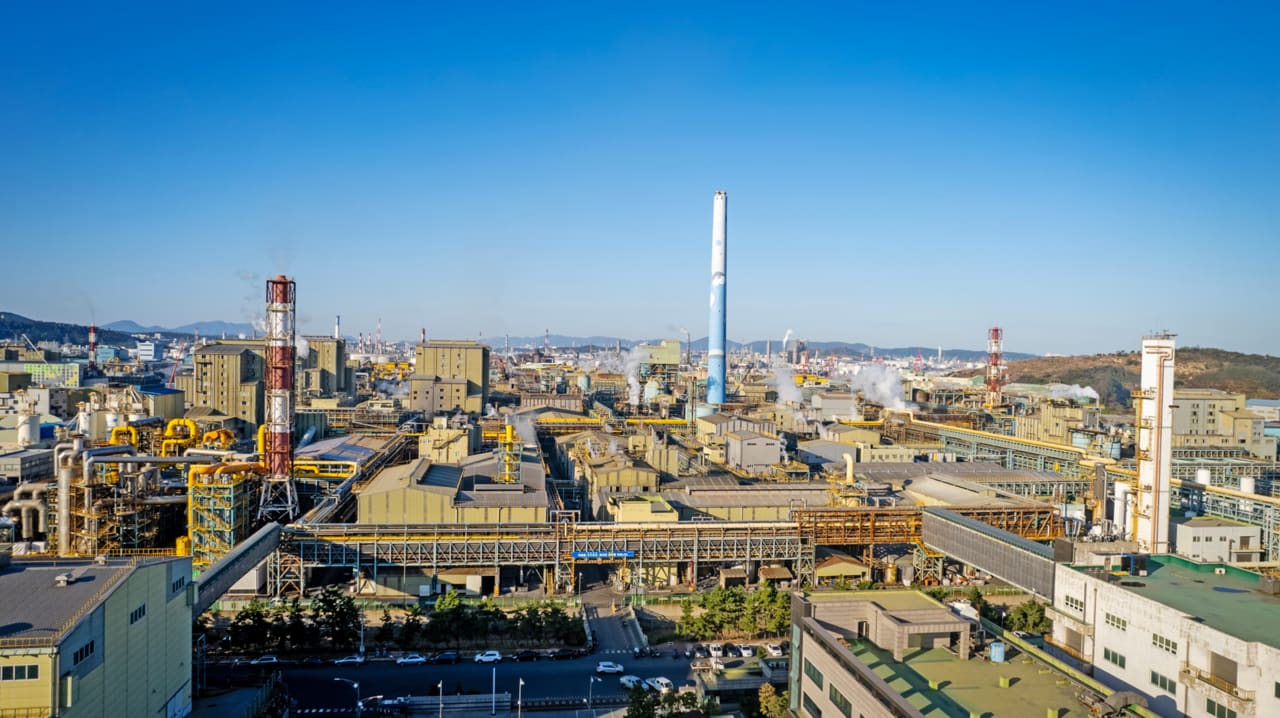
Korea Zinc operates some of the world's most sophisticated refining infrastructure, with annual zinc production capacity exceeding 800,000 metric tons. The company has built a vertically integrated model that includes smelting, refining, and recycling operations across South Korea, Australia, and other markets.
The firm's expertise extends beyond zinc. It processes rare metals including indium, used in flat-panel displays, and germanium, critical for fiber optics and infrared systems. Both materials appear on U.S. critical minerals lists and have limited non-Chinese refining capacity globally.
Washington's $3 billion package targets the entire value chain, from extraction to finished components. That scope aligns with Korea Zinc's business model, which already links mine output to high-purity metal production. The company sources concentrates from mines in Australia, Peru, and North America, processes them in facilities outside China, and delivers refined products to manufacturers in the U.S., Europe, and Asia.
Supply Chain Realignment
The U.S. has grown increasingly concerned about concentration risk in mineral refining. China controls roughly 70 percent of global refined cobalt production, 60 percent of lithium refining, and dominant shares in rare earth processing. Even when minerals are mined in allied countries, they often travel to China for refining due to cost advantages and established infrastructure.
Korea Zinc offers an alternative route. The company operates refining facilities in South Korea and Australia, both U.S. treaty allies with stable regulatory environments. It has also invested in recycling technology that recovers critical metals from electronic waste and industrial byproducts, reducing dependence on primary mining.
The Trump administration's package is expected to include loan guarantees, tax incentives, and direct grants for projects that establish or expand refining capacity in the U.S. and partner nations. Korea Zinc has not yet announced specific expansion plans tied to the U.S. program, but industry observers note the company has been evaluating North American projects for several years.
Regional Implications
The move reinforces Seoul's position as a key node in U.S.-led supply chain networks. South Korea already plays a central role in semiconductors, batteries, and shipbuilding. Adding critical mineral refining deepens that partnership and provides Seoul with leverage in trade and security discussions.
Japan and Australia are also expected to benefit. Tokyo has advanced materials processing capabilities, while Australia supplies a significant share of global lithium, nickel, and rare earth concentrates. Linking Korean refining capacity with Australian mines and Japanese technology creates a Pacific supply corridor that mirrors semiconductor alliances in the region.
China, meanwhile, faces a strategic challenge. Beijing has used its refining dominance to shape global supply chains and, on occasion, restrict exports for geopolitical purposes. A successful U.S.-led alternative network would erode that leverage and complicate China's efforts to dominate clean energy and advanced manufacturing sectors.
What Comes Next
Implementation details for the $3 billion package remain under development. The State Department and Department of Energy are expected to coordinate disbursement, with priority given to projects that can demonstrate commercial viability and rapid deployment timelines.
Korea Zinc will likely compete with other established refiners, including Glencore and Boliden, as well as newer entrants backed by private equity and strategic investors. The company's advantage lies in its existing scale, technical expertise, and alignment with U.S. alliance structures.
For investors and executives tracking Asia-Pacific industrial strategy, Korea Zinc's trajectory offers a case study in how legacy industrial players can leverage geopolitical shifts. The company's ability to navigate regulatory environments, secure long-term offtake agreements, and integrate recycling into its operations positions it well for a policy landscape that increasingly values supply chain resilience over cost minimization.
Washington's commitment to critical minerals is no longer rhetorical. With capital now on the table, the next phase will test whether U.S. policy can translate into operational refining capacity and whether Asian partners like Korea Zinc can execute at the scale required.
RELATED STORIES
South Korean Mineral Processors Eye US Strategic Supply Deals
Cheng Wei-Lun · 4 min
Jollibee Brings Compose Coffee to Manila With Five-Year Expansion Plan
Priyanka V. Rao · 3 min

Manila Eyes Nickel Processing to Escape China's Price Control
Priyanka V. Rao · 4 min
Korean Builders Race to Secure Power Equipment for AI Data Centers
Jun-ho Seo · 3 min
Spot something wrong? Email editor@briefasia.com. We log every correction publicly.