Technology · AI
Kakao Bets on AI Consumer Services, Skips Data Center Race
South Korea's messaging giant pivots away from infrastructure investments to focus on integrating artificial intelligence into KakaoTalk's 47 million user base.
KEY TAKEAWAYS
- ·Kakao will not invest in AI data centers or GPU cloud services, opting instead to build consumer AI features into KakaoTalk's messaging platform.
- ·CEO Chung Shin-a stated the infrastructure layer offers limited competitive advantage for Kakao in the AI era during the second-quarter earnings call.
- ·The decision positions Kakao to compete on application-layer AI integration rather than capital-intensive infrastructure against hyperscalers and specialized GPU providers.
Strategic Pivot from Infrastructure
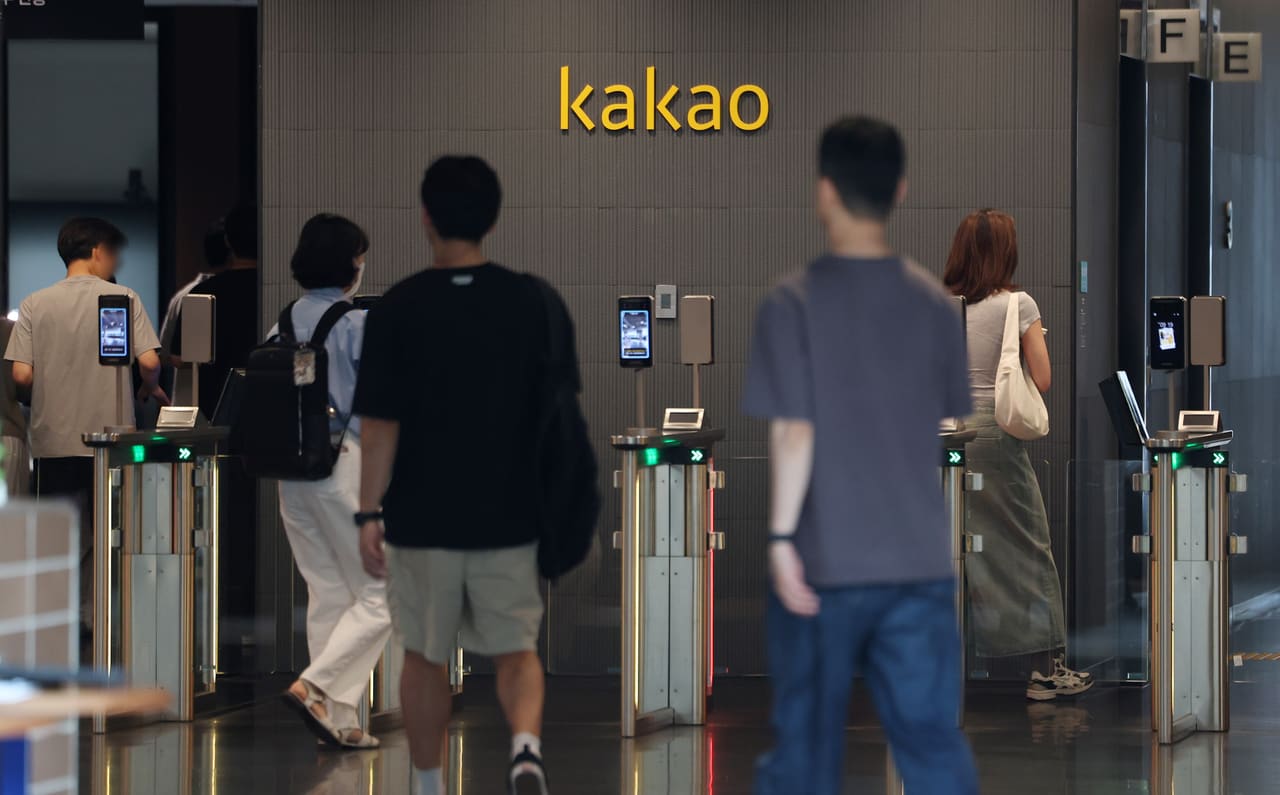
Kakao has decided to bypass the capital-heavy AI infrastructure market, directing its resources toward consumer-facing artificial intelligence services embedded in KakaoTalk. The decision marks a clear strategic fork in the road for one of South Korea's largest technology platforms, which operates the country's most widely used mobile messenger.
The company evaluated potential investments in AI data centers and GPU cloud offerings before determining that infrastructure plays would not deliver meaningful competitive differentiation. CEO Chung Shin-a explained the rationale during Kakao's second-quarter earnings briefing, noting that the infrastructure layer presents limited opportunities for the company to establish market leadership in the AI era.
Consumer Layer Focus
Rather than competing with hyperscalers and infrastructure specialists, Kakao intends to leverage its existing user base to deploy AI-driven features directly into KakaoTalk. The messaging platform serves as the communication backbone for tens of millions of South Koreans, providing Kakao with an established distribution channel that infrastructure-focused competitors lack.
This approach aligns with broader patterns emerging across Asian technology firms, where platforms with large installed user bases are prioritizing application-layer AI over foundational infrastructure. The capital requirements for data center construction and GPU procurement have escalated sharply, with single facilities now demanding investments exceeding several hundred million dollars before generating revenue.
Market Context
The decision arrives as competition for AI infrastructure capacity intensifies globally. Cloud providers and specialized GPU service operators have attracted substantial funding, yet margin profiles remain compressed due to hardware costs and energy expenses. Kakao's choice reflects a calculation that its competitive strengths lie in product development and user engagement rather than infrastructure operation.
South Korea's technology sector has seen mixed approaches to AI investment. While some conglomerates have committed to building domestic compute capacity, others are pursuing partnerships or focusing on software layers where differentiation proves more achievable. Kakao's stance suggests confidence that its consumer services can deliver higher returns than commodity infrastructure offerings.
Implications for Platform Strategy
By concentrating on the application layer, Kakao aims to integrate AI capabilities into features that drive daily user interaction: enhanced search, personalized content recommendations, conversational interfaces, and automated assistance tools. These functionalities can be deployed incrementally, tested with subsets of users, and refined based on behavioral data - advantages unavailable to pure infrastructure providers.
The strategic choice also carries execution risk. Consumer AI services require continuous innovation to maintain relevance, and competitors with both infrastructure and application layers may achieve tighter integration or cost advantages. Kakao will need to demonstrate that its focused approach yields superior user experiences without the vertical integration that rivals pursue.
Regional Competitive Landscape
Across Asia, messaging platforms are becoming battlegrounds for AI integration. WeChat in China, Line in Japan and Taiwan, and Grab's messaging features in Southeast Asia are all exploring generative AI and recommendation systems. Kakao's decision to specialize positions it as a pure-play consumer AI company within this cohort, betting that depth in user-facing features will outperform breadth across the stack.
The company's second-quarter results provided the backdrop for this strategic announcement, though specific financial figures were not the focus of the infrastructure decision. Instead, management emphasized long-term positioning over near-term capital deployment, signaling confidence that consumer AI investments will yield faster payback cycles than infrastructure buildouts.
As AI spending reshapes technology sector priorities, Kakao's path illustrates a key trade-off: whether to own the foundational layers that enable AI or to focus on the applications that users interact with directly. For a platform with an entrenched user base and limited infrastructure legacy, the choice to specialize reflects both pragmatism and a bet on consumer experience as the ultimate competitive moat.
RELATED STORIES

LG Uplus Hits Record Quarterly Profit as AI Data Centers Offset Revenue Dip
Cheng Wei-Lun · 3 min

Seoul Rejects Profit-Sharing Pressure on Samsung and SK Hynix
Cheng Wei-Lun · 3 min
South Korea Mobilizes Conglomerates for Humanoid Robot Push
Cheng Wei-Lun · 3 min
SK Hynix Eyes Stake Sale in $3 Billion China Packaging Facility
Cheng Wei-Lun · 2 min
Spot something wrong? Email editor@briefasia.com. We log every correction publicly.