ExclusivePerspectives · Interviews
Research Is Architecture: Jenchieh Hung on Running a Practice That Pays for Its Own Curiosity
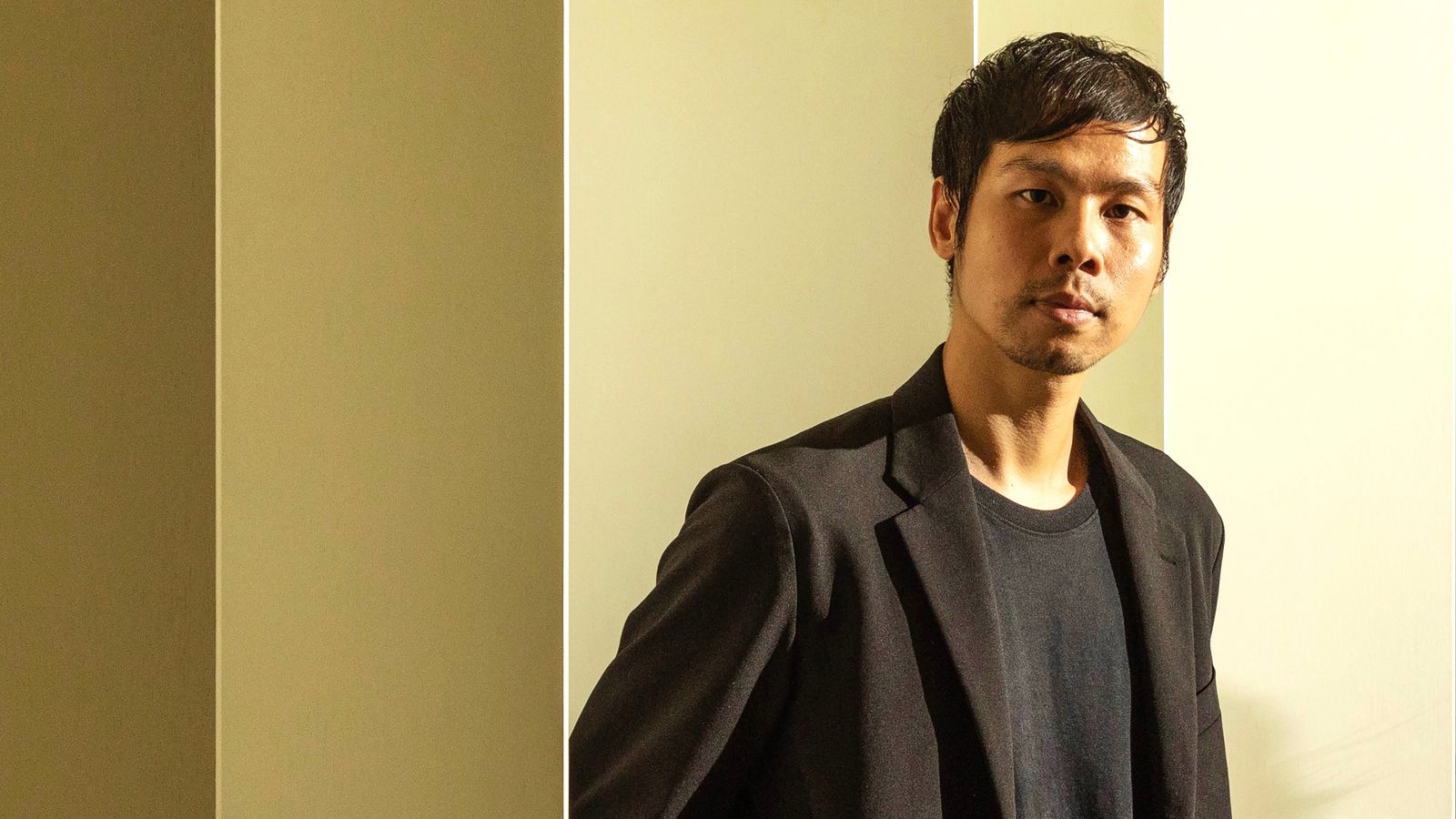
Before he opened a studio, Professor Jenchieh Hung, the co-founder and principal architect of HAS design and research asked himself what he would do if no projects came. In his own words, here is the model that answer produced: how research is funded, how cost is controlled through the specification, and what clients are really asking when they hesitate.
KEY TAKEAWAYS
- ·Before opening HAS design and research, Jenchieh Hung asked what he would do if no projects came, and built the answer into the business: competitions, research, teaching and writing treated not as marketing but as architecture itself, so the studio pays for its own curiosity.
- ·The transferable part is commercial, not philosophical: use readily available industrial materials to hold cost, then recover value through design so the result feels worth far more than the material, with the drawing set reframed as a communication tool for fabricators.
- ·He reads a client's hesitation as a fixed sequence, can we do this, are there options, can I trust you, and as a failure of imagination rather than taste, refusing to drop his position and arguing instead for the value of beauty.
What he questioned himself before there was a studio
Professor Jenchieh Hung tested the idea of his own practice with a single question. "When I was thinking about starting my own practice, I asked myself one simple question: if the studio had no projects, what would I do?"
The answers then became the core of the business. "I told myself that I could do competitions, where I could realize ideas that might not be possible in the real world. I could do research and accumulate knowledge and experience. I could teach at a university, where the income could support my basic living. Or I could become a freelance writer and write about architecture."
Almost ten years later, he claims that the person who questioned has not changed. "I am still simple, idealistic, and I still believe in passion. I believe that passion can go beyond money and bring us greater happiness, meaning, and a sense of belonging."
He is explicit about his starting point. "I am not from a wealthy family. Everything I have achieved has come through my own effort. For me, having a dream has always been more important than how much money I can make."


Research is not a cost center
Asked how the research inside the studio is funded, and whether the exhibitions, curation and books are a business line or an accepted marketing cost, Jenchieh Hung rejects the division in the question.
"What you see as research, exhibitions, books, teaching, or publications, I see simply as architecture. Architecture is not only the building. Research is architecture. Design is architecture. Writing a book is architecture. Making an exhibition is architecture. Teaching is architecture. They are different forms of the same practice, and none of them is simply a marketing cost."
That does not mean the arithmetic is ignored. "Of course, the practice has to survive economically. But I have never wanted money to be the reason for making architecture. I want the practice to create enough space for us to continue doing what we believe in."
His account of how opportunity arrives is a long game rather than a pipeline. "I spend more time thinking about how to create better architecture and more energy on research. I try to do the things I genuinely love and believe are right. I believe that when you do something honest, constructive, and beneficial to others, you move closer to your dream, and sometimes better opportunities follow."
After almost a decade, he describes the parts as one thing. "All these different things we do are parts of one whole, and together they bring me closer to the architecture and the life I believe in."

Controlling cost through the specification
The most transferable part of the practice is not its philosophy but its approach to materials.
"I also believe that craftsmanship has to be respected economically," Jenchieh Hung says. "That is why we often use readily available industrial materials. They are easier to source, produce, and fabricate, which helps us control costs."
The value is then recovered through design rather than through expensive specification. "Then, through design, we try to make the architectural result exceed the value of the material itself. The goal is to create something that feels far more valuable than its cost and makes the client feel that the investment is worthwhile."
That logic was applied to the relatively huge number of relating parts within the Aluminum Grotto and Public Ground pavilion. "We used the same material but varied the lengths of the aluminum elements. Each piece remained simple and easy to cut and assemble, but together they created variation and a sense of individuality within the larger system. Repetition does not have to produce sameness. It can produce richness."
Documentation was organized for fabrication rather than for presentation. "We could not simply draw every piece as an isolated object. We developed a system that could be understood, fabricated, repeated, adjusted, and assembled efficiently. The drawing set therefore becomes a communication tool between the architect and the fabricator, rather than simply an image of the final building."
"There are moments when the knowledge of the fabricator is better than what we can predict in the studio. We listen to them, test prototypes, and make adjustments together." Jenchieh Hung then claimed the importance of creating comprehensive understanding within the project.
His measure of a finished project credits the supply chain rather than the studio. "The real achievement is when a complex architectural idea becomes simple and precise in the hands of the people who construct it. Good architecture is not only what the architect designs. It is also what the people who make it are able to bring into reality."


What clients are really asking
Any practice built on unfamiliar positions has to solve a sales problem. Jenchieh Hung describes the client reaction as a fixed sequence. "When you look at all of our projects, the first thing our clients often say is, 'Can we really do this?' Then they ask, 'Are there other options?' And finally, they ask, 'Can I trust you?'"
He reads that as a limit of imagination rather than a rejection of design. "Many clients have a fundamental concern: they cannot easily imagine a space or a possibility that they have never seen before. But I believe that this ability to imagine the future is precisely what allows us to move beyond what already exists and create meaningful innovation."
His method is diagnostic. "Sometimes I feel that I am more like a doctor. My role is to diagnose spatial problems and give the client the best possible solution, while at the same time expanding their imagination of what architecture and beauty can be."
On the point where many practices concede, he does not. "I have never changed my architectural position simply because a client was uncertain or afraid. Instead, I prefer to listen carefully to what the client is really concerned about. Very often, they actually like the idea of a building that is both practical and beautiful. What they fear is the unfamiliar."
The way past that fear is an argument about value. "We have to look at the project from their perspective and help them understand the value of beauty. Something can be useful, but beauty can elevate usefulness into something with a deeper emotional meaning."
Trust is built at intake. "The first thing I would want to do is talk to the client and understand their dream. What do they hope for from this project?" He then asks for video and photographs of the site rather than adding travel cost to the project, so his team can study it in detail. "The more I understand the client and the site, the more confidently I can design."
He offers one project as the model of that relationship. Upon building a house in China, Forest Villa, the client told him: "I know you are an internationally renowned architect and have many projects, but this is a small house. I sincerely hope you can create the most perfect space for me." Jenchieh Hung carried that sentence through three years of design and construction.


Operating in two markets alongside academic contributions
Working in both Thailand and China has taught the studio that a method does not export unchanged. "A design method cannot simply be applied in exactly the same way everywhere. Every project has its own character, just as every person does."
The variables he lists are the ones any firm expanding across Asia will recognize. "The differences are not only about budgets or construction tolerances. They are also about materials, fabrication systems, craftsmanship, regulations, construction schedules, and the way we communicate with contractors and fabricators. In Thailand, we often work closely with local craftsmen and solve problems directly through adaptation on site. In China, we often work with a different level of manufacturing capacity, precision, and production scale."
What is held constant is the idea rather than the process. "What changes is not our architectural intention, but the way we care for and realize it. We keep the essential idea of the project, while allowing the material, fabrication, and construction process to respond to its particular environment."
Jenchieh Hung teaches alongside the practice, and his description of what students lack is closer to a hiring view than an academic one. "Students need to experience the gap between an idea and its realization. They need to understand materials, construction, clients, budgets, regulations, communities, and the unexpected problems that appear in the real world. These are things that cannot be fully learned from a computer or from a textbook."
The gap he identifies is not technical. "Nowadays, I sometimes feel that students are missing the passion to try something they have never done before."
He favors the design studio led by a practicing architect, a model he has worked inside as distinguished professor at Huaqiao University and as professor/visiting professor at Tongji University, Chulalongkorn University and Bangkok University. It gives students something "to observe, imitate, learn from, and eventually challenge," and, he adds, "more importantly, they can learn an attitude."
On the technology every practice is now pricing into its workflow, his position is a limit rather than a refusal. "A machine can generate possibilities, but it cannot replace the human experience, attitude, and conviction behind an architectural decision."
What visibility is actually worth
Young studios across Asia increasingly build their reputation on publication and awards. Jenchieh Hung has been recognized by that system and now sits inside it as a juror, including for the Royal Institute of British Architects International Awards and the Asia Architecture Design Awards, and he describes those invitations as a consequence of sustained work. "Over time, as these awards have seen our long term commitment and our continuous efforts to create better architecture for the city and society, they have also invited Professor Kulthida Songkittipakdee and me to serve as jurors."
He treats recognition as an obligation. "We keep these recognitions in our hearts and continue to create better work, so that the awards know they chose the right people."
His advice to a studio in Hanoi, Manila or Jakarta is about sequence. "I believe the most important thing is the architecture itself. Only by creating better architecture can we truly understand the world and the future. Do not design to please awards or the camera. Design for the place, for the people, and for what you believe in. Try to do something that has never been done before. If the architecture is genuine and strong, it will eventually find its audience."
And the closing judgment, from someone whose business has benefited from visibility. "Awards and publications should be the natural result of good architecture, not the ultimate goal. The camera can capture an image of architecture, but it cannot create the architecture itself."
The question of what makes architecture meaningful - beyond the image, the award, or the completed building - is one Professor Jenchieh Hung will soon be considering across the region. As a juror of the 2027 Asia Architecture and Design Awards, he brings a practice shaped by research, teaching, and built work to a wider view of how architects are responding to place, people, materials, and the future of the profession.
Those judgments arrive in Bangkok in May 2027, when the Asia Awards Organization holds the Winners' Night of the 2027 Asia Architecture and Design Awards at the Aksra Theatre and the Pullman King Power Bangkok. The evening gathers the owners, operators and studios whose work has defined the current cycle. Developers and practices whose work belongs in that room can learn more at https://www.aadawards.com.
All images courtesy of Jenchieh Hung + Kulthida Songkittipakdee / HAS design and research.
RELATED STORIES
Chinese Humanoid Robots Now Jump Higher and Run Faster Than Olympic Athletes
Cheng Wei-Lun · 4 min
Selling Hours, Losing Value: Isabelle Miaja on What Owners Actually Pay a Design Practice For
Tu C. Nguyen · 8 min
Southeast Asian Firms Overlook Digital Pact Worth USD 2 Trillion
Lim Hui Ying · 4 min
Thailand Targets 5 GW Rooftop Solar Push to Cut LNG Exposure
Priyanka V. Rao · 3 min
Spot something wrong? Email editor@briefasia.com. We log every correction publicly.