ExclusivePerspectives · Interviews
Selling Hours, Losing Value: Isabelle Miaja on What Owners Actually Pay a Design Practice For
The founder of Singapore based MIAJA Design Group has spent thirty years inside Asian hospitality projects. Her assessment of the industry is a commercial one. Design has been sold by the hour, technology is absorbing the hours, and the thing owners actually pay for has never been priced properly.
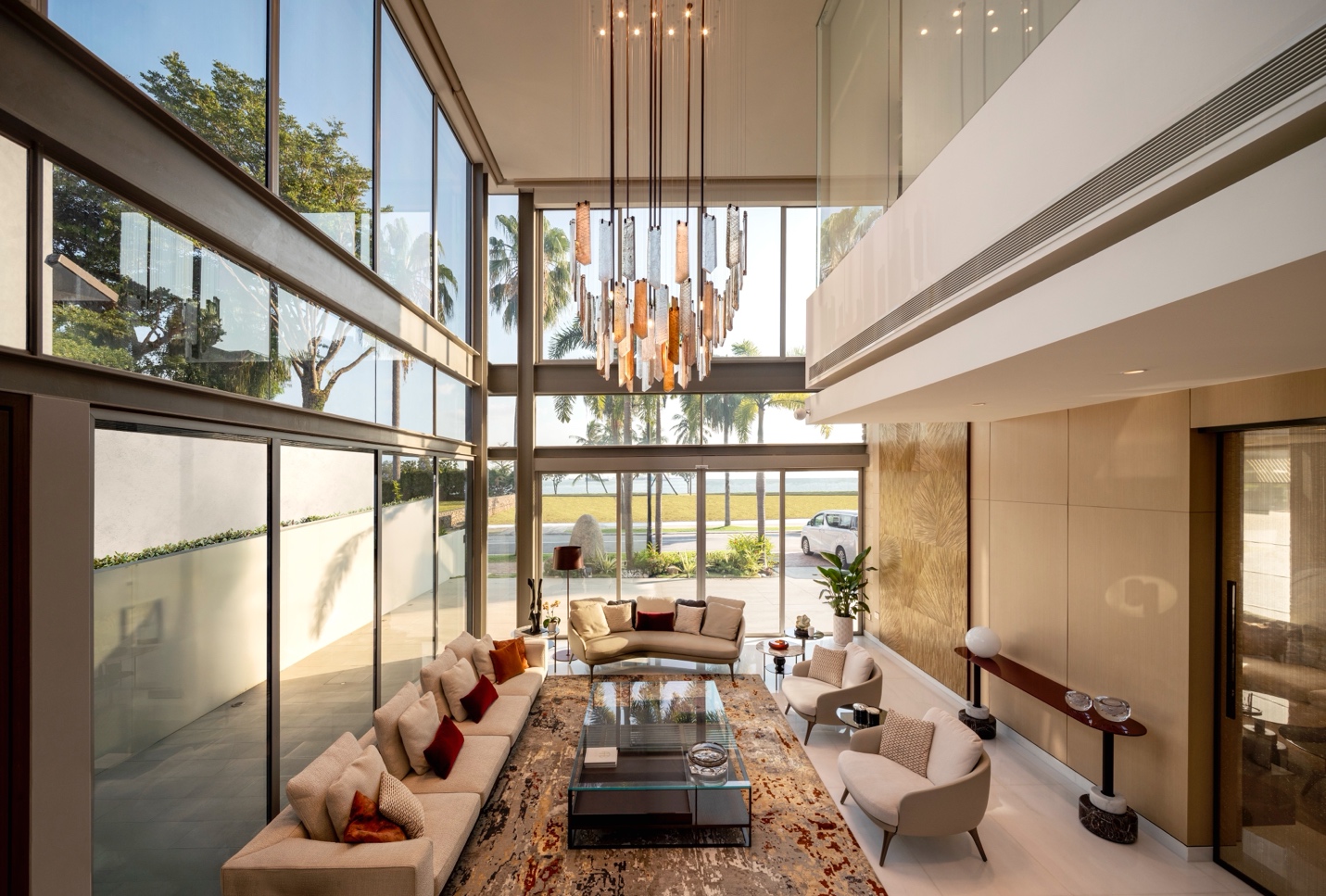
KEY TAKEAWAYS
- ·Isabelle Miaja, founder of Singapore's MIAJA Design Group, treats hotel design as a commercial problem: the largest cost on a project never appears in the budget, the money spent correcting decisions made in the wrong order when interiors, art and lighting arrive after the architect.
- ·With software now compressing the billable hours, she argues a practice should price judgment, creative direction and intellectual property, not production time, because producing an image and making a design decision are not the same thing.
- ·She makes the case on money, not taste: a strong sense of place differentiates an asset better than international polish, craft has to be procured rather than romanticised, and a founder's real job is to build a company that can make good decisions without her.
Every hotel project carries a cost that never appears in the development budget. It is the money spent correcting decisions that were made in the wrong order.
Isabelle Miaja names it precisely. "When an interior designer arrives too late, some of the most important decisions have already been made," she says. "The approach and arrival, the relationship with the landscape, circulation, ceiling heights, views, natural light, even the proportions of the spaces." Her studio can resolve most of it. That is exactly the problem. "Sometimes we are effectively correcting decisions that could have been avoided if we had all sat around the same table six months earlier."
Miaja founded MIAJA Design Group in Singapore in 1995 as IMA Interiors and now runs it from Singapore and Paris, working for international hotel operators across the region. The firm covers conceptual architecture, interiors, art consultancy, lighting and signage, and it is a family business: her son leads operations and finance, her daughter works in design. That range gives her an unusual vantage point on how projects are actually procured, and her conclusions are commercial rather than aesthetic.

The sequencing cost
The standard argument for integrating design disciplines early is a creative one. Miaja makes it as a matter of money. Integration at the start, she says, prevents redesign, variations and compromise later. "We sometimes spend a great deal of money correcting something that a conversation at the beginning could have solved."
She is careful to disarm the obvious objection, that designers always want more control. "Not because the interior designer should dominate the architect, or vice versa, but because the project should dominate all of us."
For owners the arithmetic is straightforward. The savings available from negotiating a consultant fee downward are visible and modest. The savings available from changing the order in which consultants are appointed are invisible and considerable.
What owners are actually buying
The second argument goes to pricing, and it is the one most relevant to any firm competing on fees in the region today.
Design has traditionally been billed on time: how many people, how many hours, how many drawings. Software has begun to compress exactly that part of the work. Miaja does not dispute it. "Some parts of what we do will become commoditized. In fact, they already are. We can now generate imagery and explore visual directions in hours that once took days."
Her objection is to the conclusion usually drawn from it. "Producing an image and making a design decision are not the same thing." Software does not sit opposite an owner deciding where to invest. It does not carry responsibility for whether something can be built, maintained or operated. It does not know whether a craftsman can deliver two hundred pieces at the quality shown in a rendering. "It cannot replace the accumulated judgment that tells you when something beautiful is simply wrong for a particular place."
Which produces the question the profession has avoided. "If technology allows us to achieve some of those things in half the time, does that mean the idea suddenly has half the value? I don't believe so." Her prescription is to price creative direction, intellectual property, experience and judgment rather than production hours. "AI should give designers more time to think, not less reason to think."
Differentiation as a return
Owners often ask for an international look because they believe it protects the asset. Miaja argues the reverse, on commercial grounds. "Today's traveler has seen everything. A beautiful international hotel that could be in Singapore, Dubai, London or the Maldives is no longer necessarily enough." A strong sense of place, she says, creates differentiation, and differentiation carries value.
She draws a hard line between responding to a culture and decorating with it. "I don't believe that taking a traditional motif, enlarging it and putting it on a wall suddenly makes a project authentic." What she wants is the reasoning underneath, in materials, rituals, craftsmanship, landscape and the way people gather, interpreted rather than reproduced. "I don't want to design a hotel that has to tell you where you are by putting the culture on the wall. I want you to feel where you are."
The regional guest supports the position. There is no single Asian luxury traveler, she insists, and the sophistication of the market has changed the terms of trade. "Thirty years ago, European luxury was often regarded as the reference. Today I don't think the sophisticated Asian traveler needs Europe to tell them what luxury looks like." The consequence is that spending is no longer a strategy. "The challenge is no longer to impress people with how much has been spent. It is to create something they haven't already experienced somewhere else."
On art she is unusually disciplined for a designer who also runs a gallery. Art bought at the end, to fill a wall someone noticed, is decoration rather than strategy. Art commissioned early can be made for the architecture and made locally. She declines to inflate the return. "I would never tell an asset manager that every dollar spent on art produces a precisely measurable return. That would be dishonest." What it buys, she argues, is memory, and in a business where two properties can offer identical comfort and service, memory is the differentiator that survives.

Craft is a supply chain question
Craft is easy to sell in a presentation and difficult to deliver at scale. Miaja treats it as procurement rather than romance. "A small workshop cannot suddenly become a factory because a designer has specified its work for 300 guestrooms."
Making it work, she says, means designing the procurement itself: early prototypes, honest assessment of production capacity, agreed tolerances, phased deliveries, and handmade elements combined with industrial production where that is the only way to hold quality. "It is very easy to celebrate craftsmanship in a presentation. It is much harder to protect it through value engineering, procurement and construction."
She extends it into an obligation that also happens to protect supply. Credit the makers, pay them fairly, tell their stories, bring them into the next project. "I don't want local craft to become raw material for an international designer's narrative while the person who actually made the work remains invisible."
From founder to company
Miaja is direct about the transition that most creative founders in Asia never complete. "Being a good designer and building a good design company are two completely different skills."
In the early years a founder does everything, and the name on the door makes it tempting to stay involved in everything. "Eventually that becomes impossible." Founders become bottlenecks without realizing it, she says, and she was one. The redefinition that followed is the operative lesson. "My responsibility was no longer to make every decision myself. It was to create an environment in which good decisions could be made without me." She delegated operations, management and finance, and concentrated her own time where she still adds the most value: the beginning of a project, the idea, the narrative, the creative direction and the development of younger designers. "Growing a practice requires you to give something up."
Succession she frames as institution building rather than retirement. "If MIAJA can only exist while Isabelle Miaja is personally making every creative decision, then I haven't really built a practice. I have built a job around myself." Inside a family firm she keeps creative authority and commercial authority deliberately separate and treats the tension between them as useful. What she wants the next generation to inherit is not her aesthetic, which "would eventually become a formula," but the values beneath it.

Reading a market before you spend on it
Her longest running commercial lesson is about communication. Trained in a European habit of open disagreement, she learned that harmony in a meeting can matter more than dissent. "A nod may mean, 'I hear you.' It may mean, 'I understand.' It may even mean, 'I don't want to embarrass you by disagreeing with you in front of everyone.' It doesn't necessarily mean, 'Let's proceed.'"
The cost was measurable: teams mobilized and fees spent developing directions that had never truly been approved. Her method now is to watch who does not speak, to ask the same question in several forms, and to build room for people to disagree without losing face. She also refuses the shortcut of treating the region as one market. Jakarta, Seoul and Manila do not operate on a single code, and every client has a personality of their own.
Her advice to a young practice in Ho Chi Minh City or Bangkok follows the same logic. Understand your value and understand your numbers before you build the portfolio, because "a beautiful portfolio can hide a very unhealthy business." Know the true cost of delivery, the cash flow, the scope and what sits outside it, the payment terms and the intellectual property, and learn when a project is not worth taking. A financially healthy practice, she argues, is what protects creative standards rather than what compromises them.
Then the strategic point. "The world does not need another studio trying to look like a studio in London, Paris or New York. It needs designers from Asia who are confident enough to create work that could only have come from where they come from."
Thirty years in, her closing position is about durability rather than growth. "A portfolio may get you noticed. A well run practice, built on trust, is what allows you to still be designing thirty years later."
That question of what endures, in a practice, a property or a city, is one Miaja will soon be putting to the rest of the industry. She sits on the jury of the 2027 Asia Architecture and Design Awards, a position that gives her a season by season view of how design practices across the region are positioning themselves, which typologies are attracting capital, and where owners are choosing to spend.
Those judgments arrive in Bangkok in May 2027, when the Asia Awards Organization holds the Winners' Night of the 2027 Asia Architecture and Design Awards at the Aksra Theatre and the Pullman King Power Bangkok. The evening gathers the owners, operators and studios whose work has defined the current cycle. Developers and practices whose work belongs in that room can learn more at https://www.aadawards.com.
RELATED STORIES
Indonesia's Graduate Unemployment Crisis Signals Broken Promise of Education
Priyanka V. Rao · 6 min

Vietnam's Offshore Oil Find Tests Hanoi's Will Against Beijing
Priyanka V. Rao · 5 min
.jpg?prefix=brief-asia)
Cover the logo. They'll still know who you are.
Simon Ng · 9 min

Manila's Narrow Economic Corridor Is Closing Fast
Priyanka V. Rao · 5 min
Spot something wrong? Email editor@briefasia.com. We log every correction publicly.