Asia · Business
Japanese Household Spending Drops 3.3% as Weather and Geopolitical Tensions Dampen Consumption
Seventh consecutive monthly decline signals persistent weakness in domestic demand despite rising real wages, complicating central bank rate decisions
KEY TAKEAWAYS
- ·Japanese household spending fell 3.3 percent year-on-year in June, missing the 1 percent rise forecast and marking the seventh consecutive monthly decline.
- ·Real wages grew 1.6 percent in June, yet households are saving more rather than spending, with the consumption share of income declining since late last year.
- ·Middle East conflict and energy cost pressures are expected to keep consumer sentiment subdued, complicating Bank of Japan rate decisions ahead of the September meeting.
Spending Streak Extends to Seven Months
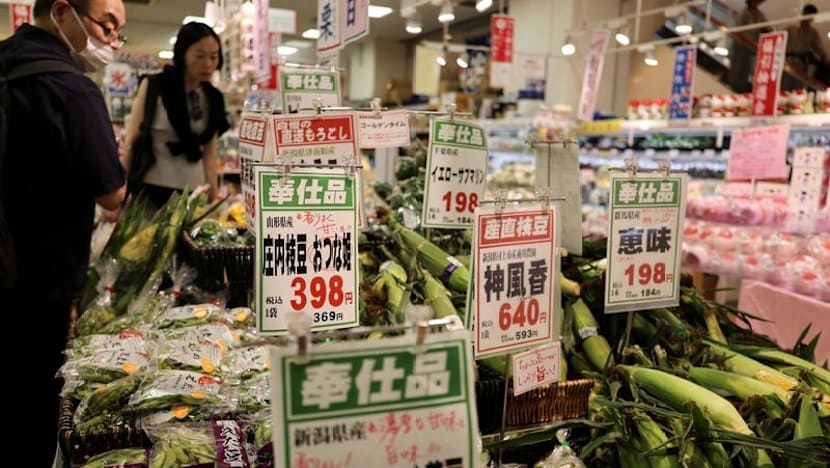
Japanese consumers pulled back sharply in June, with household spending sliding 3.3 percent from a year earlier, according to data released by the internal affairs ministry on August 7. The decline marked the seventh straight month of contraction and came as a surprise to markets that had anticipated a 1 percent rise.
The month-on-month picture looked even weaker. On a seasonally adjusted basis, spending dropped 6.4 percent, more than double the 3.1 percent decline economists had expected. The unexpectedly soft figures underscore persistent fragility in Japan's domestic consumption, a pillar the government has been counting on to sustain economic momentum.
Ministry officials pointed to weather disruptions as a primary culprit. Typhoons and unusually heavy rainfall across the archipelago in June curtailed shopping trips and outdoor spending. Yet officials stopped short of attributing the entire slump to climate factors, acknowledging that the rising cost of living continues to squeeze household budgets.
Savings Rate Creeps Higher
A revealing detail emerged from the ministry's analysis: the share of household income devoted to consumption has been trending downward since late last year. In practical terms, Japanese families are channeling a growing portion of their earnings into savings rather than spending, a behavioral shift that reflects caution even as nominal wages tick upward.
Real wages in Japan rose 1.6 percent year-on-year in June, marking the sixth consecutive month of positive growth, according to separate labour ministry data released earlier this week. That wage growth, however, has not translated into a corresponding lift in spending, suggesting households remain wary about their economic outlook.
The divergence between wage gains and spending patterns presents a puzzle for policymakers. Typically, sustained real wage growth would fuel consumption. Instead, Japanese consumers appear to be banking their raises, a sign that confidence in the broader economic environment remains tentative.
Central Bank Calculus
The Bank of Japan will weigh the household spending data as it deliberates over whether to raise interest rates at its September policy meeting. While the consumption figures are unlikely to be the decisive factor, they add another data point to the central bank's assessment of domestic demand strength.
Japan has maintained ultra-loose monetary policy for years, but recent inflation dynamics and wage negotiations have prompted speculation that the BOJ might begin normalizing rates. Weak consumption, however, complicates that calculus. Raising rates into a softening demand environment risks choking off the fragile recovery.
The central bank faces a delicate balancing act: inflation has been running above its 2 percent target, driven partly by import costs, yet domestic demand shows little vigor. The June spending data will likely reinforce calls for caution within the BOJ's policy board.
Middle East Shadow
Looking ahead, analysts see limited prospects for a robust rebound in consumer spending. Sota Takano, senior economist at Itochu Research Institute, highlighted the ongoing conflict in the Middle East as a persistent drag on household sentiment and budgets.
The war has pushed up global energy prices and disrupted supply chains, effects that ripple through to Japanese consumers in the form of higher costs for food, fuel, and other essentials. While government subsidies have cushioned some of the blow, they have not fully offset the increases.
Takano noted that unless the geopolitical situation improves dramatically and quickly, uncertainty will continue to weigh on consumer confidence. "Sentiment is unlikely to pick up much," he observed, pointing to the psychological toll of prolonged instability in a region critical to global energy markets.
The combination of weather shocks, elevated savings behavior, and external geopolitical risks paints a challenging picture for Japan's consumption outlook. For an economy that has long struggled to generate durable domestic demand, the June figures serve as a reminder that the path to sustained growth remains uneven.
Policymakers will be watching closely to see whether July and August data show any signs of recovery, or if the spending malaise deepens. For now, Japanese households appear to be hunkering down, prioritizing financial buffers over discretionary purchases in an uncertain world.
RELATED STORIES
Japanese Companies Push for Currency Stability as Weak Yen Squeezes Margins
Aiko Nakamura · 3 min

Japan Prepares Alternative Career Track to Boost UN Representation
Aiko Nakamura · 3 min

Sojitz Expands Vietnamese Beef Operations With Japanese Hygiene Standards
Cheng Wei-Lun · 3 min

Nuclear Weapons Contractors See 30% Surge in Financial Backing
Cheng Wei-Lun · 3 min
Spot something wrong? Email editor@briefasia.com. We log every correction publicly.