Asia · Politics
Japanese Companies Push for Currency Stability as Weak Yen Squeezes Margins
Corporate leaders from Mitsubishi Electric to Mitsui warn that volatility and a persistently weak yen are eroding the benefits of export competitiveness, raising costs across Japan's import-dependent economy.
KEY TAKEAWAYS
- ·The yen hit a 40-year low near 164 per dollar in July, prompting a joint Japan-U.S. intervention that lifted the currency by around 5 per cent.
- ·Executives at Mitsubishi Electric, Mitsui and Mitsubishi Corp say rising import costs and volatility now outweigh export gains from a weaker yen.
- ·A March survey found nearly 20 per cent of Japanese firms prefer a rate of 120 to 124 yen per dollar, while only 11 per cent favor levels above 150.
Growing Alarm in the C-Suite
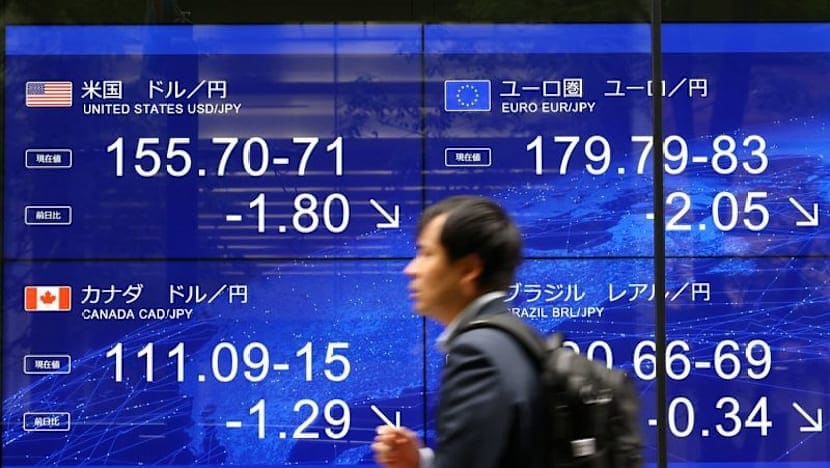
Senior executives at some of Japan's largest corporations are warning that persistent currency weakness and sharp exchange-rate swings now pose a greater threat to the economy than any export advantage a cheaper yen might deliver. The yen touched a four-decade low near 164 against the dollar in July, prompting Tokyo and Washington to conduct a rare coordinated intervention that lifted the currency by roughly 5 per cent in a matter of days.
Kenichiro Fujimoto, chief financial officer at Mitsubishi Electric, told reporters last week that a weak yen does not automatically translate into broad prosperity. Problems that hurt the wider economy ultimately hurt individual companies, he said, adding that higher costs for energy, raw materials and food weigh heavily on domestic demand and threaten Japan's fragile exit from decades of deflation.
Fujimoto's caution reflects a shift in sentiment among business leaders who once welcomed a softer currency. Japan imports nearly all its raw materials, and the cost of those inputs has climbed sharply as the yen has weakened. For many firms, rising input prices now outweigh the revenue boost from overseas sales.
Exporters Feel the Squeeze
Norihiko Ishiguro, chairman of the Japan External Trade Organization, underscored the paradox at a press conference in July. While a weaker yen offers real advantages for exports, Japanese companies import almost all their raw materials, he noted. Beyond a certain exchange rate, costs actually increase, meaning exporters do not always win from a soft currency.
A survey published by the trade organization in March found that nearly a fifth of companies consider 120 to 124 yen per dollar the most desirable range. Only 11 per cent of respondents preferred a rate above 150, a threshold the yen has breached repeatedly in recent months.
Makoto Tanaka, chief financial officer at trading house Mitsui & Co, said his primary concern is market stability. Mitsui reported record first-quarter earnings this week, buoyed by overseas income translated at favorable rates. Yet Tanaka emphasized that high volatility complicates forecasting and investment decisions. The firm is prepared to revise its assumed rate of 150 yen to the dollar as market conditions evolve, he added.
Yoshihiro Shimazu, CFO at rival Mitsubishi Corp, echoed that sentiment, noting that sharp currency moves upend earnings projections and strategic planning for companies with global operations.
A New Normal
Fujimoto suggested that hopes for a return to 120 or 130 yen per dollar may be unrealistic. Considering Japan's economic fundamentals and the persistent trade imbalance, the country may not see those levels again, he said. That assessment points to a longer-term recalibration among Japanese executives, who are adjusting strategies to a world in which the yen trades well above historical norms against the dollar.
The coordinated intervention in early August marked a significant policy moment, signaling that both Tokyo and Washington view excessive currency weakness as a risk to regional stability. For Japan's exporters, the intervention offered temporary relief. For importers and consumers, it provided a modest cushion against rising costs.
Corporate Japan now faces a delicate balancing act. A weaker yen lifts the value of overseas earnings when repatriated, but it also drives up the cost of the energy, materials and components that underpin manufacturing and trade. As volatility persists, executives are calling for predictability rather than a particular exchange rate, a stance that reflects the complexity of operating in an era of sustained currency flux.
RELATED STORIES
Yen Slides Back Toward 160 as Joint Intervention Fades
Cheng Wei-Lun · 3 min

Sojitz Expands Vietnamese Beef Operations With Japanese Hygiene Standards
Cheng Wei-Lun · 3 min

Japanese Household Spending Drops 3.3% as Weather and Geopolitical Tensions Dampen Consumption
Aiko Nakamura · 3 min

Modi Set to Address Nation Amid Job Crisis as SMIC Reports Earnings
Priyanka V. Rao · 4 min
Spot something wrong? Email editor@briefasia.com. We log every correction publicly.