Asia · Business
Japanese Chipmakers and Infrastructure Giants Lift Earnings Outlook 14 Percent
Hitachi and component suppliers banking on AI data center buildout across Asia-Pacific revise profit guidance upward for fiscal 2027
KEY TAKEAWAYS
- ·Japanese listed companies raised their fiscal 2027 net profit forecast to 14 percent growth, led by Hitachi and Ibiden on AI infrastructure demand.
- ·Hitachi's power equipment and Ibiden's IC substrates are benefiting from data center buildouts in Singapore, Tokyo, and Sydney.
- ·The upgrade reflects policy support across Asia-Pacific and yen translation gains, but risks loom if hyperscale capex slows in late 2027.
Forecast Revision Reflects AI Infrastructure Wave
Japanese listed companies have raised their collective net profit forecast to 14 percent growth for the fiscal year ending March 2027, according to aggregated earnings guidance. The upward revision centers on manufacturers that hold commanding market positions in components and infrastructure for artificial intelligence systems.
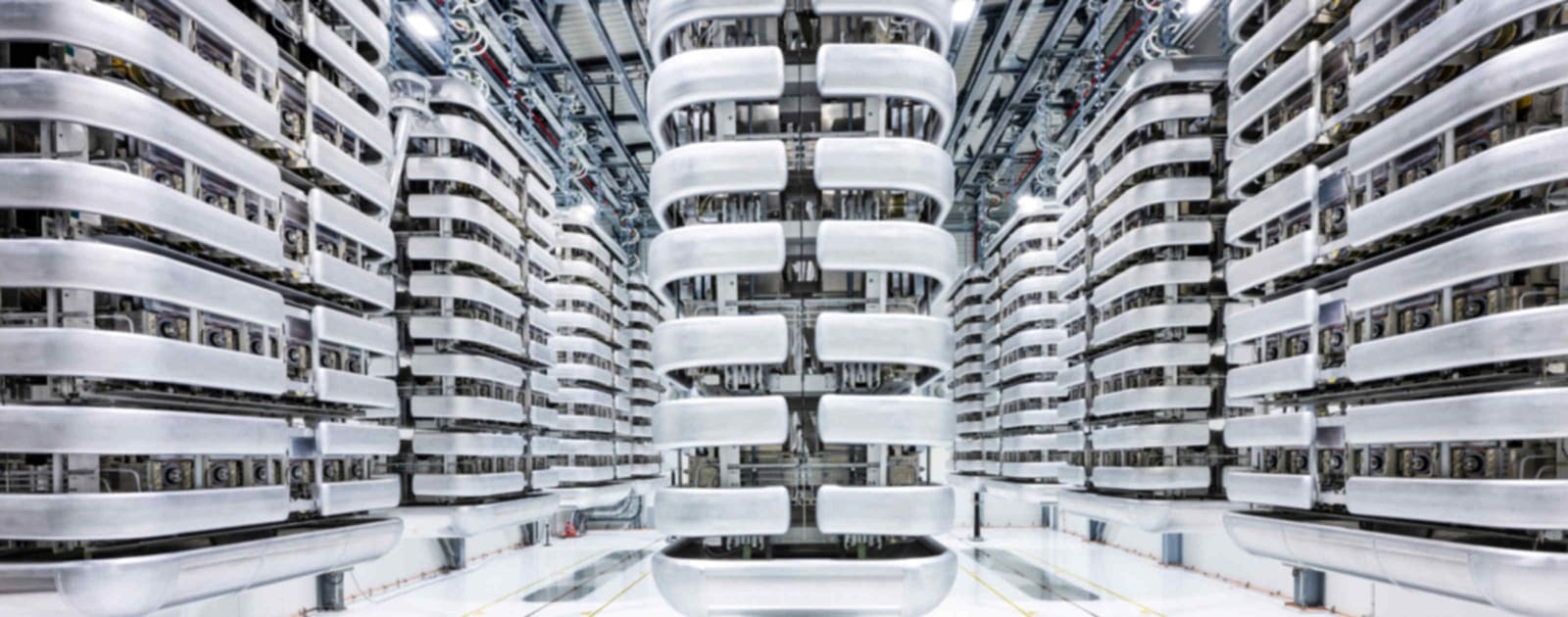
Hitachi and printed circuit board maker Ibiden lead the revision, both citing stronger-than-expected demand tied to data center expansion. Hitachi holds a significant global share in power transmission and distribution equipment, products now in tighter supply as hyperscalers race to build out AI compute capacity across the Asia-Pacific region.
The revised outlook marks a sharp acceleration from earlier guidance issued in April, when the same cohort of companies projected single-digit profit growth. The gap between initial caution and current optimism underscores how quickly AI-related capital expenditure has reshaped order books across Japan's industrial base.
Power and Components Drive the Upside
Hitachi's exposure spans electrical infrastructure, industrial control systems, and rail technology. The company's power equipment division has seen order intake climb as data center operators in Singapore, Tokyo, and Sydney secure grid connections for facilities that can draw tens of megawatts. Hitachi announced it expects higher profit contributions from this segment through the second half of the fiscal year.
Ibiden, which manufactures high-end IC substrates used in advanced processors, has similarly lifted its guidance. The Gifu-based company supplies substrates for graphics processing units and AI accelerators, components that sit at the heart of training clusters being deployed by cloud providers and research institutions. Demand visibility has extended into calendar 2027, giving Ibiden confidence to raise its full-year target.
The dual strength in power infrastructure and semiconductor packaging reflects the capital intensity of AI deployment. Every new AI cluster requires not only cutting-edge chips but also robust electrical systems, cooling, and interconnects. Japanese suppliers with scale in these categories are capturing a disproportionate share of incremental spending.
Regional Context and Capital Flow
The earnings upgrade arrives as Asia-Pacific governments and private investors funnel capital into digital infrastructure. Singapore's National AI Strategy has earmarked funds for sovereign compute; South Korea's semiconductor investment tax credits have spurred co-location of fabs and data centers; and Japanese policy now offers accelerated depreciation for AI-related industrial equipment.
This policy environment has translated into tangible order flow for Japanese manufacturers. Hitachi disclosed in its latest earnings call that orders for high-voltage switchgear and transformers have risen 22 percent year-on-year, with Asia accounting for roughly half of incremental volume. Ibiden noted that substrate shipments to customers in Taiwan and South Korea have climbed in consecutive quarters.
The revised profit outlook also reflects yen dynamics. While the currency has stabilized in recent months, the earlier period of weakness lifted repatriated earnings for companies with significant overseas revenue. Hitachi derives more than 60 percent of sales outside Japan; Ibiden's export ratio exceeds 70 percent. Both companies benefited from translation gains in the first quarter, a tailwind that remains embedded in full-year projections.
Sector Concentration and Risk
The 14 percent aggregate figure masks divergence within Japan Inc. Companies tied to AI infrastructure and semiconductor supply chains are posting double-digit growth, while consumer-facing sectors and traditional manufacturing lag. Automakers, for instance, have offered more cautious guidance, citing slowing demand in China and the Middle East despite yen support.
This bifurcation raises questions about the durability of the earnings cycle. AI capital expenditure is lumpy and concentrated among a small number of hyperscale buyers. If cloud providers decelerate spending in late 2027 or early 2028, suppliers like Hitachi and Ibiden could face abrupt order cancellations. The current forecast assumes sustained momentum through the end of the fiscal year, a scenario that hinges on continued AI model scaling and enterprise adoption.
Japanese component makers also face intensifying competition from South Korean and Taiwanese rivals, some of which have announced capacity expansions in advanced substrates and power electronics. Ibiden's substrate leadership remains intact, but margin pressure could emerge if supply growth outpaces demand in 2028.
What Comes Next
Investors will watch second-quarter earnings, due in October, for signs that order momentum is holding. Hitachi and Ibiden have both indicated they will provide updated guidance at that time, including breakdowns by geography and product line. Any softening in data center capex or delays in grid infrastructure projects would likely prompt a reassessment.
For now, the revised forecast signals that Japan's industrial giants see at least another twelve months of tailwinds from AI. The question is whether that window stretches into a longer cycle or compresses into a shorter, more volatile buildout phase. Either way, the current earnings season has made clear that Japan's exposure to AI infrastructure is deeper and more profitable than many observers anticipated six months ago.
RELATED STORIES

Japan Bets $2.3 Trillion on AI-Driven Manufacturing Revival
Aiko Nakamura · 3 min
Akita Plans Major AI Data Center to Launch by 2030
Aiko Nakamura · 3 min
Japan Raises Bar for Skilled Foreign Talent With New Income Thresholds
Aiko Nakamura · 3 min
Foreign Funds Pile Into JX Advanced Metals and Sanrio as Japan Stocks See Record Inflows
Cheng Wei-Lun · 2 min
Spot something wrong? Email editor@briefasia.com. We log every correction publicly.