Asia · Business
Japanese Automakers Bet on Stable Yen After Intervention
Major carmakers' fiscal forecasts signal expectations that recent currency moves will moderate volatility without reversing the weaker yen trend

KEY TAKEAWAYS
- ·Toyota, Honda, and Nissan have set fiscal year currency assumptions between 143 and 147 yen per dollar, clustering near post-intervention levels.
- ·The automakers view Tokyo's market action as a brake on extreme depreciation rather than the start of sustained yen appreciation.
- ·A stable yen near current levels preserves margin gains that have funded increased R&D spending on electric vehicle platforms and battery technology.
Reading the Currency Signal
Japan's major automotive manufacturers have set their fiscal year projections around a working assumption: the yen will hold near the levels established after the government's latest market intervention, rather than swing back toward pre-intervention extremes or strengthen significantly from here.
The exchange rate forecasts embedded in profit and sales guidance from Toyota, Honda, Nissan, and other automakers suggest the industry views Tokyo's currency action as a stabilization measure - a check on runaway depreciation - rather than the beginning of a sustained appreciation cycle. That calculus shapes everything from pricing strategies in North America to capital allocation decisions across Southeast Asia.
Toyota Motor Corporation, the world's largest automaker by volume, has built its full-year outlook around an average rate of 145 yen to the dollar. Honda Motor pegged its planning assumptions at 143, while Nissan Motor settled on 147. All three figures cluster within a narrow band above the psychological 140 threshold, the level around which authorities intervened to arrest the yen's slide earlier this year.
The Intervention Context
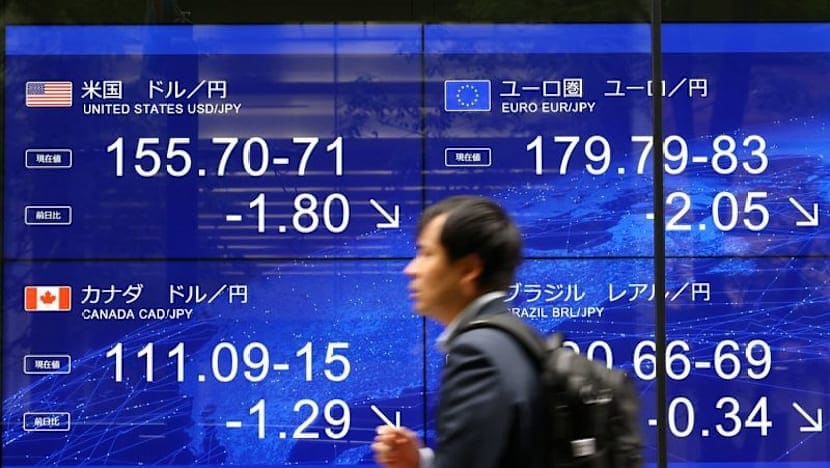
Japanese monetary authorities stepped into foreign exchange markets in late spring after the yen breached 160 against the dollar, its weakest point in more than three decades. The move, confirmed by the Ministry of Finance, involved an estimated purchase of yen equivalent to several billion dollars - the first direct market action since 2022.
The intervention succeeded in pulling the currency back from its nadir, but it did not reverse the broader trend. The yen has traded in a range between 140 and 150 to the dollar in the months since, a level still historically weak compared to the sub-120 averages that prevailed through much of the 2010s.
For Japan's export-heavy automotive sector, that range represents a workable middle ground. A weaker yen inflates overseas revenue when repatriated, padding profit margins on vehicles sold in dollar or euro markets. But excessive volatility - particularly sharp moves that outpace pricing adjustments - introduces planning risk and can erode competitiveness if input costs for imported components spike faster than automakers can pass increases downstream.
Planning for Equilibrium, Not Reversal
The clustering of carmaker forecasts around the 143-147 band indicates a collective industry view: the yen has found a near-term equilibrium that balances the Bank of Japan's ultra-loose monetary stance against periodic government intervention to prevent disorderly depreciation.
That consensus informs production footprint decisions. Honda announced in June that it would shift an additional 200,000 units of annual North American production back to Japan over the next two years, a move made economically viable by sustained yen weakness. Mazda Motor Corporation similarly indicated it would slow planned capacity expansion in Mexico, opting instead to maximize utilization at domestic plants in Hiroshima and Yamaguchi prefectures.
Nissan, meanwhile, has held off on finalizing a proposed joint-venture battery plant in the United States, citing uncertainty over long-term currency assumptions and subsidy structures under evolving US industrial policy. The company's 147-yen forecast - the most conservative among the big three - reflects a hedging posture that builds in room for modest yen appreciation without forcing a wholesale revision of its profit guidance.
Implications for Margins and Investment
A stable yen near current levels allows Japanese automakers to preserve the margin gains they harvested during the currency's two-year descent from 115 to 160. Operating profit margins at Toyota, Honda, and Nissan all expanded by 150 to 200 basis points between fiscal 2023 and fiscal 2025, driven in large part by favorable translation effects.
Those gains have funded increased research and development spending on electric vehicle platforms and battery technology, areas where Japanese manufacturers lag behind Chinese and some European rivals. Toyota earmarked an additional ¥1.2 trillion for electrification R&D in its current three-year plan, while Honda committed ¥800 billion to a similar push.
If the yen were to strengthen materially - say, back toward 130 or below - those margin cushions would compress, potentially forcing automakers to dial back investment or absorb lower profitability. Conversely, a return to extreme weakness beyond 155 would risk triggering another round of intervention and the volatility that comes with it, complicating supply chain contracts and pricing commitments negotiated months in advance.
What Comes Next
The automotive sector's currency assumptions will face their first real test in the coming quarters, as the Federal Reserve's policy trajectory and the Bank of Japan's yield curve control adjustments continue to exert opposing pressures on the yen-dollar rate.
If the carmakers' forecasts prove accurate - and the yen does indeed trade within a stable band near post-intervention levels - it will signal that Tokyo's market action achieved its intended effect: not a currency reversal, but a reduction in tail risk. That outcome would let Japan's automakers plan with greater confidence, allocating capital and setting prices without constantly hedging against wild swings.
But if the yen resumes its slide or, alternatively, rallies sharply on a hawkish shift from the BOJ, the industry will need to revise not just its fiscal guidance but its broader strategic assumptions about where to build, how to price, and how much to invest in the next generation of vehicles.
RELATED STORIES
Japanese Companies Push for Currency Stability as Weak Yen Squeezes Margins
Aiko Nakamura · 3 min

Japan Prepares Alternative Career Track to Boost UN Representation
Aiko Nakamura · 3 min

Sojitz Expands Vietnamese Beef Operations With Japanese Hygiene Standards
Cheng Wei-Lun · 3 min

Nuclear Weapons Contractors See 30% Surge in Financial Backing
Cheng Wei-Lun · 3 min
Spot something wrong? Email editor@briefasia.com. We log every correction publicly.