Asia · Business
Japan Defense Ministry to Pre-Announce Procurement Volumes to Industry
New transparency measure aims to stabilize production planning and accelerate domestic defense manufacturing capacity
KEY TAKEAWAYS
- ·Japan's Defense Ministry will begin notifying contractors in advance of planned equipment procurement volumes to enable better medium- and long-term production planning.
- ·The policy shift supports Japan's goal of doubling defense spending to 2% of GDP by fiscal 2027 and strengthening its domestic industrial base.
- ·Advance procurement transparency is expected to reduce production bottlenecks, lower unit costs, and improve interoperability with regional allies including the United States and Australia.
A Shift Toward Predictability
Japan's Defense Ministry is introducing a system to notify contractors ahead of time about the volume of military equipment it intends to purchase, a move designed to give manufacturers clearer visibility into demand and facilitate medium- to long-term production planning.
The policy shift addresses a persistent challenge in Japan's defense sector: manufacturers have historically operated with limited foresight into government orders, making it difficult to invest in capacity expansion, secure supply chains, or negotiate favorable terms with subcontractors. By telegraphing procurement intentions earlier, the ministry hopes to smooth production cycles and reduce lead times for critical systems.
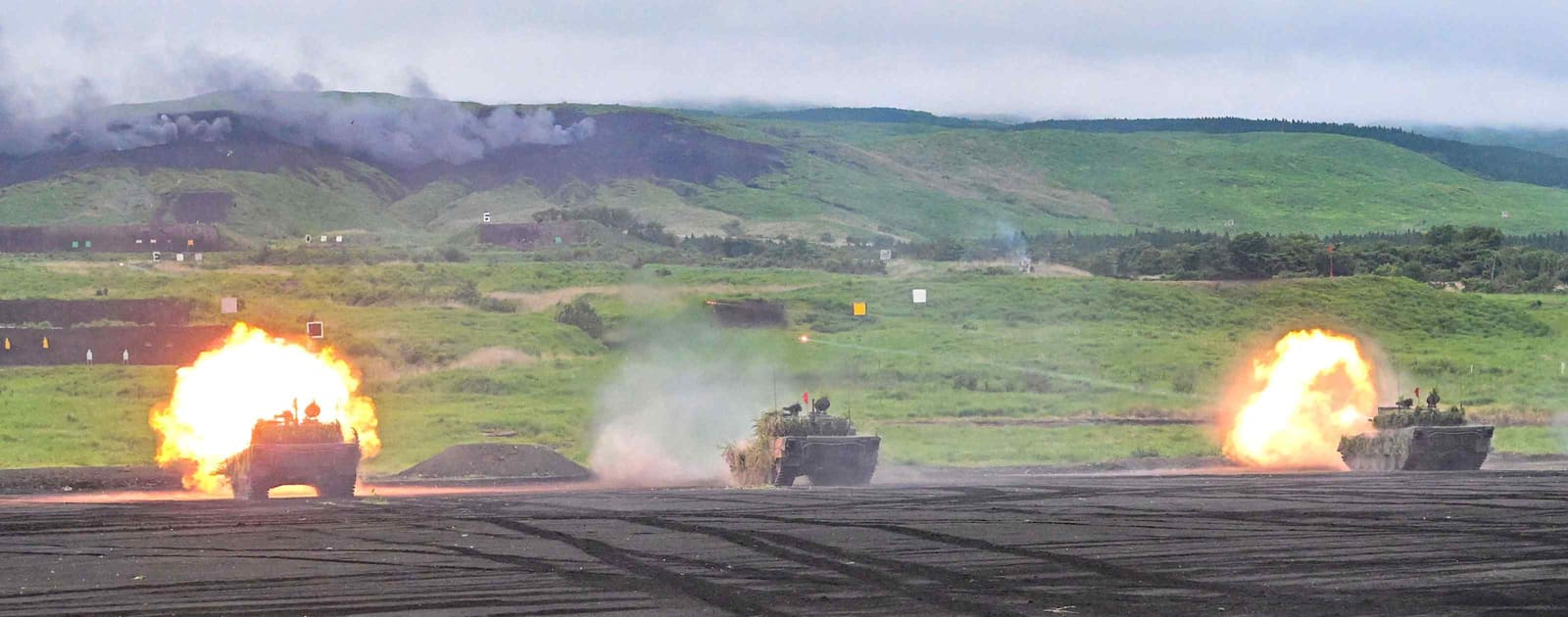
The change arrives as Japan undertakes its most significant defense buildup in decades. Tokyo has committed to doubling defense spending to 2% of GDP by fiscal 2027, a target that requires not only more funding but also a domestic industrial base capable of absorbing it. Ground Self-Defense Force tanks, fighter components, naval vessels, and missile systems are all slated for volume increases under the new defense posture.
Industrial Bottlenecks and Capacity Constraints
Japan's defense contractors, many of them divisions within larger conglomerates like Mitsubishi Heavy Industries and Kawasaki Heavy Industries, have faced structural constraints. Defense work often represents a small fraction of total revenue, and without predictable order books, companies have been reluctant to dedicate production lines or hire specialized labor.
The lack of multi-year visibility has been particularly acute for smaller suppliers in the second and third tiers of the defense supply chain. These firms produce components ranging from sensors to hydraulic systems, but without firm commitments from prime contractors, they struggle to justify capital expenditure or maintain inventory buffers.
Advance notification is expected to mitigate some of these frictions. If a contractor knows the ministry plans to procure 50 units of a particular vehicle over three years rather than learning about orders on an annual basis, it can negotiate better pricing on raw materials, schedule production runs more efficiently, and avoid the stop-start cycles that inflate unit costs.
Regional Context and Alliance Interoperability
The move also reflects broader regional dynamics. Japan has been deepening defense industrial cooperation with the United States, Australia, and other Indo-Pacific partners. In recent months, Tokyo has explored joint production arrangements for missiles, discussed licensed manufacturing of American drones, and participated in trilateral exercises with Washington and Seoul.
Transparency in procurement planning can improve interoperability. If allied nations and industry partners understand Japan's equipment pipeline, they can align their own production schedules, spare parts inventories, and maintenance protocols. This is especially relevant for systems that involve shared components or technology transfers under Foreign Military Sales programs.
Japan has also been recalibrating its export control posture, opening the door to defense equipment transfers that were previously restricted. Clearer domestic procurement signals can help potential export customers gauge whether Japan has the industrial capacity to support foreign orders without compromising its own defense readiness.
Implementation and Industry Response
Details on the notification mechanism remain under development. The ministry has not yet disclosed whether advance disclosures will take the form of published procurement roadmaps, confidential briefings to qualified contractors, or formal requests for information that signal future competitions.
Industry representatives have cautiously welcomed the initiative, noting that even rough order-of-magnitude guidance would represent an improvement over current practice. However, some have pointed out that advance notification alone may not be sufficient if budgets remain subject to annual appropriations battles or if geopolitical shifts lead to abrupt changes in priorities.
For the policy to deliver its intended benefits, contractors will need confidence that disclosed plans translate into actual contracts. That will depend on the ministry's ability to secure stable funding from the Ministry of Finance and maintain political consensus around defense spending levels.
The initiative is part of a wider effort to professionalize and modernize Japan's defense acquisition system. Recent reforms have included the adoption of multi-year contracting authority, streamlined approval processes for urgent procurements, and the establishment of a dedicated unit to manage industrial base issues.
As Japan recalibrates its security strategy in response to tensions over Taiwan, North Korean missile tests, and China's military expansion, the strength of its domestic defense industry has become a strategic variable in its own right. Advance procurement transparency is a modest but concrete step toward making that industry more resilient and responsive.
RELATED STORIES
Nuclear Weapons Contractors See 30% Surge in Financial Backing
Cheng Wei-Lun · 3 min

Over Ten Nations Express Interest in Japan-UK-Italy Fighter Jet at Farnborough
Cheng Wei-Lun · 3 min
Japanese Companies Push for Currency Stability as Weak Yen Squeezes Margins
Aiko Nakamura · 3 min

Modi Set to Address Nation Amid Job Crisis as SMIC Reports Earnings
Priyanka V. Rao · 4 min
Spot something wrong? Email editor@briefasia.com. We log every correction publicly.