Asia · Business
Over Ten Nations Express Interest in Japan-UK-Italy Fighter Jet at Farnborough
Export revenue critical to offset development costs as trilateral defense project gains traction beyond founding partners
KEY TAKEAWAYS
- ·More than ten countries have expressed interest in the Japan-UK-Italy next-generation fighter jet displayed at the Farnborough International Airshow.
- ·Program leadership stated that export sales are essential to recoup the multi-billion-dollar development costs shared among the three founding nations.
- ·The trilateral partners extended the development contract through 2027, with first flight expected in the late 2020s and operational capability in the mid-2030s.
Growing Export Pipeline
The trilateral fighter jet program uniting Japan, the United Kingdom, and Italy has drawn inquiries from more than ten countries, the organization's leadership confirmed at the Farnborough International Airshow. The disclosure underscores rising global demand for advanced air combat platforms and the strategic imperative to spread development costs across a broader customer base.
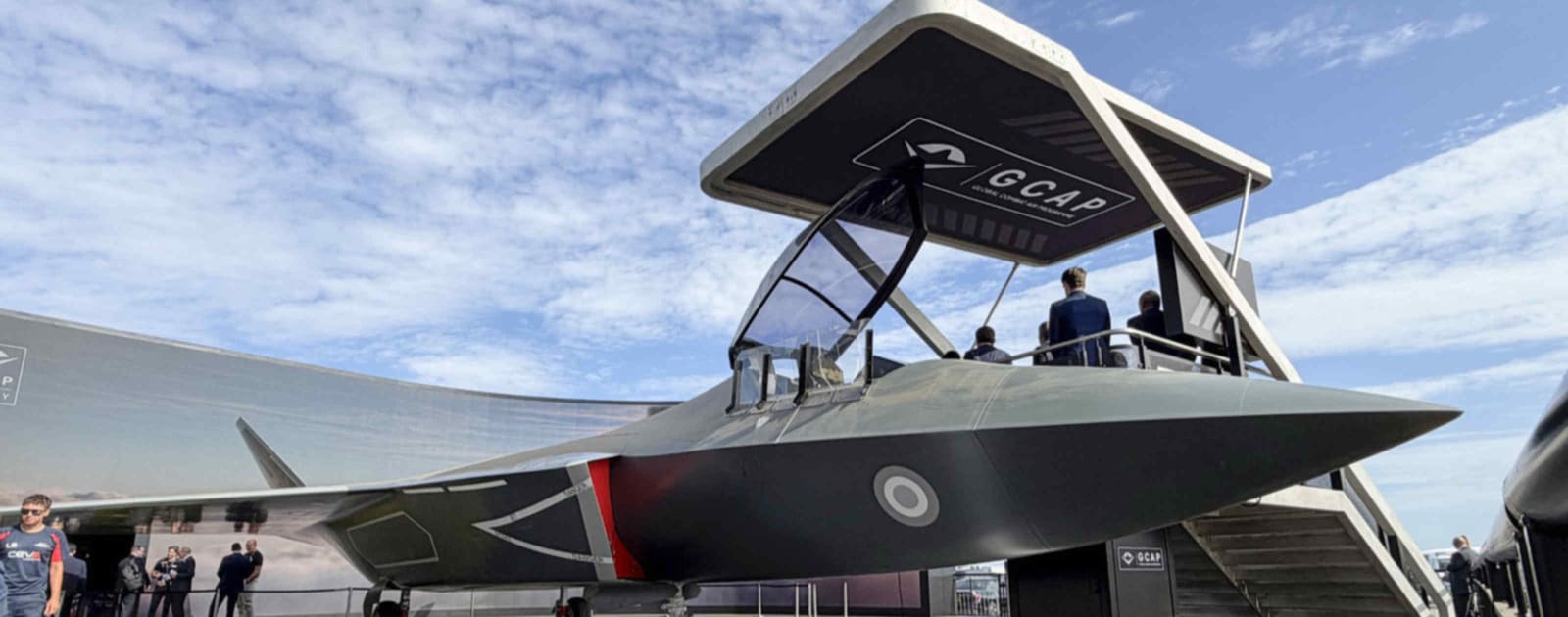
A full-scale mockup occupied prime exhibition space at Farnborough, offering potential buyers their first detailed look at the airframe configuration and design philosophy. The program head stressed that export revenue will be essential to offsetting the multi-billion-dollar investment required to field the aircraft.
Asia's First Indigenous Fifth-Generation Program
Japan's participation marks a watershed in the country's defense industrial strategy. Tokyo has historically relied on licensed production or direct procurement of American platforms, making this the first indigenously led fighter development effort in decades. The decision to co-develop rather than purchase off-the-shelf reflects both capability ambitions and a desire to retain sovereign technology.
For the UK and Italy, the project fills a gap left by withdrawing from competing European initiatives. Both nations operate aging Typhoon fleets and face budget constraints that make solo development impractical. The trilateral structure distributes engineering workload, shares financial risk, and creates a larger potential production run to drive down unit costs.
Export Economics
Defense analysts have long questioned whether niche fighter programs can achieve financial sustainability without exports. Development outlays for modern combat aircraft routinely exceed six billion dollars, and production runs limited to the founding nations rarely generate economies of scale.
The program leadership's emphasis on international sales signals recognition of this reality. Securing commitments from even a handful of the interested countries could add dozens of airframes to the production pipeline, reducing per-unit costs and justifying investment in advanced manufacturing infrastructure.
Potential customers span several regions. Nations operating legacy platforms from the 1980s and 1990s face block obsolescence over the next decade, creating a replacement window. Countries seeking to reduce dependence on a single supplier also represent natural prospects, particularly if geopolitical shifts make diversification attractive.
Technology Transfer and Industrial Participation
Export negotiations for advanced fighters typically involve complex offsets and technology-sharing arrangements. Prospective buyers often demand domestic assembly, component manufacturing, or integration of indigenous subsystems. Balancing these requirements against the need to protect sensitive technologies will shape how the trilateral partners structure future sales.
Japan's export control framework, liberalized in recent years, still imposes tighter restrictions than those of European NATO members. Harmonizing the three nations' technology transfer policies will be critical to presenting a unified offer to third countries.
The aircraft incorporates next-generation sensor fusion, network-centric warfare capabilities, and propulsion advances designed to deliver supercruise performance without afterburner. Maintaining technological edge while enabling affordable export variants will require careful configuration management.
Regional Implications
Interest from multiple countries also carries strategic weight. Defense procurement decisions often reflect alliance structures and geopolitical alignment. Sales to Indo-Pacific nations would reinforce security partnerships and interoperability with Japan's air force, while European or Middle Eastern customers would deepen ties with the UK and Italy.
Canada's recent announcement that it will participate as an observer opens a potential path for other nations to join in development or early production phases. Observer status allows access to technical briefings and program milestones without full financial commitment, serving as a gateway to eventual procurement.
The timeline remains ambitious. The trilateral partners awarded a contract extension through 2027 to advance design maturity and systems integration. First flight is expected in the late 2020s, with initial operational capability targeted for the mid-2030s. Export deliveries would follow domestic production, meaning interested countries face a decade-long horizon before receiving aircraft.
What Comes Next
The Farnborough showcase represents a deliberate effort to build international momentum while the platform is still in development. Early expressions of interest allow the program to tailor export variants and production capacity planning, avoiding the costly retrofits that have plagued other multinational fighter programs.
Whether interest translates into firm orders will depend on competitive dynamics, budget realities, and the aircraft's demonstrated performance once flight testing begins. But the number of countries engaging in discussions suggests the trilateral partners have identified a viable market niche for a high-end platform positioned between American fifth-generation offerings and emerging Chinese alternatives.
RELATED STORIES

Berkshire Hathaway Eyes Larger Stakes in Japan's Top Trading Houses
Cheng Wei-Lun · 3 min

Malaysia's Rare Earth Deposits Draw Foreign Interest Ahead of China Export Controls
Priyanka V. Rao · 3 min

Honda Demands 30% Price Cuts From Suppliers in $9.4 Billion Cost Plan
Cheng Wei-Lun · 3 min

Mitsubishi Motors Brings Back Pajero SUV With Thailand Launch
Cheng Wei-Lun · 3 min
Spot something wrong? Email editor@briefasia.com. We log every correction publicly.