Technology · Dev
Intel Revives DDR4 CPUs as Memory Costs Squeeze PC Market
The chipmaker's move to reintroduce older-generation processors targets cost-sensitive buyers as AI server demand keeps DDR5 prices elevated through year-end
KEY TAKEAWAYS
- ·Intel is reintroducing DDR4-compatible processors as AI server demand keeps DDR5 memory prices roughly 40 percent higher, constraining PC affordability across Asia.
- ·Taiwan's ODMs maintained DDR4 production lines and can ramp quickly, with initial shipments expected in September targeting corporate and education buyers.
- ·The move narrows AMD's flexibility advantage and could lift second-half Asia-Pacific PC shipments by 3 to 5 percent as cost-effective configurations return to market.
A Tactical Retreat to Older Memory Standards
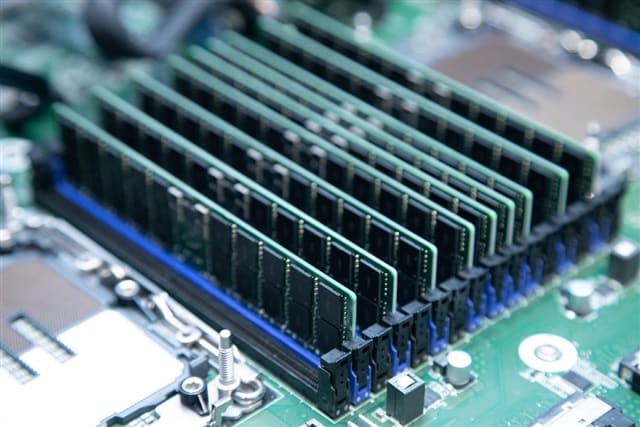
Intel is preparing to reintroduce processors compatible with DDR4 memory technology, reversing its multi-year push toward DDR5 adoption as surging AI server demand keeps newer memory prices stubbornly high. The shift represents a pragmatic response to market conditions that have made DDR5-based systems prohibitively expensive for large segments of Asia's PC buyers.
Industry observers in Taipei expect the move to unlock pent-up demand in the second half of 2026, particularly among enterprise buyers and education institutions that have delayed refresh cycles due to elevated component costs. DDR4 memory modules currently trade at roughly 40 percent below equivalent DDR5 capacity, a gap wide enough to alter purchasing decisions across commercial and consumer segments.
The decision arrives as DRAM manufacturers continue diverting production capacity toward high-bandwidth memory for AI accelerators, a trend that has kept DDR5 supply tight and prices rising through the first half of the year. Major memory producers have shown little inclination to reverse those allocation priorities, leaving PC makers to navigate a bifurcated market where performance and affordability have diverged sharply.
Asia's PC Ecosystem Adapts to Memory Realities
Taiwan's notebook ODMs have quietly maintained DDR4 production lines despite the industry's nominal transition to DDR5, anticipating exactly this scenario. Manufacturers including Quanta, Compal, and Wistron never fully retired tooling for the older standard, preserving optionality as memory market dynamics remained volatile.
That foresight now positions the island's contract manufacturers to ramp DDR4-based systems quickly once Intel's revived processors reach volume production. Supply chain sources indicate initial shipments could begin as early as September, with meaningful volume building through the fourth quarter to capture year-end corporate procurement cycles.
The strategy mirrors Intel's historical willingness to support multiple memory generations simultaneously, though this marks the first time the company has reversed course after publicly committing to a newer standard. DDR5 launched in late 2021 alongside Intel's 12th-generation Core processors, and the company had positioned the transition as irreversible by 2024.
Memory Allocation Wars Reshape Component Economics
The root cause lies in AI infrastructure buildouts that show no signs of moderating. Hyperscalers and cloud providers continue ordering HBM3 and GDDR6 memory for training clusters and inference servers, absorbing fabrication capacity that would otherwise flow to consumer DRAM products. Samsung, SK hynix, and Micron have all prioritized these higher-margin, higher-ASP products over commodity PC memory.
That reallocation has created a two-tier pricing structure where DDR5 modules command premiums that no longer reflect pure performance differences but rather supply scarcity. For PC vendors targeting education, government, and small business segments across Southeast Asia, India, and parts of China, those premiums have effectively priced DDR5 systems out of consideration.
Intel's DDR4 revival provides an escape valve, allowing vendors to offer new-generation processors with meaningful performance improvements over older chips while pairing them with affordable memory configurations. A typical 16GB DDR4 configuration costs roughly USD 45 at current spot prices, compared to USD 75 for equivalent DDR5 capacity, enough to shift a midrange business laptop from uncompetitive to viable.
Platform Implications and Competitive Dynamics
The move also carries strategic implications for Intel's competitive positioning against AMD, which has maintained broader memory compatibility across its Ryzen processor lineups. AMD's willingness to support both DDR4 and DDR5 in overlapping product generations gave system builders flexibility that Intel had effectively ceded by pushing DDR5 exclusivity.
By reintroducing DDR4 support, Intel narrows that gap and removes a tactical advantage AMD had exploited in cost-sensitive markets. The decision suggests Intel's product planning now weights market access and volume share more heavily than pure architectural progression, a shift consistent with the company's broader efforts to stabilize PC revenue amid data center challenges.
Platform vendors and motherboard makers will need to refresh product lines to accommodate the revived DDR4 processors, though the engineering lift remains modest given that much of the necessary validation work was completed during the original DDR4 era. The bigger challenge lies in managing inventory and channel positioning as two parallel memory ecosystems operate simultaneously.
Second-Half Demand Outlook
PC shipment forecasts for Asia-Pacific have been revised upward modestly on expectations that DDR4 availability will reduce effective system prices and stimulate replacement demand. Analysts project the combination of new processors and lower memory costs could add 3 to 5 percent to second-half unit volumes compared to earlier estimates, with the strongest impact in India, Indonesia, Vietnam, and the Philippines.
Corporate buyers in particular have signaled willingness to proceed with delayed upgrades if system costs retreat to 2024 levels, and DDR4 configurations offer the clearest path to that outcome. Education procurement, which follows distinct seasonal patterns across Asia, could see accelerated activity in the September-to-November window if Intel's supply ramp aligns with institutional budget cycles.
The broader question is whether this represents a temporary accommodation or a more durable split in the PC market. If AI server demand sustains current levels through 2027, DDR5 may remain a premium-tier solution while DDR4 persists as the volume standard, effectively freezing the memory transition that Intel and the broader industry had assumed would conclude by now.
For buyers, the immediate takeaway is straightforward: new systems with current-generation processors and cost-effective memory will be available later this year, ending a prolonged period where affordability and up-to-date technology were mutually exclusive choices.
RELATED STORIES
AI Demand Tightens Memory Markets as HBM4 Production Strains Supply
Cheng Wei-Lun · 3 min

Taiwan's AI Supply Chain Posts Record $89.7 Billion in August Revenue
Jun-ho Seo · 2 min

Manila's Chip Industry Still Stalled in Assembly While Taipei Built Fabs
Priyanka V. Rao · 4 min

Xiaomi Unveils 3nm Mobile Processor to Challenge Qualcomm and MediaTek
Cheng Wei-Lun · 3 min
Spot something wrong? Email editor@briefasia.com. We log every correction publicly.