Finance · Banking
Insurance Market for Data Centers Hits $10 Billion Amid New AI Risks
Nonlife insurers navigate uncharted territory as artificial intelligence infrastructure introduces cascading failure scenarios and unpredictable exposures
KEY TAKEAWAYS
- ·Data center insurance coverage is projected to reach $10 billion this year as nonlife carriers expand into AI infrastructure, a market growing faster than traditional actuarial models can price.
- ·Cascading failures pose the biggest underwriting challenge, where power grid issues can trigger GPU malfunctions and data loss, multiplying claim values in ways linear models cannot predict.
- ·Asia-Pacific markets face concentrated exposure as Singapore, Tokyo, Seoul, and Mumbai expand capacity in seismically active and climate-vulnerable zones, raising the risk of correlated losses.
A New Premium Category Emerges
Nonlife insurance carriers are confronting a fundamental challenge: how to price coverage for infrastructure they barely understand. The data center insurance market is on track to reach $10 billion in policy coverage this year, driven by the accelerating buildout of artificial intelligence compute capacity across Asia, North America, and Europe.
The growth represents a lucrative new revenue stream for insurers, but it comes with exposures that traditional actuarial models struggle to capture. Unlike conventional commercial property risks, data center failures can trigger cascading disasters where a single point of failure ripples through interconnected systems in ways that are difficult to predict or contain.
The Chain-Reaction Problem
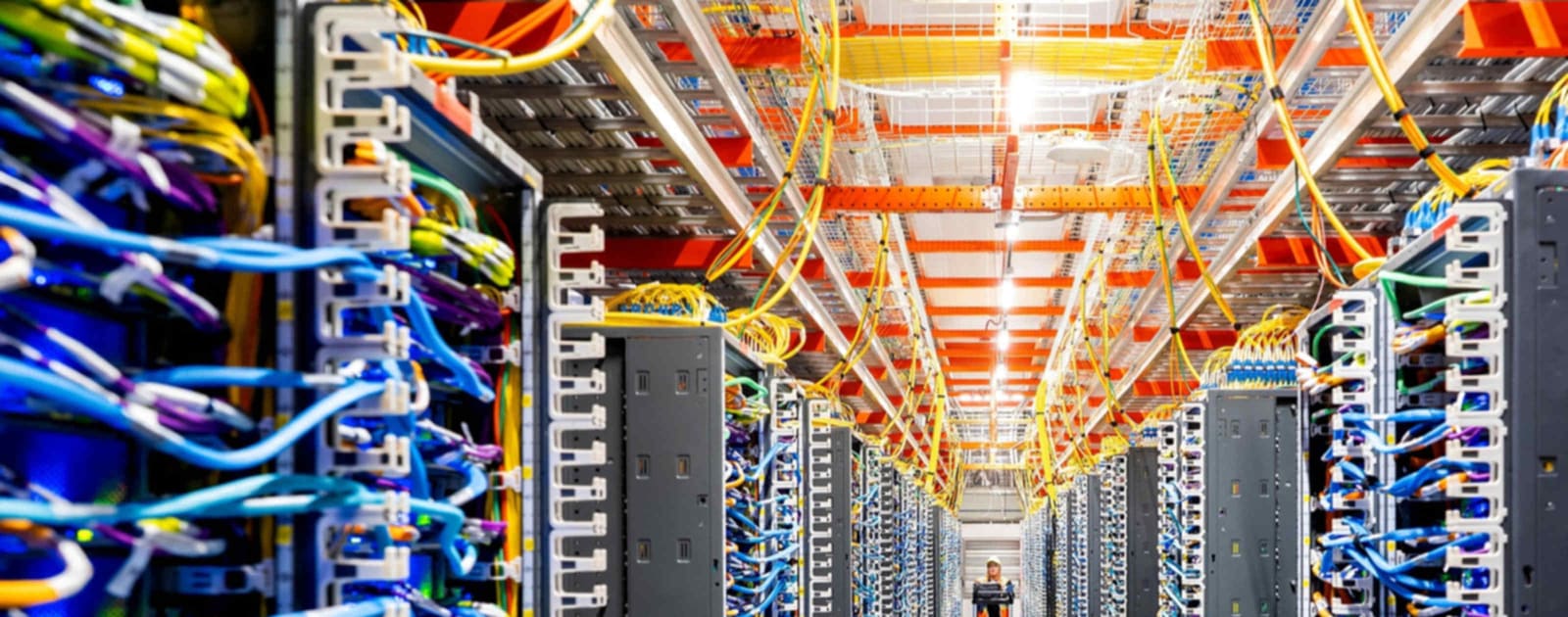
The core concern keeping underwriters cautious is what industry specialists call compounding risk. A power grid disruption at a data center does not simply mean downtime. It can cascade into graphics processing unit malfunctions, which in turn can lead to data corruption or permanent loss. Each stage multiplies the financial exposure.
This interconnectedness means that damage assessments cannot follow the linear logic applied to warehouses or office buildings. A modest electrical fault might carry a claim value orders of magnitude higher than the initial incident would suggest. Insurers are still building the loss-history databases needed to model these scenarios with confidence.
The challenge is particularly acute for AI-specific infrastructure. High-density GPU clusters generate heat loads and power demands that exceed those of traditional server farms. Cooling system failures, which might be minor nuisances in legacy facilities, can destroy millions of dollars in specialized hardware within minutes.
Underwriting in the Dark
Insurers entering the data center segment face a knowledge gap. Many carriers lack in-house expertise in AI hardware, liquid cooling systems, or the operational interdependencies of hyperscale facilities. This has led to conservative pricing in some markets and outright refusal to quote in others.
The regional dimension adds complexity. Data centers in typhoon-prone areas of Southeast Asia, earthquake zones in Japan, or flood-vulnerable regions of South Asia carry distinct physical risks. But the digital nature of the assets introduces a second layer: cyberattack vectors, ransomware exposure, and the potential for coordinated strikes on multiple facilities simultaneously.
Some insurers are responding by forming consortia to spread the risk. Others are carving out exclusions for specific failure modes or capping payouts for data loss. The market is still in price-discovery mode, with premiums varying widely depending on geography, facility age, and the insurer's appetite for emerging risk.
Asia's Exposure
The Asia-Pacific region represents both the largest growth opportunity and the highest concentration of risk. Singapore, Tokyo, Seoul, Mumbai, and Sydney are racing to expand data center capacity to meet demand from cloud providers and AI developers. But the density of these facilities in seismically active or climate-vulnerable zones amplifies the potential for correlated losses.
Japan's insurers, including Tokio Marine and MS&AD, have been among the most active in developing data center products, drawing on experience with earthquake modeling. Yet even these carriers acknowledge that AI infrastructure introduces variables their catastrophe models were not designed to handle.
The stakes extend beyond individual policies. A major loss event at a flagship AI data center could reshape the entire market, forcing widespread repricing and potentially making coverage unaffordable for smaller operators. Insurers are acutely aware that they are writing policies on infrastructure that has never been tested at scale over a full economic cycle.
What Comes Next
The $10 billion threshold marks a tipping point. At this scale, data center insurance is no longer a niche product but a meaningful segment that will attract capital, competition, and regulatory scrutiny. Expect to see more granular underwriting criteria, real-time monitoring requirements, and tiered pricing based on operational maturity.
Carriers are also likely to push for standardized risk assessments and third-party certification of data center resilience. Without industry-wide benchmarks, insurers remain vulnerable to adverse selection, where only the riskiest operators seek coverage while the most sophisticated facilities self-insure or captive their risk.
The market is moving faster than the models can keep up. For now, insurers are writing policies with one eye on the revenue potential and the other on the exit.
RELATED STORIES

Allianz Acquires HSBC Singapore Insurance Operations in $2.3 Billion Deal
Priyanka V. Rao · 3 min

Taiwanese Display Maker Qisda Bets on AI Servers to Reverse Monitor Slump
Cheng Wei-Lun · 3 min
AI Workloads Push Data Centers Beyond Design Limits
Aiko Nakamura · 3 min
Globe Telecom Sees First-Half Profit Fall 11% on Infrastructure Costs
Priyanka V. Rao · 3 min
Spot something wrong? Email editor@briefasia.com. We log every correction publicly.