Finance · Markets
Indonesian Equities Stage July Comeback as Tech Rally Loses Steam
Foreign investors begin rotating capital back into Jakarta's beaten-down market after $4 billion in outflows, seeking value plays as AI-driven winners retreat
KEY TAKEAWAYS
- ·Jakarta's benchmark index rose more than 10 percent in July after losing 28 percent year-to-date, as foreign investors rotated $4 billion back into consumer and commodity stocks.
- ·Asset managers including Invesco and Allan Gray are buying Indonesian equities trading at five times earnings, viewing them as under-valued compared to AI-driven tech plays in Korea and Taiwan.
- ·Indonesia faces an MSCI emerging-market status review in November and a rupiah down 8 percent to record lows, but S&P's recent sovereign rating affirmation has steadied near-term sentiment.
A Shift in Sentiment
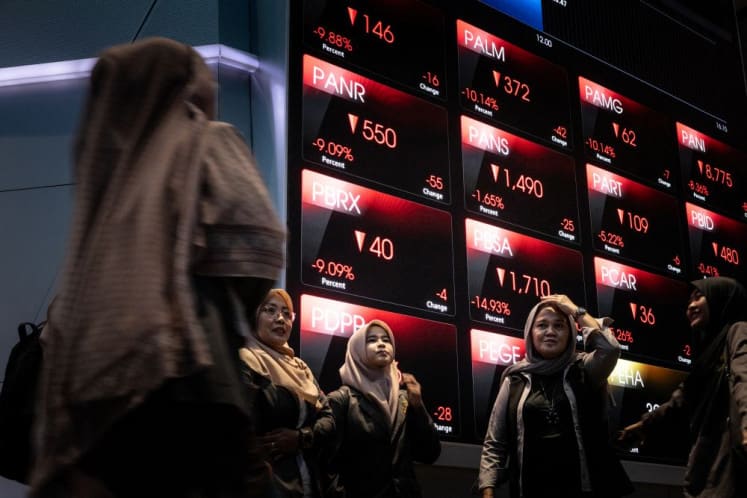
Indonesia's stock market, the region's worst performer through the first half of 2026, is drawing fresh capital as investors take profits from artificial intelligence winners and hunt for value in overlooked corners of Asia. The Jakarta Composite Index has risen more than 10 percent so far in July, reversing months of sustained foreign selling that pulled more than $4 billion out of the market.
David Chao, Asia-Pacific global market strategist at Invesco in Singapore, said his firm has been reallocating gains from South Korean holdings into Indonesian positions. The rotation reflects growing confidence that Jakarta's sell-off has created entry points, particularly in consumer staples and resource companies trading at steep discounts to regional peers.
The shift comes as technology-heavy benchmarks in Seoul and Taipei cool after a blistering rally tied to semiconductor and AI infrastructure demand. Concerns about stretched valuations and portfolio rebalancing needs have prompted institutional managers to revisit markets less exposed to chip-sector volatility.
Bargain Hunting in Consumer and Commodities
Asset manager Allan Gray made its first Indonesian investment in June, buying shares in Indofood Sukses Makmur, the parent company of the country's dominant instant noodle brand. Rory Kutisker-Jacobson, a portfolio manager at Allan Gray, noted the company trades at just over five times earnings, a valuation the firm considers attractive for a cash-generating consumer business with market dominance.
Banking and commodity stocks have also regained favor. Citi analysts highlighted Bank Central Asia, Vale Indonesia, Alamtri Minerals, and Amman Mineral International as preferred names. Aninda Mitra, head of Asia macro and investment strategy at BNY Investments, said equity valuations already reflect much of the negative sentiment, and further cheapening combined with rupiah stabilization could justify selective additions.
Data from Copley Fund Research shows that more than half of the active fund managers it tracks remain overweight on Indonesia, though the percentage invested in the country has fallen to 80.45 percent, the lowest level in fifteen years. The research firm noted the structural investment case has not disappeared, and the cost of missing a recovery may now outweigh the risk of continued patience.
Fiscal Concerns and MSCI Uncertainty Persist
The July rebound has occurred despite little improvement in the factors that triggered this year's sell-off. Indonesia's benchmark index remains down 28 percent year-to-date, weighed by questions over fiscal discipline under President Prabowo Subianto's welfare policies and the rupiah's nearly 8 percent decline to record lows.
MSCI extended its review of Indonesia's emerging-market classification earlier this year, with a decision expected in November. Most analysts anticipate the country will retain its status after regulators introduced reforms aimed at improving market transparency. S&P affirmed Indonesia's sovereign rating with a stable outlook last week, easing some investor concerns.
The $1.4 trillion economy faces additional headwinds as a net oil importer, with elevated crude prices during Middle East supply disruptions adding pressure. Arthur Budaghyan, chief emerging markets and China strategist at BCA Research, described Indonesia as a structural downgrade for many global portfolios, noting the bar for re-allocation has risen significantly.
Tentative Recovery, Not a Wholesale Reversal
Foreign capital has retreated gradually rather than exited en masse. While sentiment is improving, Indonesia is not the only market attracting renewed interest. Global investors have also been revisiting Indian and Chinese equities, diversifying away from concentrated technology exposure.
Invesco's Chao characterized Indonesia as the most under-looked macro growth story in the region. The combination of depressed valuations, a large consumer base, and resource wealth presents a contrarian opportunity for investors willing to look past near-term volatility.
The sustainability of July's gains will depend on whether Jakarta can stabilize the rupiah, demonstrate fiscal restraint, and secure a favorable MSCI ruling. For now, the rotation signals that some institutional managers believe the worst of the sell-off has passed, even as structural challenges remain unresolved.
The reprieve offers breathing room for Indonesian policymakers, but the window for rebuilding confidence is narrow. Markets will be watching closely as the November MSCI decision approaches and the government's fiscal trajectory becomes clearer in the second half of the year.
RELATED STORIES

Indonesia Commits $28 Billion to Jakarta and Bali Financial Hub Push
Priyanka V. Rao · 4 min
Indonesia Stock Exchange Tests Rupiah 1 Price Floor in Market Overhaul
Priyanka V. Rao · 3 min
From Tourism Graduate to Indonesia Electronics Distributor: Wook Eyes IPO
Cheng Wei-Lun · 3 min

CIMB Commits to 55% Dividend Floor as Regional Portfolio Offsets Indonesia Pressure
Priyanka V. Rao · 4 min
Spot something wrong? Email editor@briefasia.com. We log every correction publicly.