Asia · Business
Indonesian Consumer Spending Defies Economic Volatility
Household consumption continues to expand through political transitions and global uncertainty, challenging conventional forecasting models built on Western assumptions
KEY TAKEAWAYS
- ·Indonesian household consumption routinely expands during political transitions and macro uncertainty, contradicting conventional risk models that predict demand pullback.
- ·Consumers rely on community trust networks and shopkeeper relationships as cognitive shortcuts, simplifying decisions through relational infrastructure rather than individual analysis.
- ·Companies with deep local distribution and embedded retailer relationships outperform during volatile periods, as familiarity becomes the key variable driving purchasing behavior.
The Paradox That Isn't
Foreign analysts watching Jakarta from regional hubs like Singapore typically deploy familiar risk frameworks when Indonesia enters periods of political transition. The expectation is straightforward: consumers should defer spending, hoard cash and wait for clarity to return. Yet financial results from consumer-facing companies operating across the archipelago continue to show the opposite pattern.
Household consumption in Indonesia routinely expands during periods of macro ambiguity. This includes stretches of political handover, fiscal policy adjustment and global supply chain disruption. The gap between forecast and reality points to a structural misunderstanding of how demand functions in Southeast Asia's largest economy.
Where Western Models Break Down
Standard economic forecasting assumes an atomized consumer making decisions in isolation, armed with complete information and linear analytical capacity. When uncertainty rises, these models predict demand destruction because the theoretical individual will postpone purchases until mathematical certainty returns.
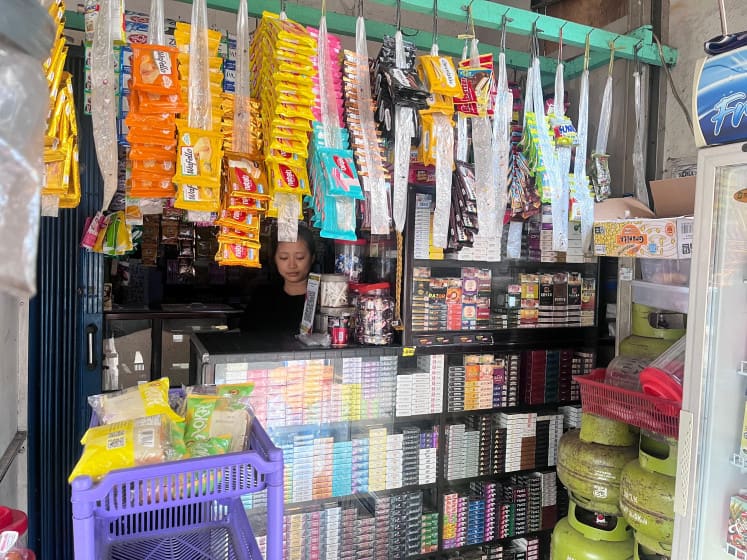
Real consumption behavior in Indonesia operates under different constraints. Consumers do not spend hours parsing inflation differentials or policy white papers. Instead, they rely on cultural shortcuts: trust networks within communities, longstanding relationships with shopkeepers and familiar brand equity. Decision-making is relational, not individualistic.
This framework aligns with bounded rationality principles, which recognize that people simplify choices when institutional frameworks shift rapidly and information remains asymmetric. Rather than freezing, Indonesian households adapt by leaning into familiar patterns and trusted relationships.
Community as Cognitive Infrastructure
The resilience of Indonesian consumption is not random. It reflects the structural role of community networks in the purchasing process. A warung keeper in a Jakarta neighborhood functions as more than a point of sale; the relationship serves as a filtering mechanism that reduces cognitive load during volatile periods.
When macro conditions become noisy, these networks intensify rather than dissolve. Consumers consolidate their purchasing within known channels, which accelerates velocity through established retail nodes even as uncertainty persists elsewhere in the system.
This dynamic explains why consumer-facing enterprises with deep local distribution networks and long-tenure retailer relationships tend to outperform during transition periods. The competitive advantage is not product differentiation or pricing power; it is embedded relational capital that functions as decision-making infrastructure.
Implications for Capital Allocation
For investors deploying capital into Indonesian consumer sectors, the implications are direct. Country-risk models calibrated to Western behavioral assumptions will systematically underprice resilience in this market. Consumption does not correlate neatly with headline political risk or policy uncertainty indices.
Instead, the relevant variables are network density, retailer tenure and brand familiarity within specific geographies. Companies that have invested in distributor relationships and community-level presence carry structural advantages that become most visible during periods of volatility.
This also means that foreign entrants relying on digital-first or direct-to-consumer strategies face steeper obstacles than conventional market-entry models suggest. Without embedded relational infrastructure, these approaches lack the cognitive shortcuts that Indonesian consumers rely on when uncertainty rises.
A Structural Advantage
The pattern is not unique to Indonesia, but the scale and consistency are distinctive. Across ASEAN markets, relational decision-making plays a role in consumption behavior. Indonesia's combination of archipelagic geography, dense community networks and uneven institutional development amplifies the effect.
This creates a structural buffer against external shocks. While export-oriented sectors remain exposed to global demand cycles, domestic consumption exhibits counter-cyclical characteristics that stabilize overall growth. The mechanism is behavioral, not fiscal.
Understanding this requires setting aside assumptions about rational, isolated consumers making optimization calculations. Indonesian households are optimizing, but the variables they weight are social and relational. Trust, familiarity and community validation reduce uncertainty more effectively than waiting for macro clarity.
For multinational corporations and regional investors, the lesson is operational. Success in this market requires building relational infrastructure at the community level, not just scaling distribution logistics. The payoff becomes visible precisely when conventional risk models predict retreat.
RELATED STORIES

Indonesia's Education Bill Revision Could Reopen Funding Door for Free Meals Program
Siti Nuraini · 3 min

Indonesia Begins Domestic Construction of Scorpene Submarines in Regional First
Siti Nuraini · 3 min

Indonesia Car Sales Jump 34% as Electric Vehicles Reshape Southeast Asia's Auto Market
Siti Nuraini · 3 min

Indonesia's Growth Numbers Hide Shrinking Savings and Rising Household Debt
Priyanka V. Rao · 4 min
Spot something wrong? Email editor@briefasia.com. We log every correction publicly.