Sustainability · Energy
Indonesia's Solar Capacity Stalls at 1.6 GW, Decades Behind National Goals
Coal reliance, infrastructure gaps, and funding shortfalls slow the archipelago's renewable energy pivot as installation rates trail government ambitions.
KEY TAKEAWAYS
- ·Indonesia's solar capacity stands at 1.6 gigawatts as of April 2026, far below the 17 GW expansion target set for this year under the government's renewable energy program.
- ·Coal dependency, inadequate transmission infrastructure, and a funding shortfall in the tens of billions of dollars are slowing utility-scale solar deployment across the archipelago.
- ·Meeting even a scaled-back 3 to 4 GW goal for 2026 will require faster permitting, mobilized financing, and grid upgrades that typically take 18 to 24 months to complete.
The Reality Gap
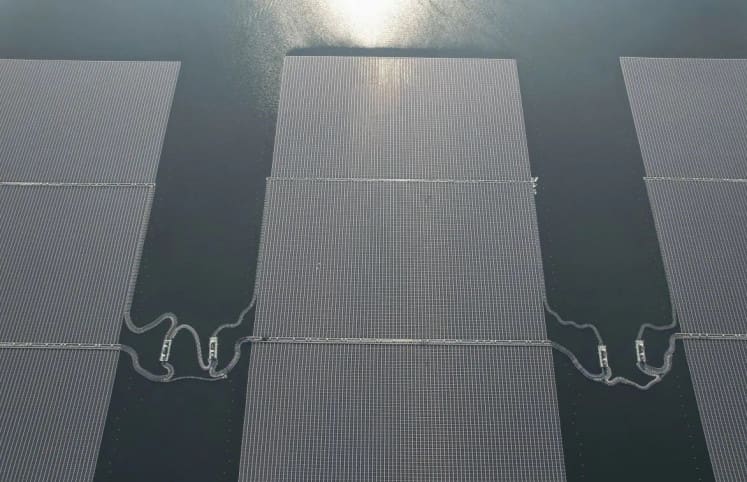
Indonesia's solar installed capacity sits at approximately 1.6 gigawatts as of April 2026, a figure that includes large-scale projects such as the Masdar facility in Cirata, West Java. The number falls dramatically short of the government's renewable energy targets, according to data from state electricity company PLN's Electricity Supply Business Plan for 2025-2034.
The plan calls for an additional 1.6 GW to come online this year alone. When measured against President Prabowo Subianto's broader 100 GW program, which envisions 17 GW of new solar capacity in 2026, the gap widens to a chasm. Ahmad Zuhdi Dwi Kusuma, associate principal at the Energy Shift Institute, said in mid-July that the country is clearly off track across capacity, installation pace, and expansion planning.
Infrastructure and Funding Constraints
Three obstacles dominate the landscape: persistent coal dependency, inadequate transmission infrastructure, and a funding shortfall. Indonesia's grid remains anchored to coal-fired generation, which delivers predictable baseload power at a cost structure that solar has struggled to undercut in the archipelago's regulatory environment.
Transmission infrastructure poses a second barrier. Solar farms require grid connections capable of handling variable output, yet many regions lack the necessary substations and high-voltage lines. The Cirata floating photovoltaic plant, while operational, represents an exception rather than a template; replicating that model across Java, Sumatra, and the eastern islands demands capital and coordination that have not materialized at scale.
Funding remains the binding constraint. The 100 GW program carries an implicit price tag in the tens of billions of dollars, yet neither domestic banks nor international development finance has committed capital at the required velocity. Without concessional loans or blended finance structures, utility-scale solar projects struggle to close financing gaps, particularly in outer provinces where offtake risk and currency exposure deter private investors.
Expansion Still Moving Forward
Despite the shortfall, solar capacity continues to grow, albeit at a slower tempo than policy documents suggest. Zuhdi noted that the direction remains positive, with new installations occurring across the archipelago. The Cirata project, developed by Masdar, added meaningful capacity when it came online, and smaller rooftop and mini-grid projects have proliferated in urban and peri-urban areas.
PLN has signed power purchase agreements for additional solar projects, though many face delays in land acquisition and permitting. The regulatory environment has improved incrementally, with feed-in tariff adjustments and net metering pilots in select provinces. These steps have not, however, translated into the exponential growth envisioned under the national program.
Regional Context
Indonesia's solar trajectory contrasts sharply with neighboring Vietnam, which added more than 16 GW of solar capacity between 2019 and 2021 through aggressive feed-in tariffs and streamlined approvals. Thailand and the Philippines have likewise accelerated installations, leveraging competitive auctions and corporate renewable energy mandates.
The archipelago's coal endowment and low electricity tariffs create a political economy that favors incumbents. State-owned coal producers and coal-fired power plants operate with sunk capital and established supply chains, making the marginal cost of coal generation attractive to utilities focused on short-term dispatch economics. Solar, by comparison, requires upfront capital and long-term offtake commitments, a structure that clashes with Indonesia's historically risk-averse power sector.
What Comes Next
Meeting the 17 GW target for 2026 now appears implausible. Even a scaled-back goal of 3 to 4 GW would require a sharp acceleration in permitting, financing, and construction. PLN's procurement pipeline includes several hundred megawatts of projects in advanced stages, but mobilizing contractors, securing land rights, and energizing grid connections typically span 18 to 24 months from financial close.
The government has signaled continued commitment to renewable energy, with recent cabinet discussions emphasizing the need to diversify the generation mix and reduce emissions intensity. Whether that rhetoric translates into policy action, streamlined approvals, or catalytic public investment will determine whether Indonesia's solar ambitions remain aspirational or become operational.
RELATED STORIES
Indonesia Seeks 100GW Solar Build From China, But Not Chinese Ownership
Priyanka V. Rao · 3 min
Southeast Asian Firms Race to Raise Green Debt as Region Falls Behind on Renewables
Priyanka V. Rao · 3 min
Indonesia's Palm Oil Zones Account for Bulk of Fire-Ravaged Land This Year
Siti Nuraini · 4 min
Indonesia Faces Tension Between Petrochemical Growth and Plastic Reduction Goals
Siti Nuraini · 4 min
Spot something wrong? Email editor@briefasia.com. We log every correction publicly.