Asia · Business
Indonesia Reviews School Meal Program to Strengthen Local Food Systems
National Nutrition Agency shifts focus from rapid expansion to community-rooted model linking child nutrition with regional agriculture
KEY TAKEAWAYS
- ·Indonesia's National Nutrition Agency suspended dozens of kitchen units after hygiene failures and is shifting its school meal program from rapid expansion to quality enforcement and local procurement.
- ·The agency is exploring a homegrown model that sources ingredients from nearby farms to create stable markets for smallholder producers while delivering fresh meals to students.
- ·Success depends on coordinating education, agriculture and health agencies to help farmers meet safety standards and manage institutional contracts across thousands of islands.
Program Recalibration Under Way
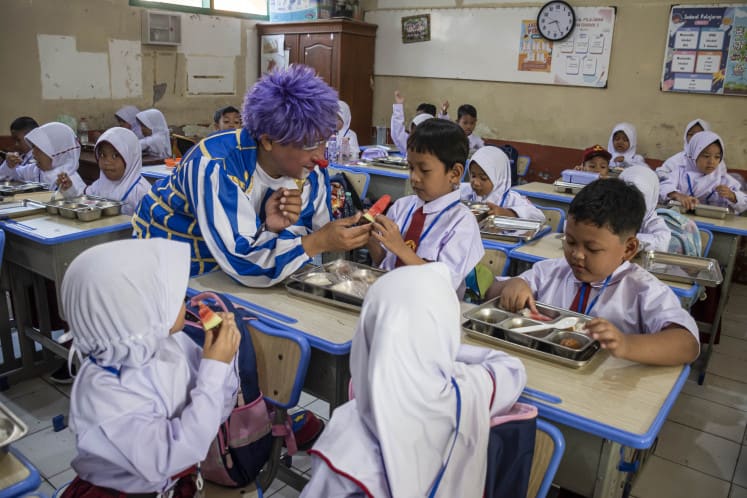
Indonesia's National Nutrition Agency has temporarily suspended dozens of nutrition fulfillment service units after hygiene inspections revealed operational shortcomings, marking a deliberate shift in the country's ambitious free nutritious meal program. The move follows leadership changes at the agency and broader reviews of procedures governing the initiative, which aims to deliver daily meals to millions of schoolchildren across the archipelago.
The suspensions reflect a strategic pivot from prioritizing speed of rollout to ensuring program quality and institutional accountability. Officials are now emphasizing adaptation to local conditions over uniform national distribution, a change that could reshape how the world's fourth most populous nation feeds its students.
From Centralized Distribution to Local Procurement
The agency is exploring a transition toward what international development circles call the homegrown school meals model. Under this approach, school feeding programs source ingredients from nearby farms and producers rather than relying on centralized supply chains, creating stable demand for smallholder agriculture while delivering fresh food to classrooms.
The model has gained traction globally as governments recognize that school meals can achieve multiple objectives beyond child nutrition. Programs designed around local procurement can provide predictable markets for regional farmers, stimulate microenterprises in food processing and catering, and reinforce dietary preferences for indigenous crops and traditional foods.
Indonesia has prior experience with community-linked feeding initiatives. The earlier school-aged child nutrition program paired meal delivery with nutrition education and local food sourcing, demonstrating feasibility before budget constraints curtailed its scope. That foundation may ease the transition as policymakers reconsider the architecture of the current effort.
Balancing Scale With Community Fit
The free nutritious meal program was launched with explicit goals extending beyond immediate hunger relief. Government planning documents framed the initiative as an investment in human capital formation, anticipating long-term gains in educational attainment, workforce productivity and public health outcomes as today's students mature into tomorrow's labor force.
Achieving those outcomes at national scale has proven complex. Indonesia's geography spans thousands of inhabited islands, diverse agricultural systems and wide variation in local governance capacity. A feeding model optimized for urban Java may falter in eastern provinces where supply chains are thinner and infrastructure more limited.
Recent operational reviews have exposed gaps in hygiene compliance and quality control at contracted kitchens. Rather than accelerate expansion, the agency opted to enforce standards and suspend non-compliant units, accepting short-term disruption to build credibility and safeguard child health.
Regional Economic Spillovers
Advocates of the homegrown approach argue that decentralizing procurement can generate economic benefits that extend well beyond school gates. When meal programs commit to purchasing rice, vegetables, poultry and fish from nearby producers, they create predictable revenue streams that enable farmers to invest in improved seeds, equipment and techniques.
Those purchases also keep more money circulating within regional economies rather than flowing to distant suppliers or multinational food companies. For rural districts with limited industrial employment, school meal contracts can represent meaningful income stability for agricultural households.
The model requires coordination across multiple government agencies. Education ministries must align meal schedules and menus with what local farmers can reliably supply. Agriculture departments need to help smallholders meet food safety standards and aggregate output to meet institutional demand. Health authorities must monitor nutritional adequacy and kitchen hygiene.
Policy Questions Ahead
Indonesia's nutrition agency faces several design choices as it refines the program. Procurement rules will need to balance preferences for local sourcing with cost discipline and supply reliability. Contracts must be structured to protect small producers from payment delays while holding vendors accountable for quality.
Capacity building will be essential. Many rural communities lack experience managing institutional food contracts, and farmers may need training in food safety protocols, record-keeping and collective marketing. Regional governments will require technical support and clear guidelines as they assume greater operational responsibility.
The agency has not announced a timeline for broader adoption of the homegrown model or specified which regions might pilot the approach. Officials have indicated that the current pause in expansion will allow time to strengthen systems before resuming growth.
Building Trust Through Transparency
The decision to suspend underperforming kitchens signals a willingness to prioritize program integrity over political optics. Large-scale social programs often face pressure to demonstrate rapid progress, creating incentives to overlook implementation problems or inflate performance metrics.
By publicly acknowledging gaps and taking corrective action, the nutrition agency may be laying groundwork for more sustainable expansion. Trust in government feeding programs depends on consistent delivery of safe, nutritious meals. A slower rollout that earns confidence from parents and communities could prove more durable than rushed deployment followed by scandals or health incidents.
The ultimate test will be whether the program can deliver measurable improvements in child nutrition indicators while generating economic opportunities for the farmers and food workers who supply it. If Indonesia succeeds in linking school meals to local food systems at scale, the model could offer lessons for other populous, geographically dispersed nations grappling with similar challenges.
RELATED STORIES
Indonesia Charges Toba Pulp Lestari in $113 Million Tax Fraud Probe
Siti Nuraini · 3 min

Indonesia's Instant Noodle Consumption Falls for First Time in Five Years
Priyanka V. Rao · 3 min

Five ASEAN Members Back Regional Oil Stockpile as Study Nears Completion
Tran Quoc Bao · 3 min

Indonesia Faces Critical Choice Between Resource Control and Industrial Growth
Tran Quoc Bao · 3 min
Spot something wrong? Email editor@briefasia.com. We log every correction publicly.