Asia · Politics
Indonesia's Research Agency Presents Nuclear and AI Strategy to President
BRIN outlined plans spanning nuclear power infrastructure, domestic semiconductor production, and water technology in an August 6 briefing with Prabowo
KEY TAKEAWAYS
- ·Indonesia's National Research and Innovation Agency briefed President Prabowo on August 6, presenting plans for nuclear power systems, AI chip manufacturing, and potable water facilities.
- ·The nuclear proposal represents a renewed push for domestic atomic energy capacity in a country where coal provides 60 percent of electricity and renewable targets remain unmet.
- ·BRIN's AI and semiconductor agenda aims to build indigenous chip production capability, a sector where Indonesia currently has minimal presence and faces steep technical and capital barriers.
Strategic Technology Agenda
Indonesia's National Research and Innovation Agency briefed President Prabowo Subianto on August 6, presenting a portfolio of technology initiatives designed to underpin the government's development priorities. The agency, known as BRIN, outlined work spanning nuclear power systems, artificial intelligence capabilities including semiconductor manufacturing, and potable water infrastructure.
The presentation signals the administration's intent to position state research capacity at the center of economic planning. BRIN's agenda touches three domains where Indonesia has historically relied on foreign technology and capital: energy generation, advanced computing, and water access.
Nuclear Power Ambitions
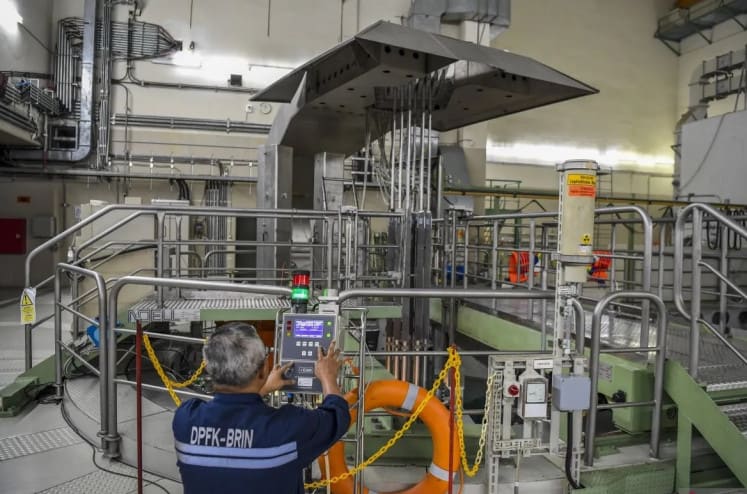
The nuclear power ecosystem proposal represents one of the more ambitious elements in BRIN's briefing. Indonesia has explored atomic energy for decades without building a commercial reactor, constrained by cost, regulatory complexity, and public concerns over safety. The agency's current work suggests a renewed push to develop domestic nuclear capacity, though specifics on reactor designs, timelines, or funding were not disclosed in the August meeting.
Southeast Asia's largest economy faces mounting electricity demand as manufacturing expands and the middle class grows. Coal still dominates the generation mix, accounting for roughly 60 percent of installed capacity. Renewable energy targets have proven difficult to meet, and natural gas supplies are tightening. Nuclear power offers baseload generation without carbon emissions, but requires substantial upfront investment and long lead times.
BRIN's involvement points to a government strategy that emphasizes indigenous research rather than turnkey imports. Whether that approach can accelerate deployment or will add years to an already protracted timeline remains an open question.
Semiconductor and AI Push
The artificial intelligence component of BRIN's presentation included work on chip manufacturing, a sector where Indonesia has minimal presence. Global AI infrastructure depends on advanced semiconductors, most of which are designed in the United States or Europe and fabricated in Taiwan, South Korea, or China. Building domestic production capability would require significant capital, access to lithography equipment subject to export controls, and a skilled workforce.
Indonesia has watched neighbors like Vietnam and Malaysia attract semiconductor assembly and testing facilities in recent years, drawn by lower labor costs and proximity to supply chains. Moving upstream into chip design or fabrication represents a far steeper challenge. BRIN's pitch suggests the government sees AI and semiconductor capacity as strategic assets worth pursuing despite the barriers.
The agency did not specify whether its work involves research partnerships with established chipmakers, plans for a state-backed foundry, or efforts to train engineers in semiconductor processes. Those details will determine whether the initiative advances beyond the pilot stage.
Water Infrastructure
BRIN also presented work on potable water facilities, addressing a persistent infrastructure gap. Millions of Indonesians lack reliable access to clean drinking water, particularly in rural areas and on islands outside Java. Existing water treatment systems are often outdated or operate below capacity due to maintenance issues and funding shortfalls.
The agency's involvement in water technology could signal a focus on decentralized treatment systems, desalination for coastal communities, or filtration methods suited to Indonesia's variable water quality. Clean water access intersects with public health, agricultural productivity, and urban development, making it a priority across multiple ministries.
Institutional Role
BRIN was established in 2021 by merging several existing research bodies, consolidating funding and eliminating bureaucratic overlap. The agency reports directly to the president, giving it a mandate to align research with national policy goals. The August 6 meeting reflects that structure, with BRIN positioning itself as the technical arm of the administration's economic strategy.
How the agency's proposals translate into funded programs will depend on budget allocations, private sector participation, and coordination with line ministries responsible for energy, industry, and public works. Indonesia's development agenda under Prabowo emphasizes self-reliance and technology sovereignty, themes that align with BRIN's portfolio but require sustained political commitment and capital to realize.
The nuclear, AI, and water initiatives outlined in the briefing represent long-term bets on sectors where Indonesia currently lacks scale. Whether the government can mobilize the resources and expertise to move from research proposals to operational systems will shape the country's technology landscape for years to come.
RELATED STORIES
Indonesia Faces Digital Data Sovereignty Question as AI Economy Grows
Siti Nuraini · 3 min
Indonesia's Education Bill Revision Could Reopen Funding Door for Free Meals Program
Siti Nuraini · 3 min
Indonesia Begins Domestic Construction of Scorpene Submarines in Regional First
Siti Nuraini · 3 min

Indonesia Car Sales Jump 34% as Electric Vehicles Reshape Southeast Asia's Auto Market
Siti Nuraini · 3 min
Spot something wrong? Email editor@briefasia.com. We log every correction publicly.