Asia · Politics
Indonesia Faces Digital Data Sovereignty Question as AI Economy Grows
The nation's tech policy debate echoes a 2007 dispute over H5N1 virus samples, raising questions about who captures value from Indonesian resources.
KEY TAKEAWAYS
- ·Indonesia is debating whether to treat digital data as a strategic national asset, similar to its 2007 stance on H5N1 virus samples when it questioned benefit-sharing arrangements with pharmaceutical companies.
- ·The country represents one of the richest sources of linguistic data for AI training, with 270 million people generating digital activity across hundreds of languages that technology companies seek to access.
- ·Jakarta must decide between a permissive approach that attracts investment or requirements ensuring Indonesian data contributes to domestic economic development and technological capability.
The New Resource Debate
Indonesia is wrestling with whether to treat its digital data as a strategic national asset or simply an input for foreign technology companies, a debate that parallels the country's 2007 standoff over H5N1 avian influenza virus samples.
Nearly two decades ago, Jakarta questioned the fairness of donating blood samples for vaccine development when the resulting products would be sold back at prices the country could not afford. Today, the resource in question is digital data, particularly the linguistic and cultural information that feeds large language models powering artificial intelligence systems worth billions of dollars.
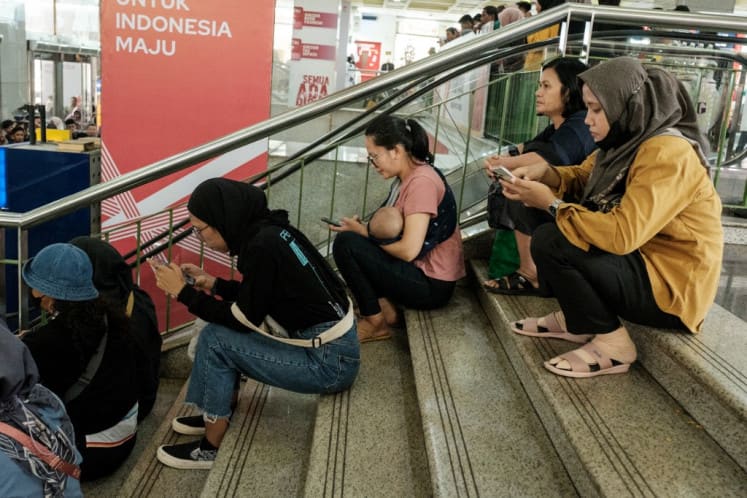
The United States has pressed Indonesia to adopt a more relaxed stance toward IT companies operating in the archipelago. At stake is access to one of the world's richest sources of linguistic diversity, with Indonesia's 270 million people generating vast quantities of digital activity across hundreds of languages and dialects.
Value Capture and Benefit-Sharing
The parallel to the H5N1 controversy is striking. In 2007, Indonesian officials argued that while the nation's virus samples helped foreign pharmaceutical firms develop vaccines, Indonesia should receive affordable access to those products. The government challenged the model in which countries providing essential resources remained passive suppliers while others captured most commercial value.
That dispute contributed to broader international discussions on equitable access and benefit-sharing in global health. The World Health Organization eventually established frameworks addressing pandemic preparedness and fair distribution of medical countermeasures.
Now, as AI systems trained on massive datasets generate substantial economic returns, Indonesia faces a similar calculus. Digital footprints from Indonesian users, their search queries, social media posts, and online behavior help train models that power commercial applications. The question is whether Jakarta will secure a share of that value or simply facilitate data extraction.
Strategic Considerations for Policy
Indonesia's position as a data-rich nation gives it leverage in negotiations with technology companies. The archipelago's linguistic complexity, with Bahasa Indonesia as the national language alongside regional languages like Javanese, Sundanese, and hundreds of others, represents valuable training material for AI models seeking to serve Southeast Asian markets.
Data sovereignty has become a priority for governments across Asia. China maintains strict data localization requirements. Vietnam has implemented cybersecurity laws mandating local data storage. India is developing frameworks for cross-border data flows that balance economic openness with national interests.
Jakarta must decide whether to follow a permissive approach that attracts investment but may limit domestic value capture, or impose requirements that ensure Indonesian data contributes to local economic development and technological capability.
Commercial and Geopolitical Dimensions
The AI economy is projected to add trillions of dollars to global GDP over the next decade. Large language models require enormous datasets for training, and companies building these systems seek access to diverse linguistic and cultural information to improve performance and expand market reach.
For Indonesia, the stakes extend beyond immediate economic returns. Control over data flows intersects with questions of cultural preservation, privacy protection, and technological independence. If Indonesian data trains foreign AI systems while domestic developers lack comparable resources, the country risks deepening technological dependence.
The debate also carries geopolitical weight. As Washington and Beijing compete for influence in Southeast Asia's digital economy, Indonesia's data policy choices will shape regional technology architecture and determine which standards and systems gain dominance.
Path Forward
Indonesia's government has yet to articulate a comprehensive data strategy that addresses these tensions. Current regulations focus primarily on privacy protection and cybersecurity rather than strategic value capture from data as a national resource.
The H5N1 episode demonstrated that middle-income countries can challenge established international frameworks when they perceive unfair arrangements. Whether Jakarta takes a similar stance on digital data will depend on domestic political priorities, pressure from technology companies and foreign governments, and the country's assessment of its own leverage.
What remains clear is that Indonesia's digital data represents significant value in the AI era. The question is whether that value will primarily benefit foreign technology companies or contribute to Indonesia's own development objectives. The answer will shape the country's position in the global digital economy for years to come.
RELATED STORIES
Indonesia's Research Agency Presents Nuclear and AI Strategy to President
Siti Nuraini · 3 min

Indonesia's Education Bill Revision Could Reopen Funding Door for Free Meals Program
Siti Nuraini · 3 min

Indonesia Begins Domestic Construction of Scorpene Submarines in Regional First
Siti Nuraini · 3 min

Indonesia Car Sales Jump 34% as Electric Vehicles Reshape Southeast Asia's Auto Market
Siti Nuraini · 3 min
Spot something wrong? Email editor@briefasia.com. We log every correction publicly.