Finance · Deals
Indonesia Regulator Sets September Deadline for Stock Exchange Demutualization Rule
OJK targets mid-September for regulation that will open IDX ownership to external investors, including state asset fund Danantara
KEY TAKEAWAYS
- ·Indonesia's Financial Services Authority will issue the Indonesia Stock Exchange demutualization regulation in the second week of September 2026, converting the broker-owned bourse into a shareholder-owned company.
- ·The revised Financial Sector Development and Strengthening Law provides legal basis but leaves open whether the exchange can list its own shares, prompting OJK to study global precedents.
- ·State asset fund Danantara has expressed interest in acquiring stakes, while the reform aims to address MSCI transparency concerns and attract greater foreign institutional investment.
Timeline Locked In
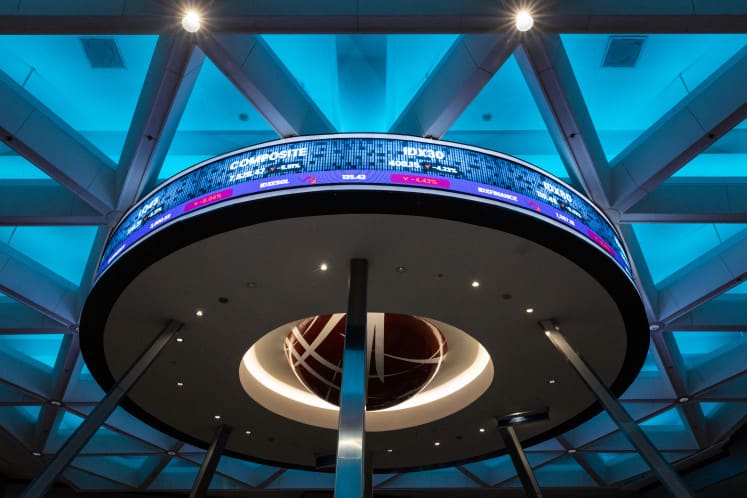
Indonesia's Financial Services Authority has set a firm target for issuing the Indonesia Stock Exchange demutualization regulation in the second week of September 2026. The move will convert the bourse from its current structure as a member-owned entity controlled by securities brokerages into a company open to external shareholders.
Hasan Fawzi, the OJK's chief capital market supervisor, confirmed the timeline Wednesday after consulting with the exchange and the Indonesian Securities Companies Association. The regulator structured the process to preserve independence for both the OJK and the bourse while creating what Fawzi described as a comprehensive and workable framework.
State asset fund Danantara has already signaled interest in acquiring a stake once the transformation clears regulatory hurdles. The demutualization forms part of a broader capital market reform package introduced earlier in 2026 to address transparency concerns raised by MSCI, the global index compiler whose decisions carry significant weight for foreign institutional flows into Indonesian equities.
Legal Foundation in Place
The revised Financial Sector Development and Strengthening Law provides the legal basis for the demutualization plan. However, the statute leaves critical procedural questions unanswered, particularly around whether the IDX itself could list shares on its own platform following the ownership restructure.
Fawzi noted that the OJK will examine international precedents before determining whether to assign a ticker code should the exchange pursue a public offering. The scenario of a bourse trading its own equity on its own screens raises operational and conflict-of-interest questions that vary across jurisdictions.
Global exchanges have taken divergent paths. The Singapore Exchange completed its demutualization and listing in 2000, while Hong Kong Exchanges and Clearing followed in 2000 after merging the stock exchange, futures exchange, and clearing houses. In both cases, dedicated governance structures and conflict-management protocols were established before public trading commenced.
Broker Control Unwinds
The current IDX ownership model concentrates control among brokerage members, a structure common in earlier exchange history but increasingly rare in modern capital markets. Member-owned exchanges can face conflicts when brokers prioritize their own trading interests over market development or transparency initiatives that might reduce their informational edge.
Demutualization typically broadens the shareholder base, introduces profit-oriented governance, and can unlock capital for technology upgrades and product innovation. For Indonesia, the shift also aligns with government ambitions to deepen domestic capital markets and attract greater foreign participation.
The reform package that includes demutualization was accelerated after MSCI flagged transparency issues in Indonesian stocks. While MSCI has not disclosed the specific concerns, market participants have pointed to inconsistent disclosure practices, concentrated ownership structures, and gaps in real-time trade reporting as potential friction points for index inclusion and weighting decisions.
Stakeholder Balancing Act
The OJK's consultation process involved both the exchange management and the brokers who currently own it. Balancing these interests is delicate: brokers stand to lose governance control, though they may gain liquidity if they can monetize their stakes through a public offering or strategic sale.
The involvement of Danantara adds a state-capital dimension. The sovereign wealth vehicle, established to consolidate and professionalize Indonesia's sprawling state enterprise holdings, brings patient capital but also political visibility. Its participation could reassure domestic investors about the exchange's strategic importance while raising questions about government influence over market operations.
Indonesia is not alone in navigating this transition. Exchanges across Southeast Asia have restructured in recent decades, often with mixed results. Thailand's SET completed demutualization in 1999, while Malaysia's Bursa Malaysia went public in 2005. In each case, the regulatory design of post-demutualization governance proved as important as the ownership change itself.
What Comes Next
With the September target set, attention turns to the regulation's technical details: minimum capital requirements, ownership concentration limits, foreign investor caps, and the timeline for existing members to exit or dilute their stakes. The OJK has not yet disclosed these parameters.
Market participants will also watch whether the regulation includes provisions for an IPO and, if so, what valuation methodology the exchange will adopt. The IDX's profitability and growth trajectory will come under closer scrutiny once it operates with shareholder accountability and quarterly earnings pressure.
The demutualization represents the most significant structural shift in Indonesian capital markets in over a decade. Whether it delivers the transparency gains and foreign inflows that regulators seek will depend on execution details that remain, for now, under wraps.
RELATED STORIES
Indonesia Stock Exchange Tests Rupiah 1 Price Floor in Market Overhaul
Priyanka V. Rao · 3 min
From Tourism Graduate to Indonesia Electronics Distributor: Wook Eyes IPO
Cheng Wei-Lun · 3 min
CIMB Commits to 55% Dividend Floor as Regional Portfolio Offsets Indonesia Pressure
Priyanka V. Rao · 4 min

Indonesia Commits $28 Billion to Jakarta and Bali Financial Hub Push
Priyanka V. Rao · 4 min
Spot something wrong? Email editor@briefasia.com. We log every correction publicly.