Asia · Trade
Indonesia's $21 Billion Masela LNG Project Anchors Asian Energy Alliance
Shell's exit from the Abadi field cleared the way for Inpex, Pertamina, and Petronas to build a regional supply corridor independent of Western majors.
KEY TAKEAWAYS
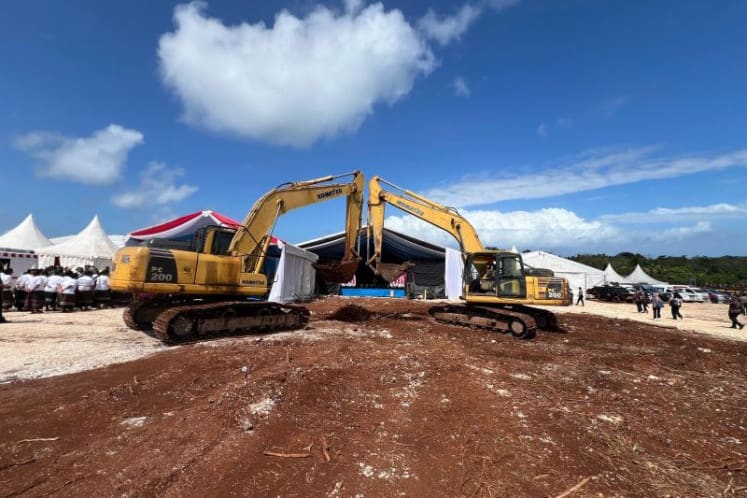
- ·President Prabowo inaugurated the $20.9 billion Masela LNG project in Maluku, with Inpex holding 65 percent, Pertamina 20 percent, and Petronas 15 percent after Shell's exit.
- ·The Arafura Sea location offers Japan a southern supply route that avoids contested East Asian shipping choke points and reduces geopolitical risk.
- ·First production is targeted for 2029, adding 9.5 million tons per year of LNG capacity as Asian national oil companies replace Western majors in complex upstream projects.
A Delayed Field Finally Moves
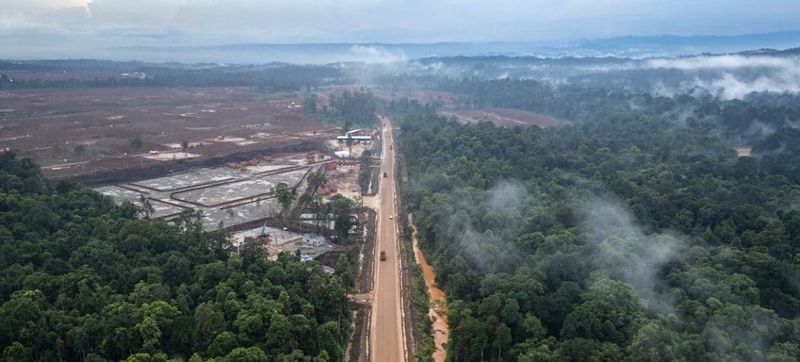
President Prabowo Subianto broke ground on the Abadi LNG project in Maluku's Tanimbar Islands in mid-July, inaugurating a $20.9 billion offshore development that has languished for nearly three decades. The ceremony signaled more than political will. It confirmed that ownership of the Masela Block has shifted decisively into Asian hands after Shell divested its 35 percent stake and stepped away from the Arafura Sea venture.
Japan's Inpex now holds 65 percent, Indonesia's Pertamina commands 20 percent, and Malaysia's Petronas retains 15 percent. First production is scheduled for 2029. The consortium structure bypasses the volatility and decarbonization timelines that have driven Western majors out of complex upstream projects across Southeast Asia in recent years.
Tokyo's Strategic Hedge
For Japan, the Masela Block represents insurance. Tokyo ranks among the world's largest importers of liquefied natural gas, and supply-chain fragility has intensified as tensions rise in the Taiwan Strait and across disputed waters in the East China Sea. Shipments that transit northern Pacific routes or pass through contested choke points carry heightened political and operational risk.
Inpex's majority stake, supported by the Japanese government, secures access to a southern Indo-Pacific corridor that avoids those pressure points. The Arafura Sea lies well south of contested shipping lanes, offering a geographically diversified supply route that reduces Tokyo's exposure to disruption.
Natural gas remains a bridge fuel in Japan's energy mix. Despite aggressive renewable targets, industrial demand for stable baseload power ensures LNG will anchor the grid for decades. Masela delivers volume and route redundancy at a moment when both have become national-security priorities.
Pertamina and Petronas Step In
Pertamina's 20 percent equity reflects Jakarta's determination to retain a meaningful stake in domestic hydrocarbon assets and to monetize reserves that have sat idle since exploration began in 1998. The state company has struggled with project execution in the past, but partnering with Inpex provides operational discipline and access to deepwater expertise.
Petronas brings upstream experience from its own offshore fields in Sarawak and Sabah. The Malaysian operator has maintained a steady LNG export program for decades and views Masela as a natural extension of its regional portfolio. Cross-border equity stakes of this kind also deepen energy interdependence within ASEAN, a bloc that has historically lacked large-scale joint ventures in oil and gas.
Western Majors Retreat
Shell's departure from Masela mirrored a broader pattern. European and North American oil companies have shed high-cost, long-cycle projects in emerging markets as shareholder pressure mounts to pivot toward renewables and to improve capital efficiency. Deepwater LNG developments in remote archipelagic settings no longer fit the portfolio calculus of firms facing activist investors and tightening climate mandates at home.
Asian national oil companies operate under different constraints. State ownership insulates them from quarterly earnings volatility, and their governments prioritize energy security over short-term returns. Pertamina, Petronas, and Inpex can commit capital to multi-decade projects because their mandates extend beyond profit maximization to include strategic supply assurance.
Regional Implications
The Masela consortium suggests that Southeast Asia's energy infrastructure will increasingly be financed, built, and operated by regional players rather than by the Western majors that dominated upstream investment for the past half-century. That shift carries implications for project governance, technology transfer, and the pace at which new fields come online.
Inpex will serve as operator, applying lessons from its Ichthys LNG project off Australia's northern coast. Pertamina and Petronas gain hands-on exposure to floating production, storage, and offloading technology that can be replicated in other Indonesian and Malaysian blocks. The knowledge flow stays within the region rather than being repatriated to Houston or London.
Commercial terms remain opaque, but industry observers expect a significant share of Masela's output to flow to Japan under long-term contracts indexed to oil benchmarks. Indonesia will reserve a portion for domestic consumption, addressing chronic gas shortages in eastern provinces. Petronas may lift cargoes for re-export from its Melaka regasification terminal or redirect supply to Peninsula Malaysia.
Financing and Timeline Risk
A $21 billion capital commitment in a volatile commodity market carries execution risk. Cost overruns plagued comparable projects in Australia and East Africa over the past decade, and the Arafura Sea's remote location adds logistical complexity. Cyclone season, shallow-water coral reefs, and limited port infrastructure in Maluku will test the consortium's project-management discipline.
Financing is expected to blend equity, export-credit-agency loans from Japan and Malaysia, and commercial debt arranged by regional banks. Jakarta has offered fiscal incentives, including accelerated depreciation and a reduced government take during the early production years, to keep the project economically viable at lower oil prices.
If the 2029 start-up target holds, Masela will add roughly 9.5 million tons per year of LNG capacity to regional supply at a time when demand across Asia continues to outpace new project sanctions. That volume matters in a market where marginal supply increasingly comes from U.S. Gulf Coast terminals exposed to hurricane risk and European regas capacity constrained by pipeline politics.
A New Energy Order
The Masela groundbreaking is a data point in a larger realignment. As climate policy accelerates in the West, Asian economies are securing the hydrocarbon supplies they need to sustain industrial growth while renewables scale. National oil companies from Tokyo to Kuala Lumpur are stepping into the void left by retreating majors, building supply chains that bypass traditional trading hubs and financial centers.
Whether that trend enhances regional stability or creates new dependencies will become clear only as projects like Masela move from ceremony to first cargo. For now, the Arafura Sea has become a test case for whether Asian capital, technology, and political will can deliver large-scale energy infrastructure without Western partnership.
RELATED STORIES
Indonesia's Wildfires Push Air Quality to World's Worst Levels
Siti Nuraini · 2 min
Southeast Asian Factories Adopt Proximity Planning to Retain Workers and Investors
Lim Hui Ying · 3 min
CIMB Commits to 55% Dividend Floor as Regional Portfolio Offsets Indonesia Pressure
Priyanka V. Rao · 4 min
Indonesia Faces Critical Choice Between Resource Control and Industrial Growth
Tran Quoc Bao · 3 min
Spot something wrong? Email editor@briefasia.com. We log every correction publicly.