Asia · Trade
Indonesia Carves Out Export Revenue Exemptions for Four Major Trading Partners
New policy creates preferential treatment for US, China, Australia and Canada under controversial natural resource proceeds regime
KEY TAKEAWAYS
- ·Indonesia exempted exporters from the US, China, Australia and Canada from its DHE-SDA policy requiring 100 percent of natural resource export proceeds be held in state banks for twelve months.
- ·The exemptions create a two-tier regime that advantages firms tied to the four countries while leaving exporters from Japan, South Korea, Singapore and others under full retention rules.
- ·Jakarta has not disclosed criteria for future exemptions, raising questions about transparency and whether other trading partners can negotiate similar treatment.
A Strategic Retreat from Universal Controls
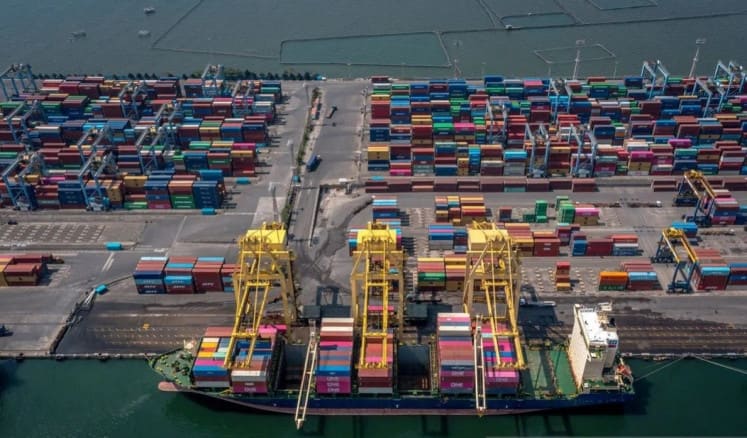
Jakarta has carved out exemptions to its natural resource export proceeds policy for four major trading partners, granting exporters from the United States, China, Australia and Canada greater latitude in handling their foreign exchange earnings. The move represents the first material loosening of rules that had required virtually all commodity exporters to deposit 100 percent of their revenues in Indonesia's state-owned banking system for twelve months.
The exemptions introduce a two-tier structure into what had been presented as a uniform policy framework. While most natural resource exporters remain bound by the full retention requirement, companies linked to the four specified countries now operate under relaxed terms that effectively restore some of the capital mobility the original DHE-SDA rules were designed to eliminate.
The Original Policy and Its Expansion
Indonesia's DHE-SDA framework was designed to stabilize the rupiah and deepen domestic liquidity by channeling hard currency from commodity sales through state banks. The policy initially applied to selected sectors but expanded earlier this year to cover nearly all natural resource exports, with mandatory twelve-month holding periods and full repatriation requirements.
That expansion drew criticism from foreign investors and industry groups, who argued the rules imposed punitive holding costs, restricted hedging strategies, and complicated treasury operations for multinational firms with global cash management systems. The retention mandate also raised questions about Indonesia's commitment to open capital account policies, particularly as neighbors like Vietnam and Thailand pursued liberalization.
Why Four Countries
The selection of the United States, China, Australia and Canada reflects both trade arithmetic and geopolitical calculus. China remains Indonesia's largest trading partner, absorbing significant volumes of coal, nickel and palm oil. The United States is a major investor in downstream manufacturing, particularly in electric vehicle supply chains. Australia and Canada bring mining capital and technology partnerships that Jakarta views as strategic.
By extending exemptions to these four, Indonesia preserves relationships critical to its commodity export revenue while maintaining leverage over smaller trading partners and domestic players. The arrangement also signals Jakarta's willingness to negotiate bilateral carve-outs rather than defend the DHE-SDA policy as non-negotiable.
Market and Investment Implications
The exemptions are likely to accelerate a bifurcation in Indonesia's commodity sector. Exporters with ties to the four favored jurisdictions gain a competitive advantage in pricing, hedging and capital allocation. Firms from other countries, including major Asian economies like Japan, South Korea and Singapore, remain subject to the full retention regime unless they secure similar treatment.
That disparity may prompt a wave of corporate restructuring as companies seek to route exports through exempted jurisdictions or establish joint ventures with qualifying partners. It also complicates Indonesia's pitch as a neutral, rules-based investment destination, particularly as it seeks to attract capital for downstream processing projects in nickel, bauxite and copper.
For state banks, the exemptions reduce the volume of captive deposits they had expected under the expanded policy. While Himbara institutions still benefit from mandatory placements by non-exempted exporters, the loss of flows from the four largest trading partners diminishes the policy's original liquidity objectives.
What Comes Next
Jakarta has not published detailed criteria for future exemptions, leaving open the question of whether other countries might negotiate similar treatment. The lack of transparency around the decision-making process raises concerns about consistency and predictability, both of which are central to investment-grade sovereign risk profiles.
Industry observers expect further adjustments as Indonesia balances its desire for foreign exchange stability against the practical realities of global commodity markets. The DHE-SDA framework, once positioned as a cornerstone of macroeconomic policy, now appears more negotiable than its architects initially suggested. How Jakarta manages that tension will shape not only capital flows but also its credibility as a regulatory environment capable of sustaining long-term industrial strategy.
RELATED STORIES
Destry Damayanti Emerges as Top Candidate for Bank Indonesia Governor
Priyanka V. Rao · 3 min
Indonesia's Rupiah Defense Drains Reserves as Central Bank Rethinks Strategy
Siti Nuraini · 2 min

Indonesia Questions Whether Foreign Investment Builds Capability or Just Serves Market Access
Priyanka V. Rao · 4 min

Indonesia's Education Bill Revision Could Reopen Funding Door for Free Meals Program
Siti Nuraini · 3 min
Spot something wrong? Email editor@briefasia.com. We log every correction publicly.