Sustainability · Energy
India Launches First Strategic Natural Gas Reserve After Gulf Supply Scare
New Delhi evaluates salt caverns and cryogenic tanks to buffer against LNG disruptions as Middle East supplies half its gas imports
KEY TAKEAWAYS
- ·India is developing its first strategic natural gas storage system, evaluating salt caverns, depleted gas fields, and cryogenic LNG tanks after recent Middle East supply disruptions.
- ·The Middle East supplies more than half of India's LNG and LPG imports, with the country importing nearly half of its total gas consumption and lacking dedicated strategic reserves.
- ·A Petroleum Ministry committee is assessing storage volumes for the next four to five years, debating how much capacity should be strategic versus commercial to enable price arbitrage.
A New Buffer for Energy Security
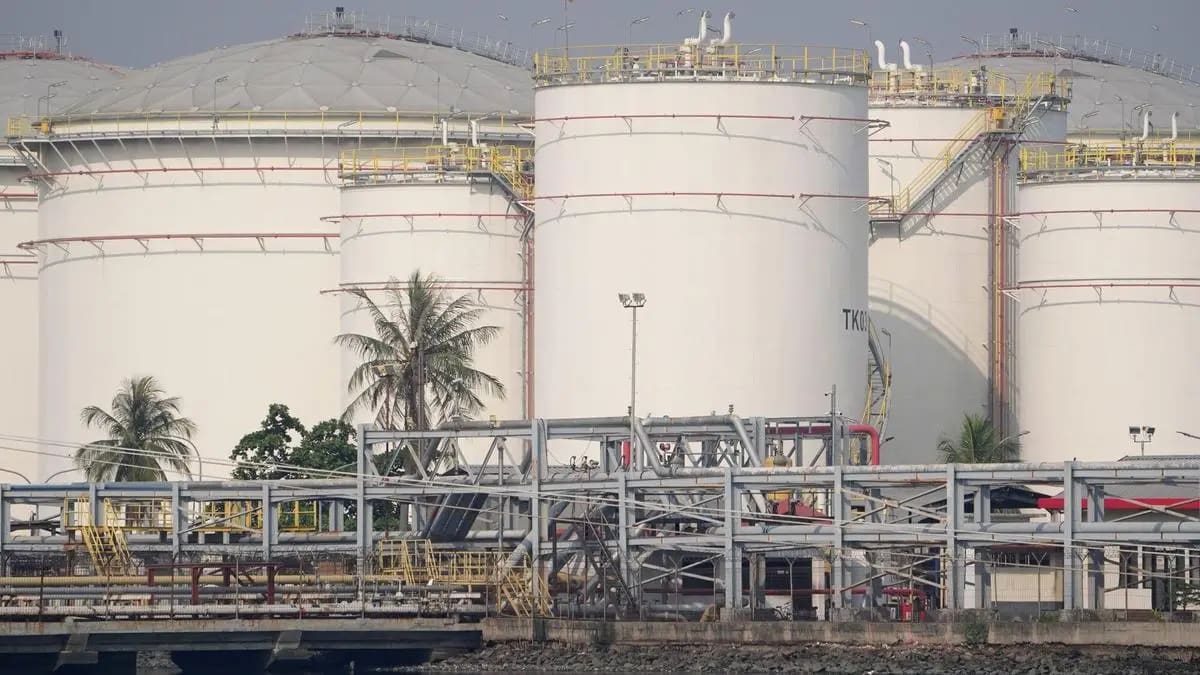
India has started building its first strategic natural gas reserve, a direct response to supply vulnerabilities exposed during recent tensions in the Middle East. State-owned petroleum companies are now assessing multiple storage technologies, from underground salt caverns to cryogenic liquefied natural gas tanks positioned near regasification terminals.
The initiative represents a significant shift in India's energy security planning. While the country maintains strategic crude oil reserves through the Indian Strategic Petroleum Reserves Limited, no comparable system exists for natural gas, despite imports accounting for nearly half of domestic consumption.
A committee under the Petroleum Ministry is evaluating storage options for both LNG and liquefied petroleum gas. The urgency stems from India's heavy dependence on Gulf suppliers, with the Middle East region accounting for more than half of the country's LNG and LPG imports. When conflict disrupted shipping lanes and production facilities earlier this year, the absence of buffer stocks became a glaring vulnerability.
Technology and Geology Under Review
Engineers India is conducting feasibility studies to identify suitable geological formations and storage methods. The work includes assessing depleted gas fields, salt caverns, and above-ground cryogenic tanks. ISPRL, which manages crude oil reserves, lacks experience with salt cavern storage, prompting the technical evaluation.
Public sector oil companies are examining how much capacity should be designated as strategic versus commercial. China's model, which uses vast crude storage to capitalize on price arbitrage, has drawn attention in New Delhi. Officials are debating storage volumes based on projected demand over the next four to five years.
One of seven Empowered Groups of Secretaries established by the government is also reviewing short-, medium-, and long-term measures to address potential disruptions to trade, supply chains, and logistics. The scope includes rebuilding damaged infrastructure in key exporting regions, such as Qatar's Ras Laffan facility, which sustained damage during the conflict.
Filling a Critical Gap
A study by the Council on Energy, Environment and Water highlighted that India operates no dedicated strategic natural gas storage, leaving critical sectors exposed to supply shocks. Power generation, fertilizer production, and city gas distribution networks all depend on uninterrupted gas flows.
The lack of reserves means India cannot absorb sudden price spikes or physical shortages. When LNG spot prices surged during the West Asia crisis, Indian buyers faced immediate cost pressures with no domestic cushion to soften the blow.
Storage infrastructure would provide both security and flexibility. Commercial reserves could help companies manage seasonal demand swings and lock in lower prices during global supply gluts. Strategic reserves, meanwhile, would offer the government a tool to stabilize domestic markets during geopolitical disruptions.
Regional Context and Timing
India's move follows a broader pattern across Asia. Japan and South Korea have maintained strategic LNG reserves for years, while China has accelerated underground gas storage development as part of its energy independence drive. Southeast Asian nations, particularly those dependent on pipeline imports, are also exploring buffer options.
The timing of India's push reflects both immediate lessons from the West Asia conflict and longer-term concerns about energy transition. As the country expands natural gas use to displace coal in power generation and transportation, supply reliability becomes more critical. The government has set a target to raise gas's share of the energy mix to 15 percent by 2030, up from around 6 percent currently.
Financing and site selection will shape the timeline. Salt cavern storage requires specific geology, typically found in regions with thick salt deposits. Cryogenic tanks offer faster deployment but come with higher operating costs and land requirements. The Petroleum Ministry has not yet disclosed target capacity or budget allocations.
The project also intersects with India's broader infrastructure build-out. New LNG regasification terminals along the east and west coasts are planned or under construction, offering potential sites for co-located storage. Integrating strategic reserves into this expansion could reduce capital costs and accelerate deployment.
India's strategic gas storage represents a recognition that energy security now extends beyond crude oil. With natural gas playing a growing role in the economy, the ability to weather supply shocks will determine whether the country's energy transition stays on track.
RELATED STORIES
Human Development Patterns Drive Assam's Deadly 2026 Floods
Priyanka V. Rao · 3 min
South Asia Loses 31 Million Full-Time Jobs Annually to Extreme Heat
Priyanka V. Rao · 3 min

Mumbai's Electric Bus Push Leaves Drivers in Precarious Contracts
Priyanka V. Rao · 4 min
Oil Stockpiles Fall as Hormuz Disruption Stalls Middle East Shipments
Cheng Wei-Lun · 3 min
Spot something wrong? Email editor@briefasia.com. We log every correction publicly.