Technology · Dev
India Pushes Electronics Manufacturing and Space Launch Capacity Amid Market Headwinds
New Tamil Nadu clusters, private orbital capability, and LED investment plans advance as smartphone demand softens under component price pressure
KEY TAKEAWAYS
- ·India approved two electronics manufacturing clusters in Tamil Nadu worth $104.75 million and achieved private orbital launch capability in July 2026.
- ·Smartphone shipments in India declined sharply in Q2 2026 as memory shortages drove component costs up 8 to 12 percent year-on-year.
- ·Seoul Semiconductor is evaluating an LED plant in India under the revised India Semiconductor Mission 2.0 incentive framework.
Manufacturing Infrastructure Expands in Tamil Nadu
India's central government greenlighted two Electronics Manufacturing Clusters in Tamil Nadu on July 22, 2026, with a combined investment of INR 10.12 billion, or $104.75 million. The Manallur and Pillapaikkam sites mark the latest phase of New Delhi's push to build domestic electronics capacity and reduce import dependence. Union Minister for Electronics and Information Technology Ashwini Vaishnaw confirmed the approvals in a written parliamentary response.
Tamil Nadu already hosts significant electronics activity, including Apple supplier facilities and auto-electronics plants. The new clusters will provide shared infrastructure, testing labs, and utilities to lower entry barriers for component makers and assembly contractors. India's Production-Linked Incentive scheme for electronics has drawn roughly $30 billion in committed investment since 2020, with Tamil Nadu securing a large share of mobile-device and LED production commitments.
Private Orbital Launch Joins US and China Competition
India now operates a privately developed orbital launch vehicle, joining a small group of nations with commercial spaceflight capability outside state agencies. The milestone places India in direct competition with SpaceX's Falcon and Starlink constellations, China's expanding state-commercial hybrid launchers, and emerging players in Japan and South Korea.
Low-Earth-orbit satellite deployment has become a strategic priority across Asia. Constellations for broadband, Earth observation, and navigation require frequent, cost-effective launches. India's space sector reforms since 2020 opened the door to private capital and manufacturing, and the country's established launch track record through the Indian Space Research Organisation provided a technical foundation.
The new capability also supports India's ambitions in satellite internet. Starlink, OneWeb, and domestic players are racing to secure spectrum and ground-station approvals. A homegrown launch option reduces dependence on foreign providers and offers cost advantages for Indian satellite operators.
Smartphone Shipments Decline on Memory Cost Surge
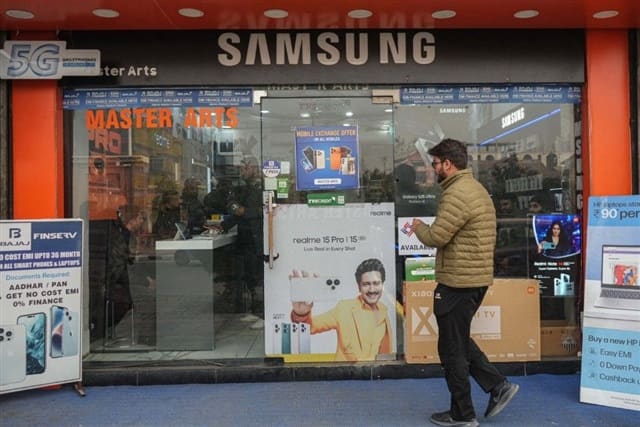
India's smartphone market contracted sharply in the second quarter of 2026, driven by rising component prices that pushed retail costs higher and dampened consumer demand. Memory shortages, particularly for DRAM and NAND, have lifted bill-of-materials costs across the industry. The price increases hit hardest in value segments, which dominate Indian sales.
The downturn extends beyond India. Memory supply tightness, driven by underinvestment in 2024 and 2025 and surging AI server demand, has rippled through consumer electronics. Smartphone brands in Southeast Asia, Latin America, and Africa face similar margin pressure. In India, average selling prices rose approximately 8 to 12 percent year-on-year in the first half of 2026, according to industry estimates, while unit shipments fell.
India remains the world's second-largest smartphone market by volume, and any sustained decline reshapes global supply chains. Local assembly has grown under PLI incentives, but most components, including displays, chipsets, and memory, are imported. Higher memory prices erode the cost advantage of Indian manufacturing and threaten the viability of ultra-low-cost models that anchor rural and first-time buyer segments.
Seoul Semiconductor Eyes LED Plant Under Revised Incentive
Seoul Semiconductor, a South Korean optoelectronics manufacturer, is exploring the construction of an LED production facility in India and has initiated discussions with multiple state governments. The company is evaluating eligibility under India Semiconductor Mission 2.0, the revised incentive framework announced in early 2026 that broadened support beyond logic and memory chips to include compound semiconductors, optoelectronics, and packaging.
If the project proceeds, Seoul Semiconductor would become the first major Korean semiconductor manufacturer to commit to India under ISM 2.0. Previous rounds attracted interest from US, European, and Taiwanese firms, but Korean participation has been limited. South Korea's dominance in memory and display supply chains makes its engagement a bellwether for the program's appeal beyond China-plus-one relocations.
LED demand in India is growing across automotive lighting, consumer electronics backlighting, and general illumination. Domestic production remains minimal, with most LEDs imported from China, Taiwan, and South Korea. A local Seoul Semiconductor plant would serve both Indian demand and potentially export markets in the Middle East and Africa.
Implications for Asia's Tech Landscape
India's moves in electronics manufacturing, space launch, and component production reflect a broader shift in Asian supply chains. Policy support, infrastructure investment, and regulatory reform are converging to position the country as a manufacturing alternative and a domestic market anchor.
The smartphone decline, however, underscores the limits of manufacturing-led growth when global component markets tighten. India's reliance on imported memory, displays, and advanced chips leaves local production vulnerable to external price shocks. Without upstream capacity in wafer fabrication and materials, the country's electronics ambitions remain constrained.
Private space launch capability offers a different trajectory. India's cost structure, technical talent, and established launch infrastructure provide competitive advantages in a market where frequency and reliability matter as much as payload capacity. The race for LEO dominance is no longer confined to the US and China, and India's entry changes the calculus for satellite operators across Asia.
Seoul Semiconductor's interest signals that ISM 2.0 may attract compound semiconductor and optoelectronics investment that earlier rounds missed. These segments sit outside the geopolitical crossfire of advanced logic and memory but remain critical to automotive, industrial, and communications applications. If India can build a cluster in LEDs, power devices, and RF components, it gains a foothold in supply chains less dominated by Taiwan and China.
The Tamil Nadu clusters, meanwhile, will test whether shared infrastructure and incentives can catalyze component ecosystems rather than just assembly capacity. India has proven it can attract final-stage manufacturing. The harder question is whether it can nurture the supplier networks, testing labs, and technical talent that underpin self-reliant production. The next 24 months will show whether policy intent translates to operational scale.
RELATED STORIES
Indian AI Firm Commits $8 Billion to Nvidia Infrastructure Buildout
Priyanka V. Rao · 3 min
India's Semiconductor Push Extends to Supply Chains and Advanced Manufacturing
Priyanka V. Rao · 4 min

India's Semiconductor Fabs Face Critical Yield Challenge as Production Begins
Priyanka V. Rao · 4 min

India Shuts Down Hundreds of Google Firebase Accounts Linked to Banking Fraud
Priyanka V. Rao · 4 min
Spot something wrong? Email editor@briefasia.com. We log every correction publicly.