Sustainability · Nature
India Blocks Sri Lanka's Deep-Sea Mining Claim in Race for Indian Ocean Minerals
A legal standoff over the Afanasy Nikitin Seamount has frozen both nations' access to cobalt, nickel, and manganese deposits critical for green energy transitions
KEY TAKEAWAYS
- ·India's 2022 objection froze Sri Lanka's claim to extend maritime jurisdiction over the Afanasy Nikitin Seamount, a 400-kilometer ridge holding cobalt, nickel, and manganese deposits roughly 1,050 kilometers offshore.
- ·India's 2024 application to the International Seabed Authority for a 15-year exploration license covering 3,000 square kilometers cannot proceed because the seamount's legal status remains unresolved.
- ·Sri Lanka cannot compel India through binding arbitration due to India's Article 298 declaration, but holds leverage because India's license application depends on Colombo's cooperation in resolving the dispute.
The Stakes Beneath the Waves
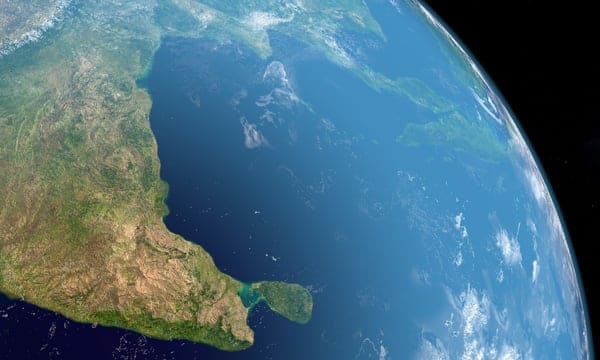
A 400-kilometer underwater mountain ridge roughly 1,050 kilometers southeast of Sri Lanka has become the center of a legal standoff that illustrates how critical mineral competition is reshaping maritime diplomacy in the Indian Ocean.
The Afanasy Nikitin Seamount holds deposits of cobalt, nickel, and manganese needed for electric vehicle batteries and aerospace applications. But neither India nor Sri Lanka can touch it. Sri Lanka's 2009 claim to extend its maritime boundary to include the seamount sits frozen at the U.N. Commission on the Limits of the Continental Shelf, blocked by India's 2022 objection. Meanwhile, India's 2024 application to the International Seabed Authority for a 15-year exploration license covering 3,000 square kilometers of the seamount cannot proceed because the area's legal status remains unresolved.
The result is a dual bottleneck with no clear exit.
Sri Lanka's Jurisdictional Gambit
Sri Lanka's original filing invoked Annex II of the Final Act of the Third U.N. Conference on the Law of the Sea, a provision that allows certain states in the southern Bay of Bengal to use an alternative mathematical method for drawing continental shelf boundaries if they have thick sedimentary deposits beneath the continental rise near shore.
If the Commission validates the claim, the seamount would fall under Sri Lankan national jurisdiction, even though it lies roughly 650 nautical miles offshore, well beyond the standard 350 nautical mile limit for extended continental shelves.
India did not object in 2009. The shift came in 2022, after Prime Minister Narendra Modi announced a net-zero emissions target by 2070 at COP26 in 2021. The commitment intensified India's search for cobalt and other minerals essential for clean energy infrastructure. India's formal protest through a note verbale requested the Commission not to consider Sri Lanka's claim, citing prejudice to India's strategic and economic interests.
Under Commission rules, that objection immediately halted evaluation of Sri Lanka's submission. The body is prohibited from considering claims when a dispute exists unless both parties give explicit consent.
India's Exploration Bid Stalls
Two years after freezing Sri Lanka's claim, India applied to the International Seabed Authority for an exploration license at the seamount. The Authority, headquartered in Kingston, Jamaica, oversees the international seabed under U.N. mandate. Any exploration or extraction in areas beyond national jurisdiction must be approved by the Authority under strict legal frameworks.
But the Authority cannot process India's application because the seamount's legal status is ambiguous. If Sri Lanka's boundary extension is eventually recognized, the seamount would no longer be international seabed, voiding India's license request and removing the Authority's jurisdiction.
The result is a legal stalemate. The Commission cannot evaluate Sri Lanka's claim due to India's dispute. The Authority cannot grant India's license due to undefined boundaries.
Limited Legal Remedies
Sri Lanka could theoretically challenge India's objection at the International Tribunal on the Law of the Sea. Bangladesh successfully sued Myanmar in 2012 after Myanmar used the same dispute rule to block Bangladesh's continental shelf claim. The tribunal ruled in Bangladesh's favor, and the Commission subsequently accepted the claim.
But India declared under Article 298 of the U.N. Convention on the Law of the Sea that it will not accept international court rulings on maritime boundaries, military activities, or disputes under Security Council debate. That declaration removes Sri Lanka's ability to compel India through binding arbitration.
Sri Lanka can initiate compulsory conciliation under Annex V of the Convention, where an appointed commission evaluates both claims. However, the commission's recommendations are non-binding. India can participate but is not obligated to accept the outcome.
Until the dispute is resolved to both parties' satisfaction, the seamount will be treated as contested territory with provisional status as part of the international seabed.
The Economic Pressure on Colombo
For Sri Lanka, access to the seamount's mineral resources represents a potential source of foreign currency at a moment when the country remains fragile after its 2022 sovereign default. Even after debt relief, Sri Lanka's public debt-to-GDP ratio is projected to remain near 90 percent, with roughly half denominated in foreign currency. Export earnings have dropped to 19 percent of GDP in 2025, down sharply from 39 percent in 2000.
Yet Sri Lanka lacks the capital and technology to conduct deep-sea exploration independently. On June 23, the Ceylon Chamber of Commerce hosted a Mineral Sands Technical Conference and invited global private sector participation. Minister of Industry and Entrepreneurship Development Sunil Handunneththi stated that the mineral industry is a government priority, with ambitions to position Sri Lanka as a competitive leader in mineral processing, research, and skilled employment generation.
Those ambitions collide with geopolitical realities. Without India's cooperation, Sri Lanka cannot advance its claim. Without Sri Lanka's acquiescence, India's license application remains frozen.
Provisional Arrangements as a Path
The U.N. Convention on the Law of the Sea encourages disputing states to enter provisional arrangements of a practical nature. A bilateral partnership for joint development of the seamount would resolve the legal deadlock.
Sri Lanka holds leverage in such negotiations. India's licensing request at the International Seabed Authority cannot proceed without Colombo's cooperation. Sri Lanka could use that vulnerability to negotiate capital investment and technology transfer as part of a joint development framework.
There is no legal restriction preventing Sri Lanka from pursuing simultaneous partnerships with third states such as China or the United States. However, India's recent efforts to expand its economic footprint in Sri Lanka suggest New Delhi is prepared to deepen engagement to secure preferential access.
The seamount remains untouched. But the competition over what lies beneath it is already shaping the contours of Indian Ocean geopolitics.
RELATED STORIES

South Asia Loses 31 Million Full-Time Jobs Annually to Extreme Heat
Priyanka V. Rao · 3 min
Human Development Patterns Drive Assam's Deadly 2026 Floods
Priyanka V. Rao · 3 min
China's Electric Truck Exports Surge as Fuel Costs Rise Across Asia
Cheng Wei-Lun · 3 min

Mumbai's Electric Bus Push Leaves Drivers in Precarious Contracts
Priyanka V. Rao · 4 min
Spot something wrong? Email editor@briefasia.com. We log every correction publicly.