Technology · AI
HSBC to Hire Over 100 AI Specialists in Singapore as Automation Push Accelerates
The British bank plans to open a global AI center in the city-state later this year, focusing on treasury solutions and digital payments as part of a broader workforce transformation.
KEY TAKEAWAYS
- ·HSBC will hire more than 100 AI specialists in Singapore for a global center launching later this year, focusing on treasury solutions and digital payments.
- ·The expansion comes as CEO Georges Elhedery considers cutting roughly 20,000 positions, about 10 percent of headcount, through automation of middle and back-office functions.
- ·The Singapore facility will develop talent in natural language processing, data science, and AI governance through partnerships with local educational institutions and government bodies.
Singapore Becomes AI Hub
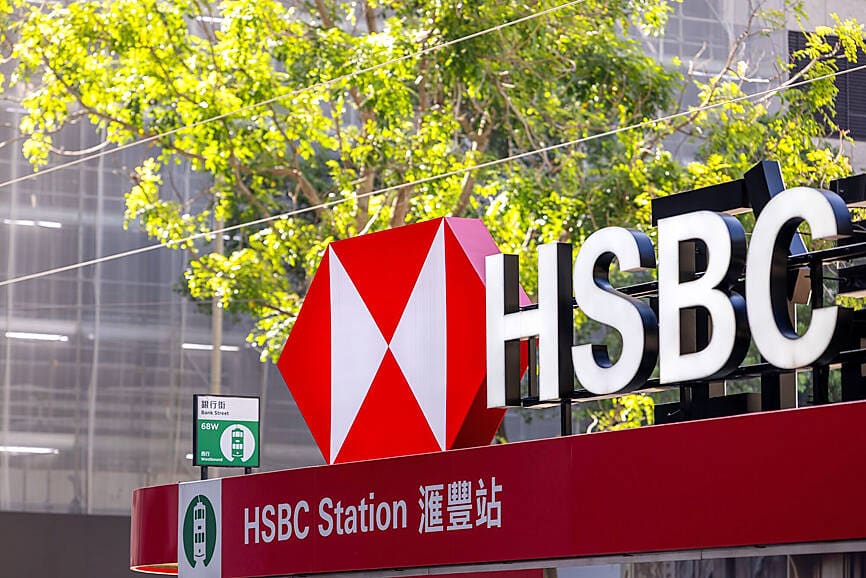
HSBC Holdings plans to recruit more than 100 artificial intelligence specialists in Singapore as part of a new global AI center set to launch in the city-state by year-end. The British lender announced the hiring push yesterday, signaling an acceleration of technology investments that are reshaping financial services workforces across the region.
The Singapore facility will initially concentrate on agentic treasury solutions and AI-enabled digital payments, according to HSBC. The new specialists will collaborate with chief AI officer David Rice and teams handling wealth management and global payment solutions.
The center aims to build what HSBC calls a "pipeline of talent" spanning natural language processing, data science, and AI governance. The bank said it plans to partner with educational institutions and government bodies in Singapore to develop this capability.
Workforce Transformation Context
The expansion comes months after reports emerged that HSBC is considering significant job reductions over the coming years as CEO Georges Elhedery embraces automation to streamline middle and back-office operations. Those changes could affect roughly 20,000 positions, representing about 10 percent of total headcount, according to people familiar with internal deliberations in March.
In May, Elhedery publicly acknowledged that AI would "destroy" certain roles while generating new ones, urging employees to adapt to the technological shift rather than resist it. He emphasized, however, that human judgment, decision-making, and accountability would remain central to banking operations.
The twin announcements of AI hiring and potential workforce reductions illustrate the complex transition underway at major financial institutions. While banks invest heavily in specialized technical talent, they simultaneously prepare to automate routine tasks that have historically required large support teams.
Broader Industry Pattern
HSBC's moves reflect a pattern across industries where companies cite AI as both a driver of hiring in specialized roles and a justification for cuts in operational positions. Financial services firm Block, cloud provider Oracle, and ride-hailing company Uber Technologies have all pointed to AI when announcing workforce reductions in recent months.
Last week, Uber said it eliminated 10 percent of customer service positions as part of efforts to simplify operations and incorporate AI capabilities. The company framed the cuts as part of a broader organizational restructuring.
Singapore has positioned itself as a regional hub for technology talent and innovation, with government policies designed to attract multinational firms establishing AI and research centers. The city-state's regulatory environment, skilled workforce, and infrastructure make it a natural base for financial institutions expanding their technology operations across Asia.
Asia's Financial Technology Race
For HSBC, the Singapore AI center represents a strategic bet on the region's growth trajectory. Asia is expected to generate roughly one-third of global new wealth by 2030, making technology investments in the region critical for institutions competing for affluent and high-net-worth clients.
The bank's focus on treasury solutions and digital payments aligns with areas where AI can deliver measurable efficiency gains and enhanced customer experiences. Agentic AI systems, which can act autonomously to complete complex tasks, are seen as particularly valuable in treasury operations where speed and accuracy in cash management and risk assessment provide competitive advantages.
Natural language processing capabilities enable more sophisticated customer interactions and document processing, while AI governance frameworks address regulatory requirements and risk management concerns that have become paramount as banks deploy these technologies at scale.
The hiring announcement also signals HSBC's recognition that building internal AI capabilities requires sustained investment in specialized talent. Rather than relying solely on vendor solutions or consulting firms, major banks are assembling in-house teams that can develop proprietary applications tailored to their specific operations and customer bases.
Whether this approach delivers the productivity gains and cost savings that executives envision remains to be seen. Early adopters in financial services have reported mixed results, with some AI deployments exceeding expectations while others have struggled with integration challenges and accuracy issues.
For now, HSBC is placing a substantial wager that Singapore can serve as the foundation for its global AI ambitions, betting that the investment in specialized talent today will position the bank to compete effectively as automation reshapes the industry's workforce and service delivery models.
RELATED STORIES
Private Capital Floods Asia's MedTech Sector as Brain Interfaces and Robotics Draw Investors
Priyanka V. Rao · 4 min

Shein Drops 4% in Hong Kong Debut as Tariff Pressure Weighs on Valuation
Priyanka V. Rao · 4 min
Singapore Targets High-Value Data Centre Workloads as Neighbors Scale Up Capacity
Cheng Wei-Lun · 3 min
DBS Doubles Down on Asia, Ruling Out Global Expansion
Anand Sundaram · 3 min
Spot something wrong? Email editor@briefasia.com. We log every correction publicly.