Real Estate · Land
Hong Kong Revives Pak Shek Kok MTR Station Plan After Five-Year Delay
Revised proposal for East Rail Line station near Science Park marks shift in government approach to infrastructure funding and regional connectivity
KEY TAKEAWAYS
- ·Hong Kong has presented a revised proposal for a Pak Shek Kok MTR station near Science Park, five years after the project was first announced in 2021.
- ·The new plan introduces an alternative funding mechanism that differs from the traditional rail-plus-property model used for most metro expansions.
- ·The station would improve connectivity between Hong Kong's innovation district and technology centers in Shenzhen as part of Greater Bay Area integration.
A Long-Stalled Project Returns
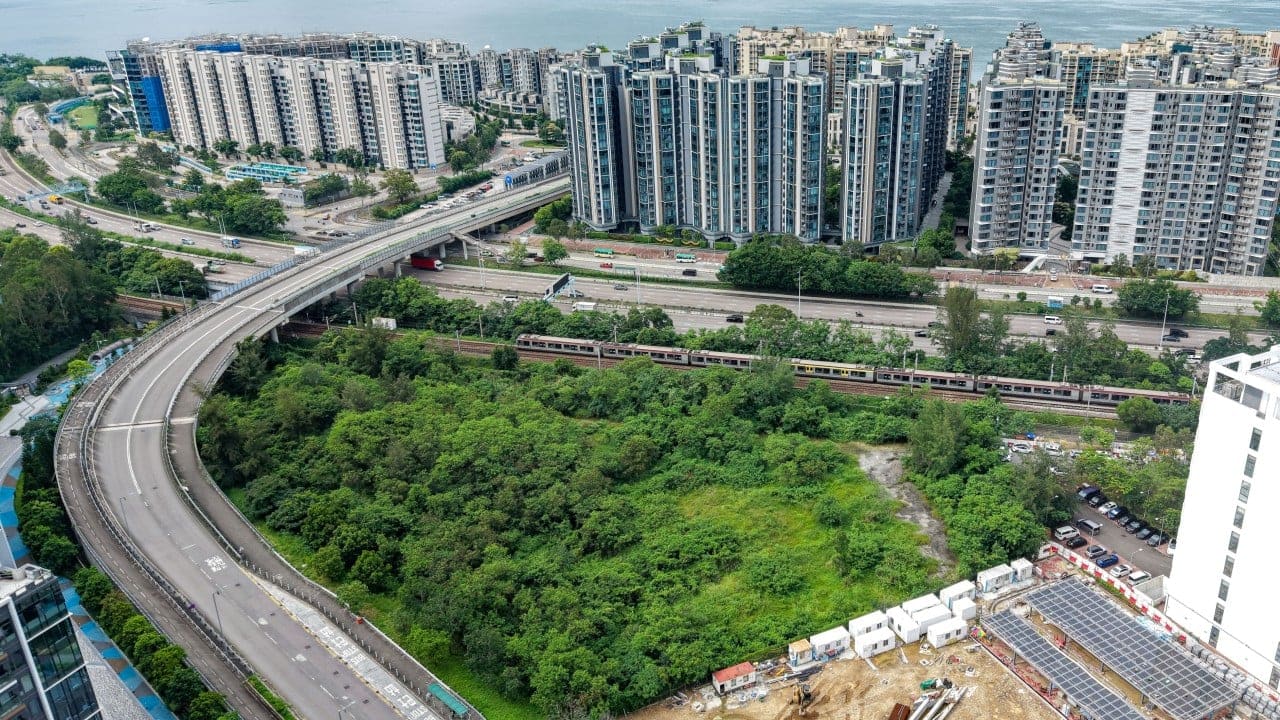
Hong Kong has revived plans for a new MTR station at Pak Shek Kok on the East Rail line, nearly five years after the project was first announced in the 2021 policy address. The government has now presented a revised proposal that shifts the funding and implementation approach, marking a significant step in the city's infrastructure development pipeline.
The station would serve the area near Hong Kong Science Park, a cluster that houses technology companies and research institutions in the New Territories. The original plan, unveiled during Carrie Lam Cheng Yuet-ngor's tenure as chief executive, has remained in planning stages since 2021 without breaking ground.
The delay stands out in a city known for completing major infrastructure projects on schedule. Hong Kong has delivered multiple large-scale rail extensions and cross-border links over the past two decades, including the High Speed Rail connection to mainland China and the Tuen Ma Line, the city's longest metro route.
Revised Funding Approach
The government's new proposal addresses one of the primary obstacles that kept the project on hold: financing structure. Rather than following the traditional model where MTR Corporation shoulders the full upfront cost, the revised plan introduces an alternative funding mechanism that distributes financial responsibility differently.
Details of the financing arrangement have not been fully disclosed, but the shift represents a departure from the rail-plus-property development model that has underpinned most of Hong Kong's metro expansion for decades. That model typically grants MTR Corporation property development rights near new stations, allowing the company to recoup construction costs through real estate profits.
Land constraints near Pak Shek Kok may have complicated the application of this model. The area sits adjacent to Tolo Harbour and is bounded by Science Park facilities and residential developments, leaving limited room for large-scale commercial or residential projects that would generate sufficient returns.
Regional Connectivity Goals
The Pak Shek Kok station aligns with Hong Kong's broader ambition to position itself as a regional innovation hub and transport node. The East Rail line already connects the city center with the border crossing at Lo Wu and Lok Ma Chau, where passengers can transfer to mainland China's high-speed rail network and metro systems serving Shenzhen.
Adding a station near Science Park would improve access for researchers, engineers, and business executives traveling between Hong Kong's innovation district and technology centers across the border. Shenzhen has emerged as one of Asia's leading tech hubs, home to companies including Tencent, Huawei, and DJI, as well as a dense network of hardware manufacturers and supply chain partners.
The connection also supports Hong Kong's positioning within the Greater Bay Area initiative, a central government plan to integrate eleven cities in southern China into a unified economic zone. The initiative emphasizes cross-border movement of talent, capital, and goods, with transport infrastructure serving as a key enabler.
Science Park Expansion Context
Hong Kong Science Park has expanded significantly over the past decade, growing from a modest research campus to a complex housing over 1,000 companies. The park focuses on sectors including artificial intelligence, biotechnology, fintech, and advanced manufacturing.
Recent tenants include R&D centers established by multinational corporations such as Siemens, Qualcomm, and AstraZeneca, alongside local startups and university spin-offs. The Hong Kong government has committed additional funding to expand the park's physical footprint and support programs for early-stage companies.
Current access to Science Park relies primarily on buses and a dedicated shuttle service from Tai Wai MTR station. The lack of a direct rail link has been cited by companies and researchers as a barrier to attracting talent, particularly those living in central districts or across the border.
Implementation Timeline Uncertain
While the revised proposal represents progress, the government has not announced a construction timeline or target completion date. Planning, land preparation, and procurement processes for major rail projects in Hong Kong typically span several years before excavation begins.
The MTR Corporation has not issued a public statement on the revised financing arrangement or its role in the project. The company operates as a listed entity with both government and private shareholders, and must balance public service obligations with commercial considerations.
Hong Kong has several other rail projects in various stages of planning and construction, including extensions to the Northern Link and the Tung Chung Line. Resource allocation and sequencing among competing infrastructure priorities will influence how quickly the Pak Shek Kok station advances from proposal to reality.
The project's revival comes as Hong Kong works to maintain its competitiveness as a business and innovation center amid regional competition and economic headwinds. Efficient transport links between key districts and cross-border connections remain central to that effort.
RELATED STORIES
Hong Kong Awards First Northern Metropolis Land to Mainland-Local Consortium
Cheng Wei-Lun · 3 min
Hong Kong Housing Market Tests Durability as Flipper Activity Drops
Cheng Wei-Lun · 3 min
Hong Kong's Distressed Property Sales May Ease as Market Stabilizes
Priyanka V. Rao · 3 min
Four Bids Land for Major Hong Kong Rail Transit Development Site
Lim Hui Ying · 3 min
Spot something wrong? Email editor@briefasia.com. We log every correction publicly.