Real Estate · Homes
Hong Kong's Northern Metropolis Faces Buyer Skepticism as First Homes Launch
Wheelock Properties sold 56 of 100 units on debut day at prices matching urban areas, raising questions about demand in the remote tech hub slated for 2.5 million residents.
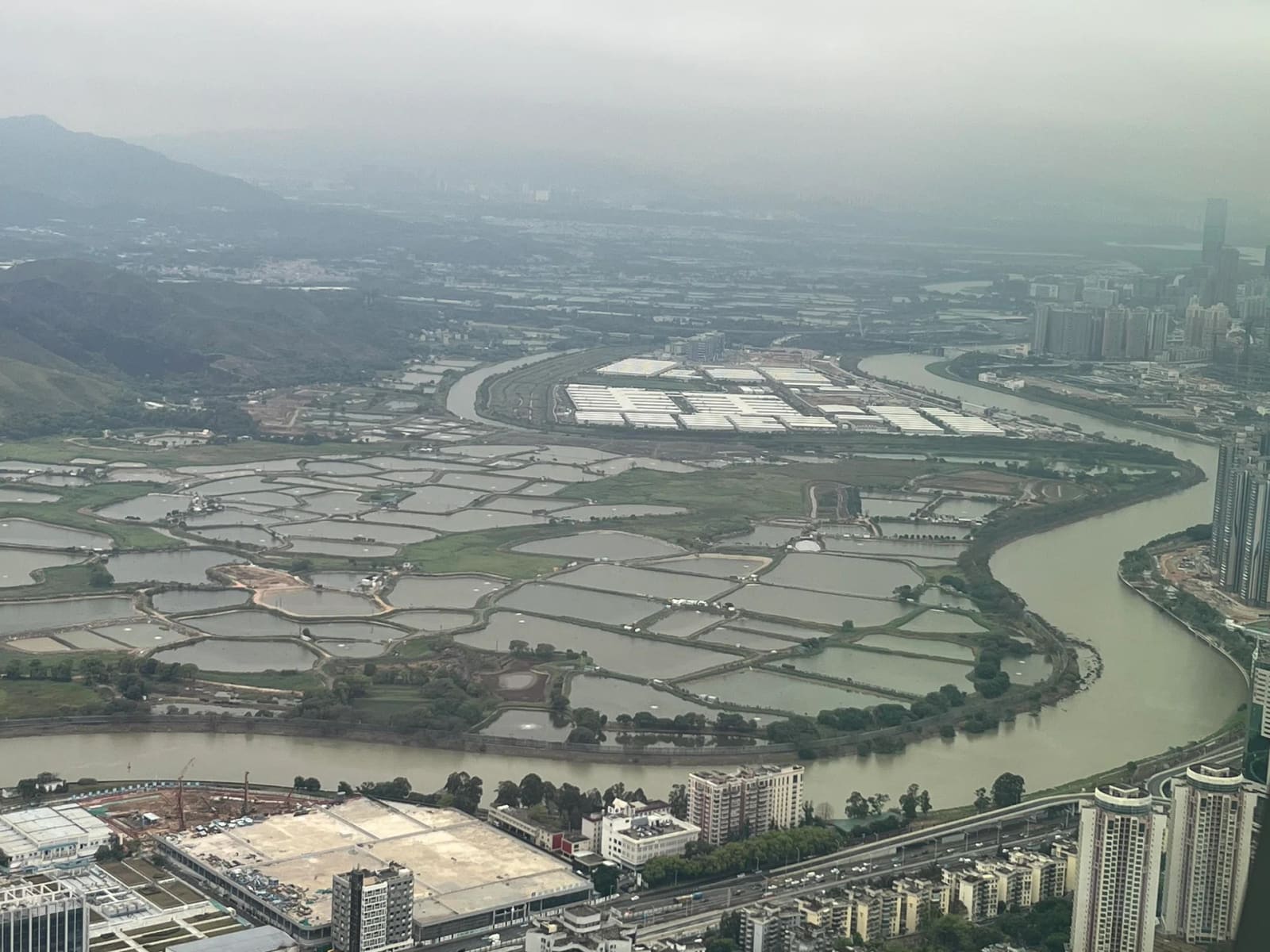
KEY TAKEAWAYS
- ·Wheelock Properties sold 56 of 100 apartments at Park Silicon in Kwu Tung on August 16 at an average HK$17,000 per square foot, nearly matching urban West Kowloon prices.
- ·Northern Metropolis spans one-third of Hong Kong's territory and targets 2.5 million residents, but full metro connectivity will not arrive until 2034.
- ·Mainland Chinese buyers account for roughly half of Hong Kong first-hand residential sales by value, but recent Beijing capital controls introduce new demand risk.
Lukewarm Reception for Border Development
The first residential launch in Hong Kong's Northern Metropolis has delivered a muted signal for the city's most ambitious spatial plan in decades. Wheelock Properties sold 56 of 100 apartments at its Park Silicon project in Kwu Tung on debut day, August 16, at an average price exceeding HK$17,000 per square foot. That pricing sits nearly level with new developments in West Kowloon, a far more established urban corridor with full transit access and mature amenities.
The modest take-up rate underscores the challenge facing developers and policymakers alike: convincing buyers to pay urban premiums for a frontier location that will not gain full metro connectivity until 2034. Park Silicon comprises 781 units across two phases, forming part of a 2,100-unit pipeline from three major developers in Kwu Tung alone.
Stakes and Scale
Northern Metropolis spans roughly one-third of Hong Kong's land area, covering a long-overlooked region of fish ponds, farmland, and rural villages along the border with Shenzhen. First unveiled in 2021 as a dual solution to the city's chronic housing shortage and a vehicle to deepen economic ties with mainland China, the plan envisions a tech-focused hub housing 2.5 million people and anchored by research labs and startups.
Henderson Land Development is preparing to launch North Innovale, a 682-unit project expected to go on sale within weeks. Sun Hung Kai Properties has applied for pre-sale consent for a further 642 homes. Together, the three projects represent an early test of whether premium pricing can coexist with long infrastructure lead times and unproven job creation.
Land Costs and Timing
The pricing reflects the steep land acquisition costs developers absorbed in 2021, near the peak of Hong Kong's property cycle. Wheelock outbid 11 competitors for the Park Silicon site, paying roughly 7 percent above the upper estimate. The sector subsequently entered a prolonged downturn driven by a slowing economy and elevated interest rates, before stabilizing in 2025.
That timing mismatch has left developers threading a narrow path: prices must recover enough land cost to preserve margins, yet remain attractive enough to move inventory in a market still finding its footing. Local firms have grown more cautious on the mega-development. A land auction in the area in 2026 drew only two bids, a stark contrast to the competitive frenzy five years earlier.
Metro Gap and Buyer Calculus
Kwu Tung will not gain full metro connectivity until 2034, a decade-long gap that forces buyers to weigh current convenience against long-term potential. Morningstar analyst Kathy Chan noted that the pricing appears aggressive given the infrastructure timeline, and that purchasers are effectively placing a bet on the area's future rather than its present amenities.
Home prices in Northern Metropolis will ultimately hinge on whether the development can attract sufficient residents, employment, and cross-border activity to absorb the large housing pipeline. The region's success depends on more than infrastructure: it requires a critical mass of high-tech employers, research institutions, and services to justify the residential density planners envision.
Mainland Demand and New Risks
Mainland Chinese buyers have become a cornerstone of Hong Kong's first-hand residential market, accounting for roughly half of sales by value. That demand has provided a cushion for developers, but recent policy shifts in Beijing have introduced fresh uncertainty. A clampdown on mainland citizens' offshore stock trading and insurance purchases poses a growing risk to cross-border capital flows that have underpinned buyer appetite.
UBS Greater China property analyst Mark Leung flagged interest rate uncertainty and tighter cross-border investment controls as factors that could limit further house price appreciation. The interplay between monetary policy, capital controls, and buyer sentiment will shape not only Northern Metropolis but Hong Kong's broader residential market in the years ahead.
What Comes Next
The performance of Park Silicon and the two upcoming launches will offer early clues about pricing tolerance and the speed at which buyers are willing to commit to a long-dated vision. If absorption remains slow, developers may need to recalibrate pricing or offer more flexible payment terms to clear inventory. Conversely, stronger demand would validate the strategy of pricing Northern Metropolis closer to urban benchmarks, compressing the discount buyers traditionally expect for peripheral locations.
For Hong Kong, the Northern Metropolis represents more than a housing solution. It is a spatial bet on deeper integration with the Pearl River Delta, a test of whether policy can reshape geography, and a wager that technology and proximity to Shenzhen can drive sustained economic activity. The first batch of sales suggests that vision will take time, patient capital, and perhaps more modest pricing to translate into reality.
RELATED STORIES
Hong Kong's Northern Metropolis Stumbles as Homebuyers Balk at Remote Tech Hub Prices
Cheng Wei-Lun · 3 min
Hong Kong Banks Race to Finance Student Housing Conversions
Priyanka V. Rao · 4 min
Hong Kong's Brownfield Exodus Fuels Industrial Property Demand
Cheng Wei-Lun · 3 min
Expat Retirees Return to Hong Kong, Fueling Premium Property Sales
Priyanka V. Rao · 3 min
Spot something wrong? Email editor@briefasia.com. We log every correction publicly.