Finance · Markets
Hong Kong's Dollar Peg Faces Fresh Scrutiny Amid Yuan Rise
Four decades after the linked exchange rate system was born from crisis, investors and analysts are questioning whether the city's currency anchor still serves its purpose

KEY TAKEAWAYS
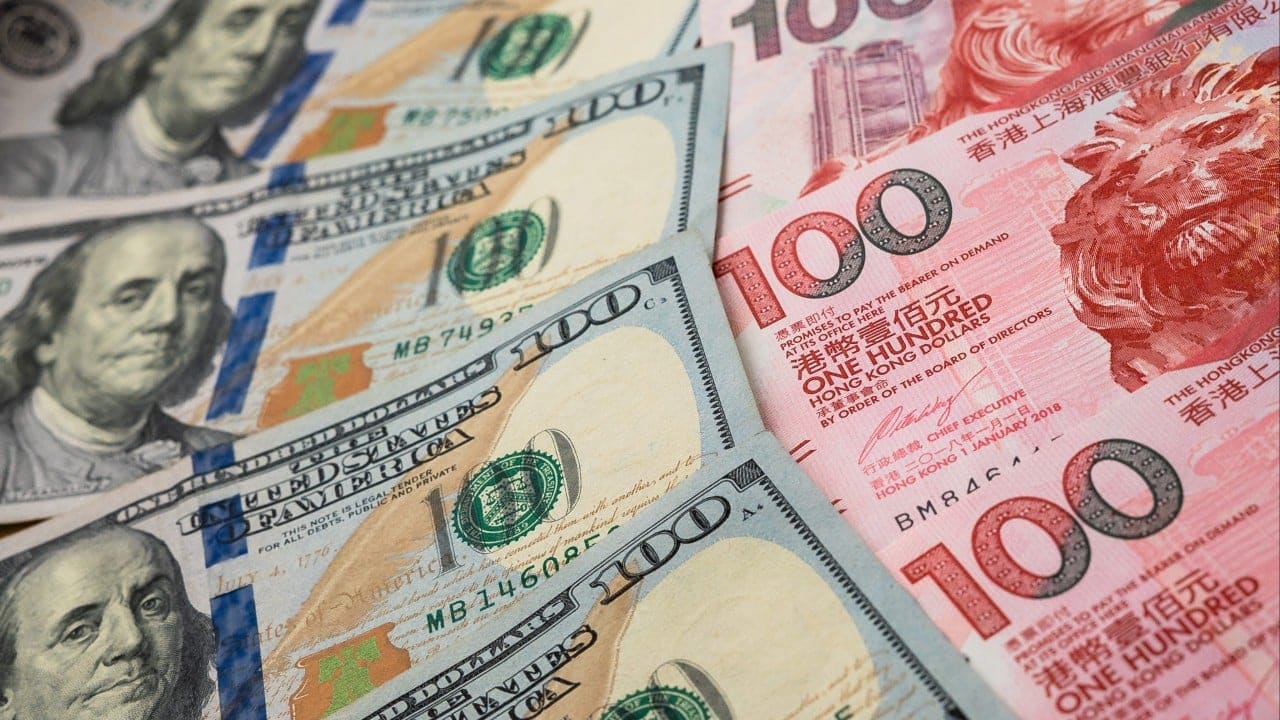
- ·Hong Kong's currency peg to the US dollar was established in October 1983 after the local currency fell 48 percent to HK$9.60 amid sovereignty negotiations, and has been defended within a HK$7.75-7.85 band ever since.
- ·The system offers exchange rate stability and monetary discipline but faces new questions as China accelerates yuan internationalization and global central banks diversify away from dollar reserves.
- ·Hong Kong authorities have repeatedly ruled out changes to the peg, citing over USD 430 billion in foreign reserves and the system's role as the foundation of the city's financial stability.
A System Born from Panic
The linked exchange rate system that ties Hong Kong's currency to the US dollar emerged from a moment of acute financial distress. In September 1983, the Hong Kong dollar was freely floating when a crisis of confidence sent it plummeting 48 percent to a historic low of HK$9.60 against the greenback.
The collapse reflected deep uncertainty about the city's future as negotiations between Britain and China over Hong Kong's sovereignty intensified. Within weeks, authorities moved to stabilize the currency by introducing a peg, initially set at HK$7.80 per US dollar. That anchor has remained in place for more than four decades, surviving the 1997 Asian financial crisis, the 2008 global meltdown, and repeated waves of capital flight.
Today the Hong Kong Monetary Authority maintains the peg within a narrow convertibility zone between HK$7.75 and HK$7.85 per dollar. The system requires the authority to hold substantial US dollar reserves and stand ready to buy or sell Hong Kong dollars at the band's edges to defend the rate.
The Mechanics of Stability
Under the arrangement, commercial banks can exchange Hong Kong dollars for US dollars at a fixed rate through the currency board mechanism. This convertibility underpins confidence in the local currency and has helped Hong Kong maintain its status as an international financial center with free capital flows.
The peg offers several advantages. It eliminates exchange rate risk for businesses and investors transacting in US dollars, the world's dominant reserve currency. It also imposes monetary discipline on the government, since the currency board system limits the ability to print money arbitrarily or run large fiscal deficits without consequences.
Hong Kong's foreign exchange reserves stood at over USD 430 billion as of mid-2025, providing a deep buffer to defend the peg. The city's fiscal reserves add another layer of protection, giving authorities ample firepower to weather speculative attacks.
New Pressures Build
Yet the international monetary landscape is shifting. Central banks from Beijing to New Delhi have been gradually reducing their holdings of US Treasury securities, diversifying into gold, euros, and other assets. China has accelerated efforts to promote cross-border use of the yuan through trade settlement systems, currency swap lines with dozens of countries, and the expansion of offshore yuan clearing hubs.
These trends are prompting some market participants to question whether Hong Kong's rigid link to the dollar still aligns with the city's economic reality. Critics note that China is now Hong Kong's largest trading partner by far, accounting for the majority of goods flows. Meanwhile, yuan-denominated financial products have proliferated in Hong Kong's markets over the past decade.
A handful of economists and former officials have floated the idea of reviewing the peg, suggesting alternatives such as a basket arrangement that would include the yuan alongside the dollar, or even a gradual transition toward a managed float. Proponents argue such changes could give Hong Kong more monetary policy flexibility and better reflect its deep integration with the mainland economy.
The Case for Continuity
Hong Kong's financial authorities have consistently dismissed calls for change. The HKMA has emphasized that the linked exchange rate system remains the cornerstone of financial stability and that there are no plans to alter it. Officials point out that any shift away from the dollar peg would introduce uncertainty at a time when Hong Kong is working to reinforce its role as a gateway for international capital into China.
The city's legal system, regulatory framework, and market infrastructure are all calibrated around dollar-based transactions and contracts. Unwinding that would be complex and potentially destabilizing. Moreover, Hong Kong's status as a freely convertible currency jurisdiction rests in part on the credibility that four decades of defending the peg have built.
Financial Secretary Paul Chan reiterated in recent public remarks that the government sees no reason to revisit the arrangement. He noted that Hong Kong's economic fundamentals, including strong reserves and a disciplined fiscal position, provide solid backing for the currency system.
What Comes Next
For now, the debate remains largely academic. Market pressure on the Hong Kong dollar has been modest, and the currency has traded comfortably within its band for extended periods. Speculative attacks that periodically tested the peg in past decades have not materialized in recent years.
Still, the conversation reflects broader questions about Asia's monetary architecture as the region's economic weight grows and China's currency ambitions advance. Hong Kong sits at the intersection of these forces, a role that has historically been a source of strength but also exposes the city to competing pressures.
Whether the peg endures another four decades may depend less on technical economic criteria than on the evolving geopolitical and financial relationships that shape the region. For a city that has built its prosperity on serving as a bridge between East and West, maintaining that balance will remain the central challenge.
RELATED STORIES
Hong Kong Industry Group Proposes Currency Basket to Replace Dollar Peg
Cheng Wei-Lun · 3 min

Hong Kong and China Regulators Announce Market Integration Reforms
Cheng Wei-Lun · 3 min
Chinese State Firms Centralize Global Cash in Hong Kong Treasury Hubs
Cheng Wei-Lun · 3 min
Hong Kong's Wealth Hub Status Faces Test as Beijing Tightens Tax Enforcement
Cheng Wei-Lun · 3 min
Spot something wrong? Email editor@briefasia.com. We log every correction publicly.