Finance · Deals
Hong Kong's Wealth Hub Status Faces Test as Beijing Tightens Tax Enforcement
The city attracted record cross-border assets in recent years, but new mainland rules targeting offshore wealth may reshape the regional private banking landscape
KEY TAKEAWAYS
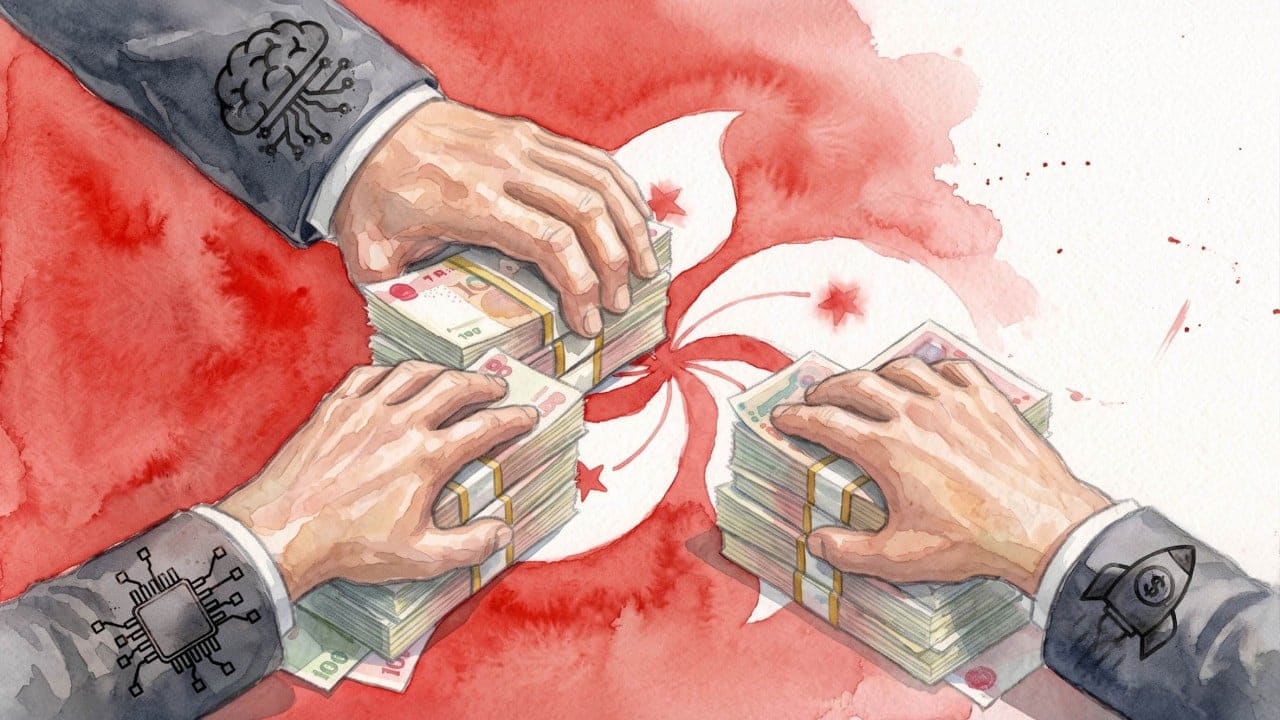
- ·Hong Kong became the world's largest cross-border wealth hub last year, surpassing Switzerland as wealthy Chinese and Southeast Asian families consolidated assets in the city.
- ·Beijing has tightened tax enforcement targeting offshore holdings by mainland residents, closing gaps that allowed wealth to sit in Hong Kong structures with limited scrutiny.
- ·Private banks now face compliance pressure and client uncertainty, while Singapore and Dubai gain appeal as alternatives offering greater distance from mainland oversight.
A Decade of Magnetic Pull
Hong Kong has spent decades building a reputation as the preferred destination for wealthy families across Asia. The city's combination of unrestricted capital movement, robust legal infrastructure, and deep financial services expertise has drawn Chinese entrepreneurs establishing family trusts, Southeast Asian millionaires seeking portfolio diversification, and international investors positioning for regional opportunities.
That appeal reached a milestone last year when Hong Kong surpassed Switzerland to become the world's largest center for cross-border private wealth. The shift reflected years of momentum driven by Chinese technology firms listing in the city, mainland entrepreneurs moving assets offshore, and Asian family offices consolidating operations in a single jurisdiction.
The city's private banks, trust companies, and wealth advisors have built an ecosystem designed to serve ultra-high-net-worth individuals who value confidentiality, tax efficiency, and proximity to mainland markets without direct exposure to Beijing's regulatory reach.
Beijing's New Tax Posture
That calculus is now under pressure. China has begun tightening enforcement of tax rules that affect offshore assets held by mainland residents and entities. The measures target income and gains that previously existed in a grey zone, where wealthy individuals could structure holdings through Hong Kong vehicles with limited mainland scrutiny.
Recent regulatory signals indicate Beijing intends to close gaps that allowed high-net-worth families to park wealth in Hong Kong trusts or holding companies while maintaining effective control from the mainland. The State Taxation Administration has expanded information-sharing protocols and clarified residency tests that determine tax liability.
For private banks and wealth managers in Hong Kong, the shift introduces compliance complexity. Institutions must now verify client tax residency more rigorously and assess whether structures that were once standard practice now trigger reporting obligations or withholding requirements under updated mainland rules.
Implications for Private Banking
The immediate effect is visible in client behavior. Wealth advisors report more cautious conversations about trust structures, with families seeking legal opinions on how Beijing's enforcement priorities might affect existing arrangements. Some clients are restructuring holdings to ensure clear separation between mainland and offshore assets, while others are reconsidering whether Hong Kong remains the optimal domicile.
The city's wealth management industry has long benefited from its role as a halfway house: close enough to China to capture mainland capital flows, but legally distinct enough to offer offshore advantages. That positioning becomes harder to maintain if Beijing treats Hong Kong-based assets as functionally onshore for tax purposes.
Private banks face a balancing act. Stricter compliance reduces regulatory risk but may also make Hong Kong less attractive relative to competitors in Singapore, Dubai, or even Switzerland, where distance from mainland oversight remains a selling point.
What Comes Next
Hong Kong's status as a wealth hub will depend on how aggressively Beijing enforces the new tax framework and whether the city can articulate a value proposition beyond tax arbitrage. Financial services executives argue that Hong Kong's strengths go deeper than tax efficiency: the city offers sophisticated estate planning, access to mainland investment opportunities through Stock Connect and Wealth Management Connect programs, and a concentration of legal and advisory talent unmatched elsewhere in Asia.
Yet the competitive landscape is shifting. Singapore has steadily gained market share among Asian families seeking offshore wealth management, and the city-state's government has signaled openness to accommodating ultra-high-net-worth migration. Dubai has emerged as an alternative for clients prioritizing distance from both U.S. and Chinese tax authorities.
For Hong Kong, the test will be whether its legal system, currency stability, and financial infrastructure can sustain inflows even as the tax environment becomes less favorable. The city remains a vital gateway to China, but that proximity now cuts both ways.
RELATED STORIES
Hong Kong and China Regulators Announce Market Integration Reforms
Cheng Wei-Lun · 3 min
China Bond Futures Launch in Hong Kong Draws Strong Opening Volume
Cheng Wei-Lun · 3 min

Asian Central Banks Drive Gold Demand as Hong Kong Eyes Trading Hub Role
Cheng Wei-Lun · 3 min
Chinese State Firms Centralize Global Cash in Hong Kong Treasury Hubs
Cheng Wei-Lun · 3 min
Spot something wrong? Email editor@briefasia.com. We log every correction publicly.