Finance · Banking
Fuse Financing Lends $406 Billion to 11.1 Million Filipinos in Q1
GCash's lending arm targets first-time borrowers with digital credit products, moving customers away from informal 5-6 lenders into regulated financial system
KEY TAKEAWAYS
- ·Fuse Financing disbursed P406 billion in loans to 11.1 million unique users in Q1 2026, with 85 percent being first-time formal credit borrowers.
- ·The GCash lending arm uses a proprietary GScore algorithm based on e-wallet transaction data to serve unbanked Filipinos without traditional credit histories.
- ·Fuse launched GLoan Sakto in 2024, a nano-loan product allowing borrowers to access as little as P100 with zero interest and 14-day repayment terms.
Digital Credit Reaches the Unbanked
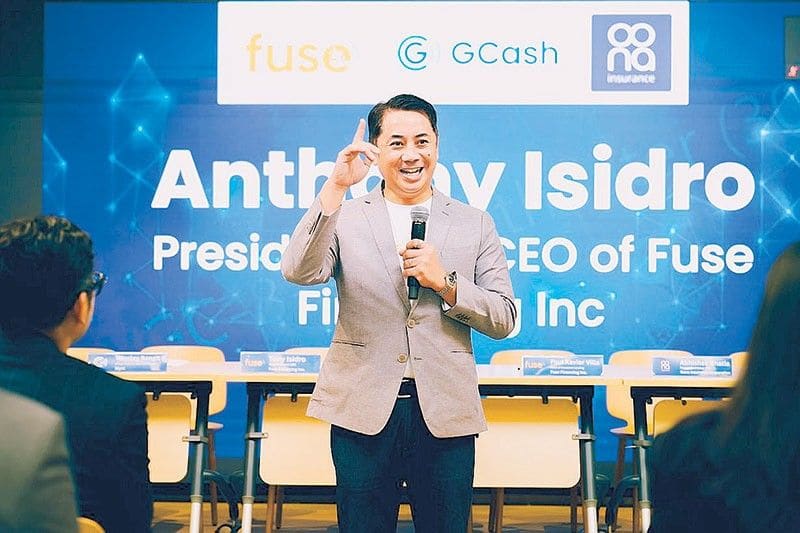
Fuse Financing, the lending division of Philippine e-wallet operator GCash, disbursed P406 billion in loans to 11.1 million unique users during the first quarter of 2026, according to company president and CEO Tony Isidro. Of those borrowers, 85 percent had never accessed formal credit before.
The figures underscore the scale at which digital lenders are pulling Filipinos out of informal credit markets and into regulated channels. For decades, cash-strapped households have relied on "5-6" moneylenders, who typically charge 20 percent interest per cycle, or turned to relatives and neighborhood store tabs known locally as palista. Fuse's model aims to replace those arrangements with instant, app-based loans anchored to a proprietary credit-scoring system.
The firm's GScore algorithm evaluates borrowers based on their transaction footprint inside the GCash ecosystem, enabling users without bank accounts, collateral or traditional credit histories to qualify for loans. Isidro describes the mechanism as a way to extend "fair, respectful and accessible" credit at scale.
Product Suite and Nano-Loans
Fuse currently operates three core products. GCredit functions as a revolving credit line; GGives splits purchases into installments; and GLoan offers instant cash advances. In 2024 the company launched GLoan Sakto, a nano-loan feature that allows borrowers to take as little as P100 with zero interest, a minimal processing fee and a 14-day repayment window.
Isidro characterizes GLoan Sakto as "sachet loans," a nod to the Philippine consumer habit of buying essentials in single-use portions. The product targets borrowers with immediate, small-ticket needs, such as bridging the gap between paydays. Traditional lenders have historically classified these customers as high-risk and declined to serve them, pushing them toward unregulated loan sharks.
The nano-loan format also serves as an on-ramp for credit-building. Successful repayment improves a user's GScore, which in turn raises loan limits and unlocks access to the firm's other products.
Trust at the Core
Isidro traces his approach to lending back to childhood. At age 10 he helped run his grandmother's sari-sari store in Marikina, where regular customers would buy goods on credit and have purchases recorded in a notebook. That experience, he says, taught him that borrowing is fundamentally a matter of trust.
Five years into his tenure at Fuse, Isidro has sought to replicate that neighborhood-level trust through technology. The firm enforces a zero-tolerance policy on abusive collection practices and has begun deploying artificial intelligence to monitor call interactions between agents and borrowers. The AI scans conversations to ensure compliance with regulatory guidelines and filters out harassment.
Isidro emphasizes that dignity in lending extends beyond approvals. "Borrowing with dignity means ensuring that every touchpoint across the customer's entire journey is respectful, fair and empowering," he said.
Infrastructure and Partnerships
Fuse is refining its GScore engine and exploring industry-specific financing products for micro, small and medium enterprises. The company has partnered with the Asian Development Bank on product development and recently joined the Securities and Exchange Commission in a nationwide financial literacy campaign.
Isidro acknowledges that consumer understanding of digital credit remains uneven. He points to ongoing education efforts as critical to preventing borrowers from falling into debt traps or returning to predatory lenders.
The firm, which marks its tenth anniversary in 2026, sees merchant partnerships and ecosystem expansion as near-term growth levers. Isidro is particularly focused on reaching MSMEs, which he describes as the backbone of the Philippine economy.
Regional Context
The Philippines remains one of Southeast Asia's most underbanked markets. Millions of adults lack access to formal financial services, a gap that has historically been filled by informal lenders operating outside regulatory oversight. Digital wallets and embedded lending platforms have emerged as a primary vehicle for financial inclusion across the region, with similar models gaining traction in Indonesia, Vietnam and Thailand.
Fuse's Q1 loan volume reflects both the appetite for accessible credit and the scale required to serve a mass-market population. The company's ability to process millions of small loans hinges on automated underwriting and real-time data, infrastructure that traditional banks have been slow to build.
Isidro remains optimistic about closing the country's financial inclusion gap, though he concedes the road is long. "We've made meaningful progress, but we still have a long way to go," he said. "Through responsible credit solutions, we can bring more Filipinos into a safer, fully regulated formal credit ecosystem."
RELATED STORIES

Philippines Central Bank Fielded 120,000 Customer Disputes in 2025
Priyanka V. Rao · 3 min
Philippine SSS Net Income Falls 28 Percent as Pension Hike Drives Up Costs
Priyanka V. Rao · 2 min

US and Japan Stage First Joint Yen Intervention in 28 Years
Cheng Wei-Lun · 3 min
Philippine Equities Face Headwinds as Second-Quarter Growth Hits 17-Year Low
Priyanka V. Rao · 3 min
Spot something wrong? Email editor@briefasia.com. We log every correction publicly.