Technology · Dev
Factorial and SK On Explore Solid-State Battery Retrofit for Existing Plants
The partnership aims to assess whether legacy lithium-ion facilities can be converted to manufacture next-generation solid-state cells, potentially accelerating deployment across Asia's battery supply chain.
KEY TAKEAWAYS
- ·Factorial Energy and SK On will conduct a feasibility study to determine if existing lithium-ion battery plants can be retrofitted for solid-state cell production.
- ·Retrofitting could reduce capital expenditure and accelerate deployment timelines compared to building new gigafactories, which typically cost 500 million to over one billion US dollars.
- ·If successful, the first adapted production lines could begin pilot output by 2028, positioning South Korea as a leading solid-state manufacturing hub in Asia.
A Retrofit Strategy for Next-Generation Cells
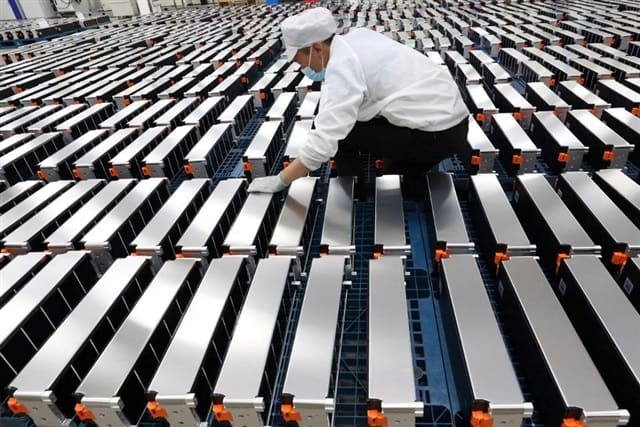
Factorial Energy and SK On announced a joint feasibility study to determine whether current lithium-ion battery plants can be adapted to produce solid-state batteries. The agreement marks a pragmatic approach to scaling advanced energy storage: instead of constructing entirely new factories, the two companies will evaluate how existing lines, tooling, and infrastructure might be repurposed for solid-state chemistry.
SK On operates multiple gigafactories across South Korea, China, and Hungary, with combined capacity exceeding 100 GWh. Factorial, a Massachusetts-based developer, has been piloting its proprietary solid-state electrolyte in automotive applications and claims energy density gains of up to 50 percent over conventional lithium-ion cells. The feasibility work will focus on production processes, quality control, and capital expenditure required to transition legacy assets.
Why Retrofitting Matters in Asia's Battery Race
Building a greenfield battery plant typically requires 18 to 24 months and upfront investment ranging from 500 million to over one billion US dollars, depending on scale. Retrofitting existing facilities could cut both timelines and capital outlays, a critical advantage as automakers set 2027 and 2028 targets for solid-state battery integration in electric vehicles.
South Korea's battery triumvirate of LG Energy Solution, Samsung SDI, and SK On collectively holds nearly 30 percent of global EV battery market share. If retrofit pathways prove viable, Korea's installed base of lithium-ion capacity could pivot toward solid-state production faster than competitors building from scratch. China's CATL and Japan's Panasonic have also signaled interest in solid-state technology but have not yet disclosed retrofit strategies at scale.
Solid-state batteries replace the liquid or gel electrolyte in conventional lithium-ion cells with a solid material, typically ceramic or polymer-based. The architecture promises higher energy density, faster charging, and improved thermal stability, addressing three pain points that have constrained EV adoption. However, manufacturing solid-state cells at gigawatt-hour scale remains unproven; most pilot lines produce fewer than 10 MWh annually.
Technical and Economic Hurdles
The feasibility study will need to resolve several engineering challenges. Solid-state cells require precise control of interface contact between electrode and electrolyte, a step that differs fundamentally from liquid-electrolyte assembly. Existing coating, stacking, and formation equipment may need software updates, hardware modifications, or complete replacement.
Material supply chains also diverge. Solid electrolytes often rely on lithium metal anodes and specialized cathode formulations, whereas legacy plants are optimized for graphite anodes and nickel-manganese-cobalt or lithium-iron-phosphate cathodes. Sourcing, handling, and quality assurance protocols will require adaptation, particularly for lithium metal, which is reactive and sensitive to moisture.
Cost remains the central question. Industry estimates place solid-state cell production costs at roughly double those of conventional lithium-ion cells today, driven by material expense and lower manufacturing throughput. Retrofitting could narrow that gap if capital expenditure is reduced, but only if yield rates and cycle times approach parity with established lithium-ion processes.
Implications for the EV Supply Chain
Automakers including Mercedes-Benz, Hyundai, and Stellantis have invested in or partnered with solid-state developers, betting that the technology will unlock longer range and shorter charging times by the end of the decade. Mercedes holds a stake in Factorial and has been testing prototype cells in development vehicles. SK On supplies batteries to Hyundai, Kia, Ford, and Volkswagen, giving the Korean company a direct channel to integrate solid-state cells into high-volume platforms if the retrofit path succeeds.
The timeline for commercial deployment hinges on the outcome of this feasibility work. If SK On and Factorial conclude that retrofitting is economically and technically sound, the first adapted lines could begin pilot production as early as 2028. That would position South Korea as a leading solid-state manufacturing hub and potentially shift the competitive landscape in battery supply, where China currently dominates both capacity and raw material processing.
The partnership also reflects a broader industry recognition that solid-state batteries will not arrive via a single breakthrough but through iterative adaptation of existing industrial ecosystems. Rather than waiting for purpose-built solid-state gigafactories, the sector is exploring incremental pathways that leverage sunk capital and established workforces. Whether that approach delivers on cost and performance targets will become clear over the next 18 to 24 months as feasibility studies conclude and pilot conversions begin.
RELATED STORIES
Posco Future M Lands 190,000-Ton LFP Cathode Contract in Energy Storage Push
Jun-ho Seo · 3 min
South Korea Mobilizes Conglomerates for Humanoid Robot Push
Cheng Wei-Lun · 3 min
SK Hynix Eyes Stake Sale in $3 Billion China Packaging Facility
Cheng Wei-Lun · 2 min
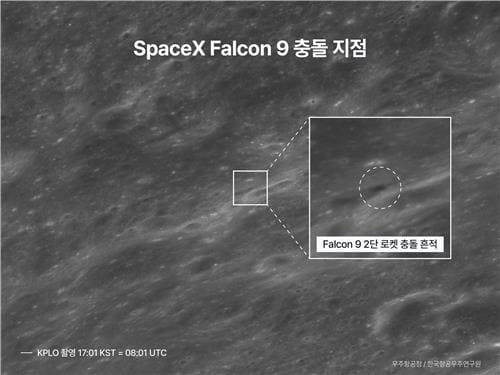
South Korea's Danuri Orbiter Photographs SpaceX Rocket Impact on Moon's Far Side
Cheng Wei-Lun · 4 min
Spot something wrong? Email editor@briefasia.com. We log every correction publicly.