Technology · Dev
EcoPro BM Sets 2027 Timeline for Solid-State Electrolyte Production
South Korean battery materials maker unveils roadmap to supply complete range of components for next-generation solid-state cells
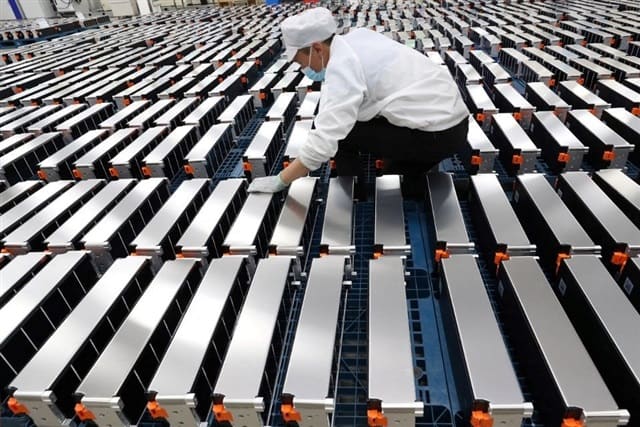
KEY TAKEAWAYS
- ·EcoPro BM plans to begin mass production of sulfide-based solid electrolytes by 2027, targeting supply for all-solid-state batteries.
- ·The roadmap was announced following a July 16 briefing in Seoul and positions the company to supply the full range of materials for next-generation cells.
- ·The timeline aligns with competing solid-state commercialization efforts across Asia, including Toyota's 2027-2028 vehicle production target and initiatives from Chinese battery makers.
Manufacturing Push for Next-Generation Battery Components
EcoPro BM announced plans to launch mass production of sulfide-based solid electrolytes as early as 2027, marking a strategic expansion into critical materials for all-solid-state batteries. The South Korean company outlined its timeline during a corporate briefing held in Yeouido, Seoul, on July 16, followed by a formal roadmap announcement on July 19.
The move positions EcoPro BM to supply the complete range of materials required for solid-state battery production, a technology widely viewed as the successor to current lithium-ion cells. Sulfide-based electrolytes are considered one of the most promising paths for solid-state batteries due to their high ionic conductivity and potential for room-temperature operation.
Asia's Battery Materials Race
EcoPro BM's timeline aligns with broader industrial momentum across Northeast Asia, where battery suppliers and automakers are racing to commercialize solid-state technology. Japan's Toyota has targeted 2027-2028 for limited production of solid-state battery vehicles, while Chinese manufacturers including CATL and BYD have announced competing timelines for semi-solid and all-solid-state variants.
South Korea's battery ecosystem has concentrated heavily on cathode materials and cell assembly, with Samsung SDI and LG Energy Solution leading global shipments of conventional lithium-ion batteries. EcoPro BM's expansion into solid electrolytes represents a vertical integration strategy designed to capture value across the materials chain as the industry transitions away from liquid electrolyte architectures.
The company's existing business centers on high-nickel cathode materials, a segment where South Korean producers hold significant market share in the premium EV battery space. Adding solid electrolyte production would give EcoPro BM a foothold in a material category currently dominated by Japanese chemical firms and a handful of specialized startups.
Technical and Commercial Hurdles
Sulfide-based solid electrolytes face well-documented challenges in moisture sensitivity, interfacial resistance with electrode materials, and manufacturing scalability. Lab-scale synthesis of sulfide compounds has proven relatively straightforward, but achieving the purity, uniformity, and cost structure required for automotive-scale production remains an open engineering problem.
EcoPro BM has not disclosed capital expenditure figures, production capacity targets, or customer commitments tied to the 2027 timeline. Industry observers note that solid-state battery roadmaps have historically shifted, with multiple automakers and suppliers adjusting commercialization dates as technical obstacles emerge during scale-up.
The company's announcement suggests confidence in resolving process issues within the next two years, a timeline that implies pilot production and customer qualification activities are already underway. Whether EcoPro BM is developing proprietary sulfide formulations or licensing existing compositions remains unclear from public disclosures.
Implications for Korea's Battery Supply Chain
If EcoPro BM meets its 2027 target, South Korea would possess domestic supply capability for both cathode active materials and solid electrolytes, reducing dependence on Japanese chemical suppliers for next-generation battery inputs. This vertical integration mirrors strategies pursued by Chinese battery manufacturers, who have aggressively developed in-house materials capabilities over the past decade.
The timeline also reflects pressure on Korean battery makers to differentiate their technology offerings as Chinese competitors scale production and drive down costs in the conventional lithium-ion segment. Solid-state batteries promise higher energy density, faster charging, and improved safety characteristics, attributes that could justify premium pricing in automotive and aerospace applications.
Market adoption will depend on whether EcoPro BM and its cell-making customers can demonstrate cost-competitive solid-state batteries at production volumes sufficient for mainstream vehicle programs. The 2027 timeline puts the company on a parallel track with global competitors, setting up a narrow window for establishing manufacturing scale and customer relationships before the market consolidates around a smaller number of suppliers.
RELATED STORIES
South Korean Chip Materials Suppliers Ride AI Boom to Profit Surge
Cheng Wei-Lun · 3 min
South Korea Taps Three Telecom Giants to Deliver Free AI Services Nationwide
Cheng Wei-Lun · 3 min
SK Hynix Eyes Deeper Collaboration With Japan's Chip Sector
Cheng Wei-Lun · 4 min
Samsung Display Restarts Asan OLED Campus as Foldable Phones Stage Recovery
Cheng Wei-Lun · 4 min
Spot something wrong? Email editor@briefasia.com. We log every correction publicly.