ExclusiveLifestyle · Health
Do Duy Cuong and the immunity gap Asia is not counting
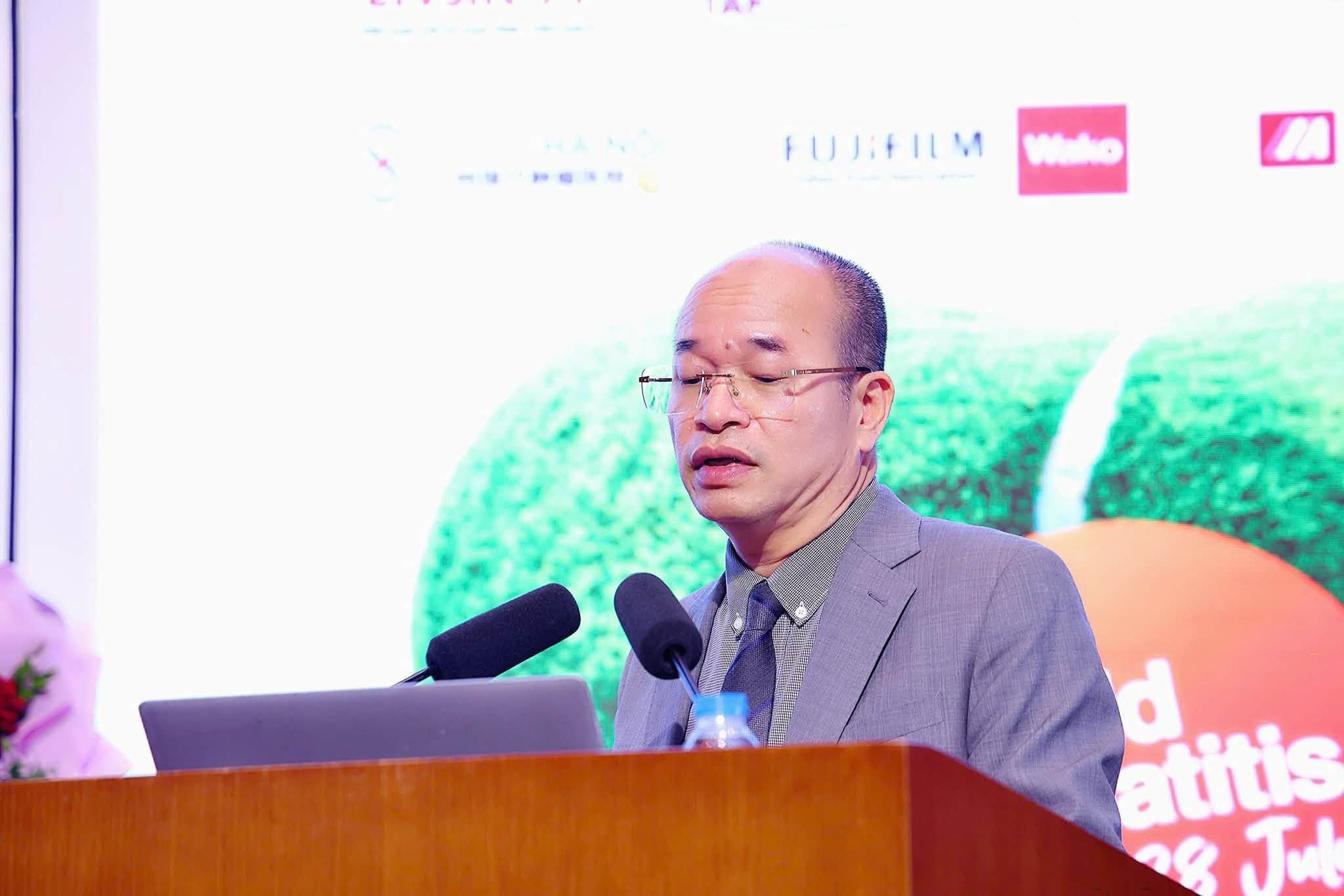
Measles is surveilled as a childhood disease. In a Hanoi referral ward, the patients arriving on ventilators were between 30 and 65, and three quarters could not say whether they had ever been vaccinated.
KEY TAKEAWAYS
- ·In a Hanoi referral ward through the 2024-25 measles wave, the adults arriving on ventilators were 30 to 65 years old and three quarters could not recall being vaccinated, the signal a child-centred surveillance system misses: a tertiary ICU records the consequences of vaccine coverage twenty or thirty years later.
- ·Do Duy Cuong, the only one of his 1997 residency intake to enter infectious diseases, turns outbreaks into documents others can read, the Bach Mai COVID cluster became a US CDC paper, which is the one capability a health system cannot buy as equipment.
- ·For patients the fix is cheap, make adult vaccination history a routine admission question, especially in diabetes, lung and kidney disease; the harder question is who does this underpaid, high-risk work next as senior expertise drifts from the public wards that carry the sickest cases toward private hospitals and schools.
On 10 April 2025, the Bach Mai Institute of Tropical Medicine reported the year's first adult death from measles: a 51 year old man in Hanoi with chronic obstructive pulmonary disease and diabetes. In the five months before that, the same institute had admitted 104 adults with measles, and nearly half needed intensive care.
The number that matters is not the caseload. It is an answer to a routine question on admission. Three quarters of those patients could not recall whether they had been vaccinated.
What an adult ward sees first
The patient was 51, lived in Hanoi, and had chronic lung disease, type 2 diabetes and hypertension before measles reached him. He had three days of dry cough, fever and breathlessness, then a rash spreading from the face down. Four days after admission to a district hospital he was moved to intensive care with measles complicated by pneumonia. The national daily Nhan Dan reported the case on 10 April 2025.
Vietnam has run a national immunisation programme continuously since the 1980s. A measles death at 51 does not fit the categories that programme uses. Measles is counted, communicated and monitored as a disease of small children. Reporting systems point at the under fives. So do catch up campaigns. Adults are outside the frame.
What Associate Professor Do Duy Cuong, then director of the Bach Mai Institute of Tropical Medicine, reported to a health ministry delegation in March 2025 was not an outbreak. Between November 2024 and March 2025 the institute admitted 104 measles inpatients. Forty eight were severe enough to require intensive care. The typical admitted patient was between 30 and 65 years old, and one was 70 and on a ventilator. Three quarters had no recollection of their own vaccination history.
A tertiary ward, read properly, is a surveillance instrument. It cannot measure vaccine coverage. It records the consequences of that coverage twenty or thirty years later.
That is the argument of this piece, and it does not stop at Vietnam's borders. Most measles surveillance in Asia is built around children, because that is where measles has historically been. The place where the loss of adult immunity shows up first is not a commune clinic. It is the intensive care unit of a referral hospital, where the first cases arrive already needing oxygen.
A specialty almost nobody chose
He qualified in medicine at Hanoi Medical University in 1993 and completed residency in infectious diseases in 1997. According to a profile published by the Ho Chi Minh City daily Nguoi Lao Dong in January 2024, twenty two doctors passed into that residency intake and he was the only one who went into infectious diseases. The specialty was hard to study, poorly paid, and carried an occupational risk the others did not.
In the same profile he described people withdrawing an offered handshake once they heard which department he worked in. His explanation for staying was short.
“A doctor has to carry the full responsibility, with conscience,” he told Nguoi Lao Dong in January 2024. The Vietnamese is blunter than any English rendering.
He has compared diagnosing infection to working a criminal case: thousands of possible agents, hidden in the body, and a single missed rash or ulcer is enough to send the investigation the wrong way. Domestic outlets have reused that line to exhaustion. It nonetheless describes the one capability a health system cannot buy as equipment, which is the ability to ask the right question before the laboratory answers.
Through the late 1980s and 1990s his ward was full of malaria, tetanus, sepsis, typhoid, cholera and rabies, with almost no ventilators. Doctors and relatives took turns squeezing a resuscitation bag. In 2003 Bach Mai sat at the centre of the SARS outbreak in Hanoi. Avian influenza H5N1 followed, with a high fatality rate.
He trained at the Institute of Tropical Medicine at Nagasaki University in early 2003, then began doctoral work at the Karolinska Institute in Stockholm in 2007, defending in 2012. He was appointed associate professor in 2018. In between he left the hospital for a period to run HIV programmes at an international health organisation, then returned to clinical work. Career records supplied by the subject state that the HIV outpatient clinic he built at Bach Mai manages more than 2,000 patients. BriefAsia has not been able to verify that figure independently.
The detail that matters to a regional desk is not the biography. It is that a specialty almost nobody chose thirty years ago is now the specialty Asia is short of, at exactly the moment the disease map is changing fastest.

What survives an outbreak
In March 2020 Bach Mai Hospital became the largest COVID-19 cluster in northern Vietnam. The paper he wrote as first author, published in Emerging Infectious Diseases by the United States Centers for Disease Control and Prevention in January 2021, records the scale of the response: three distinct clusters identified on 18 March, 495 people traced and tested in the first round, 27 staff of a catering contractor positive, all 7,664 hospital staff placed under quarantine, and 52,239 community contacts quarantined. The hospital outbreak was contained in three weeks.
The point is not the outbreak. It is that the outbreak was turned into a document that can be challenged, in English, in a journal read by colleagues in Bangkok, Manila and Jakarta. A great deal of epidemic experience in this region dies with the people who lived through it, because nobody writes it down in time. Two of his co authors were at Karolinska, a trace of the network he kept from his doctoral years.
He was also corresponding author on a Journal of Travel Medicine paper describing Vietnam's second wave, which began in a tourist city, again through hospital transmission that spilled into the community. Since 2021 he has edited Bach Mai Hospital's clinical medicine journal, a position that attracts no attention and determines whether young Vietnamese doctors have somewhere to learn to write and to be refereed.
The map is changing shape
In August 2025, with chikungunya spreading in several Asian countries and no case yet recorded in Vietnam, he published a deliberately unexcited assessment on the Bach Mai portal. The disease is not new, he noted, and its current spread may be linked to environmental and weather conditions favouring mosquitoes. The clinical difficulty is that sudden high fever, severe joint pain and rash look very like dengue, which is endemic.
Most cases resolve on their own, he said, so the public should not panic. He added that diagnostic PCR was available at only some facilities.
That sentence describes the structural problem of the public health expert. He has to warn and to prevent panic at the same time, through the same microphone.
The regional picture has not softened. Health ministry figures reported in the Vietnamese press show more than 70,000 dengue cases and nine deaths in the first seven months of 2026, roughly 1.3 times the same period of 2025, with more than 53,000 of those in the south. Globally, dengue rose from about 500,000 cases in 2000 to more than 14 million in 2024, with roughly 10,000 deaths, and the probability of El Nino returning in 2026 has been put at 62 percent for June to August, rising towards 80 percent in autumn.
For measles, a World Health Organization report published on 28 November 2025 showed cases falling 71 percent and deaths 88 percent between 2000 and 2024, to roughly 11 million cases and 95,000 deaths. That progress is now under pressure. Canada lost its measles elimination status on 10 November 2025 after more than a year of sustained transmission of a single strain. Surveillance data reported to WHO show 42,174 cases in Bangladesh and 26,607 in India between December 2025 and May 2026. Early in 2026, cases rose in the Americas and South East Asia compared with the same period a year earlier.
One counterweight belongs in this piece, or it becomes a false alarm. In Vietnam, suspected measles cases in the four months to 18 April 2026 were 26.9 times lower than in the same period of 2025, while dengue ran 1.8 times higher and hand, foot and mouth disease 2.5 times higher. The adult measles wave of 2024 and 2025 has receded. The claim here is not that Vietnam is in a measles emergency. It is that the immunity gap the wave exposed is still there, and will be tested again each time the virus returns to the region.
Behind all of this sits a quieter problem. The World Health Organization's 2025 global antibiotic resistance surveillance report, drawing on more than 23 million bacteriologically confirmed infections, found resistance in 2023 to be most frequent in the South East Asia and Eastern Mediterranean regions. An infectious diseases intensive care unit in Hanoi, Jakarta or Dhaka is therefore solving two problems at once: new agents, and old drugs that no longer work.

Consequences, and who stands in that ward next
For patients the consequence is specific and cheap. Adult vaccination history needs to become a routine clinical question rather than a blank line on an admission form. Patients with diabetes, chronic lung disease or kidney disease are the group in whom a disease considered mild in children goes straight to a ventilator. Asking costs almost nothing. Not asking is paid for in intensive care days.
For the system the consequence is diagnostic and critical care capacity. When chikungunya, dengue and other viral infections all present as fever and rash, the value of a referral centre lies in having PCR and having someone who can interpret it. The intensive care unit of the Bach Mai Institute of Tropical Medicine, established in February 2025, treated 2,231 severely ill patients in its first year and runs invasive ventilation, high flow oxygen, continuous renal replacement therapy and plasma exchange as routine. That is infrastructure, and infrastructure is expensive and slow.
For the profession the consequence is the hardest question. Who does this work after him. A specialty almost nobody chose thirty years ago now sits at the front line of regional health security, still pays less than interventional specialties, and still carries the same occupational risk. He currently chairs the tropical medicine specialty council of the Vinmec health system, directs the Centre for Tropical Diseases at Vinmec Times City International Hospital, and heads the tropical medicine department at VinUniversity, where he has taught since 2023.
There is a tension here that this piece will not smooth over. Most of the capability he accumulated was built inside the public tertiary system, which takes the sickest patients and pays the least. Senior expertise moving toward private hospitals and private medical schools may thicken national capacity through teaching and research, or thin the capacity of the institutions carrying the severe caseload. Both are open. Neither Vietnam nor most of South East Asia has the data to say which is happening.
The 2026 to 2027 season will answer a narrower question that can actually be checked. Whether northern referral centres again record clusters of severe measles in patients aged 30 to 65, and whether adult admission records begin to ask something most of them do not ask today: how many doses of measles vaccine has this patient had.
All images courtesy of Do Duy Cuong.
RELATED STORIES
Indonesia's Hidden Health Crisis: How Fortified Nutrition Could Break the Anemia Cycle
Siti Nuraini · 4 min

Đăng Khôi Takes Trống Cơm to Silk Way Star
Manh Khang · 8 min
Top Glove Projects Strong FY2026 Results on Tighter Supply and Rising Prices
Anand Sundaram · 3 min
China's Beverage Giants Face Profitability Test After Rapid Expansion
Jun-ho Seo · 3 min
Spot something wrong? Email editor@briefasia.com. We log every correction publicly.