Technology · AI
Disco Raises First-Half Profit Guidance on AI Chip Equipment Sales
Japanese precision toolmaker expects net profit to climb 32% year-on-year as chipmakers expand capacity for AI semiconductor production
KEY TAKEAWAYS
- ·Disco raised its net profit forecast for the six months ending September 2026 to JPY73.8 billion, a 32% year-on-year increase driven by AI semiconductor equipment demand.
- ·The Japanese toolmaker benefits from sustained capital expenditure by TSMC, Samsung, and other Asian foundries expanding capacity for advanced logic and high-bandwidth memory production.
- ·Consumables revenue from replacement blades and abrasive wheels provides recurring income as fabs operate at higher utilization rates to meet AI infrastructure orders.
Profit Revision Signals Sustained AI Investment
Disco, the Japanese manufacturer of precision cutting and grinding equipment for semiconductors, has revised its net profit outlook for the six months ending September 30, 2026, to JPY73.8 billion (approximately USD461 million), according to the company. The figure represents a 32% increase over the same period last year, underscoring the resilience of capital equipment demand as foundries and memory makers ramp production lines dedicated to AI processors.
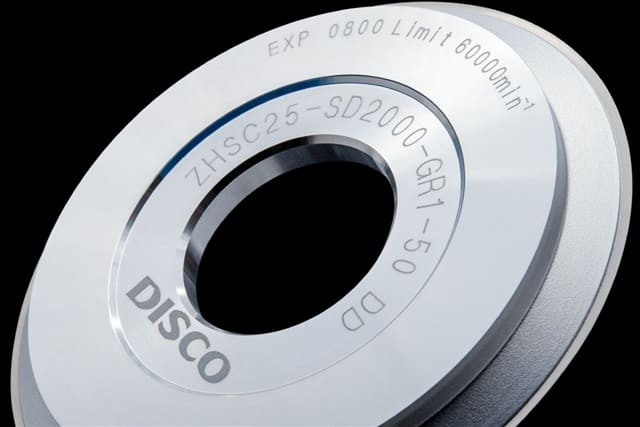
The Tokyo-based firm specializes in dicing saws and grinding wheels used to slice silicon wafers into individual chips, a critical step in the back-end of semiconductor manufacturing. While front-end lithography and deposition tools often capture headlines, back-end precision equipment remains indispensable as chip designs grow more complex and layer counts rise. Disco's tools are particularly vital for high-bandwidth memory and logic chips that power data-center accelerators, where even micron-level variation in die thickness can affect thermal performance and yield.
Asia's Foundry Buildout Drives Equipment Orders
The forecast upgrade arrives as Taiwan Semiconductor Manufacturing Company, Samsung Foundry, and smaller players across South Korea, Japan, and Singapore continue to expand advanced packaging and wafer processing capacity. TSMC alone has committed more than USD100 billion to capital expenditure through 2026, much of it earmarked for 3-nanometer and 2-nanometer nodes that serve hyperscale AI customers. Samsung's Pyeongtaek and Hwaseong fabs are likewise scaling output of high-bandwidth memory stacks used alongside Nvidia and AMD accelerators.
Disco's consumables business, which supplies replacement blades and abrasive wheels, also benefits from higher utilization rates at existing fabs. As chipmakers push equipment to multi-shift operation to meet AI-driven demand, consumable replacement cycles shorten, creating a recurring revenue stream that smooths cyclical swings in capital equipment sales. Industry data suggests that consumables can account for 30 to 40% of total revenue for precision toolmakers during periods of elevated fab utilization.
Regional Context and Supply-Chain Positioning
Japan's semiconductor equipment sector has maintained a strong foothold in specialty process tools even as the country's share of global chip production has declined. Disco, Tokyo Electron, and Screen Holdings collectively hold dominant positions in cleaning, etching, and dicing segments, supplying equipment to fabs across Asia. For Disco, proximity to Taiwan and South Korea, the two largest semiconductor manufacturing bases outside China, provides logistical and service advantages that insulate the firm from some of the volatility seen by diversified equipment conglomerates.
The profit revision also reflects limited exposure to consumer electronics, where demand has softened following two years of post-pandemic correction. AI infrastructure spending, by contrast, has remained robust, with cloud providers in North America, Europe, and Asia continuing to place multi-billion-dollar orders for custom silicon. That shift has allowed equipment makers focused on leading-edge and advanced-packaging nodes to decouple from traditional semiconductor cycles tied to smartphone and PC volumes.
Outlook and Margin Dynamics
Disco has not disclosed updated revenue or operating-margin guidance alongside the profit forecast, but the 32% year-on-year earnings growth implies either strong pricing discipline or favorable product mix. High-value tools for advanced packaging, such as those used in chiplet assembly and through-silicon-via processing, typically command higher margins than legacy dicing equipment for mature nodes.
Looking ahead, the sustainability of AI-driven equipment demand will depend on hyperscaler capital-expenditure budgets and the pace at which new fab capacity comes online. TSMC's Arizona and Kumamoto facilities, Samsung's Taylor, Texas, plant, and Intel's Ohio mega-site are all scheduled to begin volume production between late 2026 and early 2028, potentially creating a second wave of equipment orders. For Disco, maintaining lead times and securing supply of synthetic diamond and resin materials for consumables will be key operational priorities as the company navigates a period of elevated demand.
RELATED STORIES

Preferred Networks Eyes Public Listing to Scale AI Chip Production
Aiko Nakamura · 2 min

Fujitsu to Exit Commodity Hardware as AI Shifts Production Strategy
Aiko Nakamura · 4 min
Kioxia Rules Out SK Hynix Merger, Focuses on Stabilising Memory Chip Prices
Tran Quoc Bao · 3 min
Kioxia Rules Out SK Hynix Manufacturing Partnership Despite Memory Boom
Jun-ho Seo · 3 min
Spot something wrong? Email editor@briefasia.com. We log every correction publicly.