Finance · Markets
DBS Hits Record High as Singapore Lender Posts S$3.08 Billion Quarterly Profit
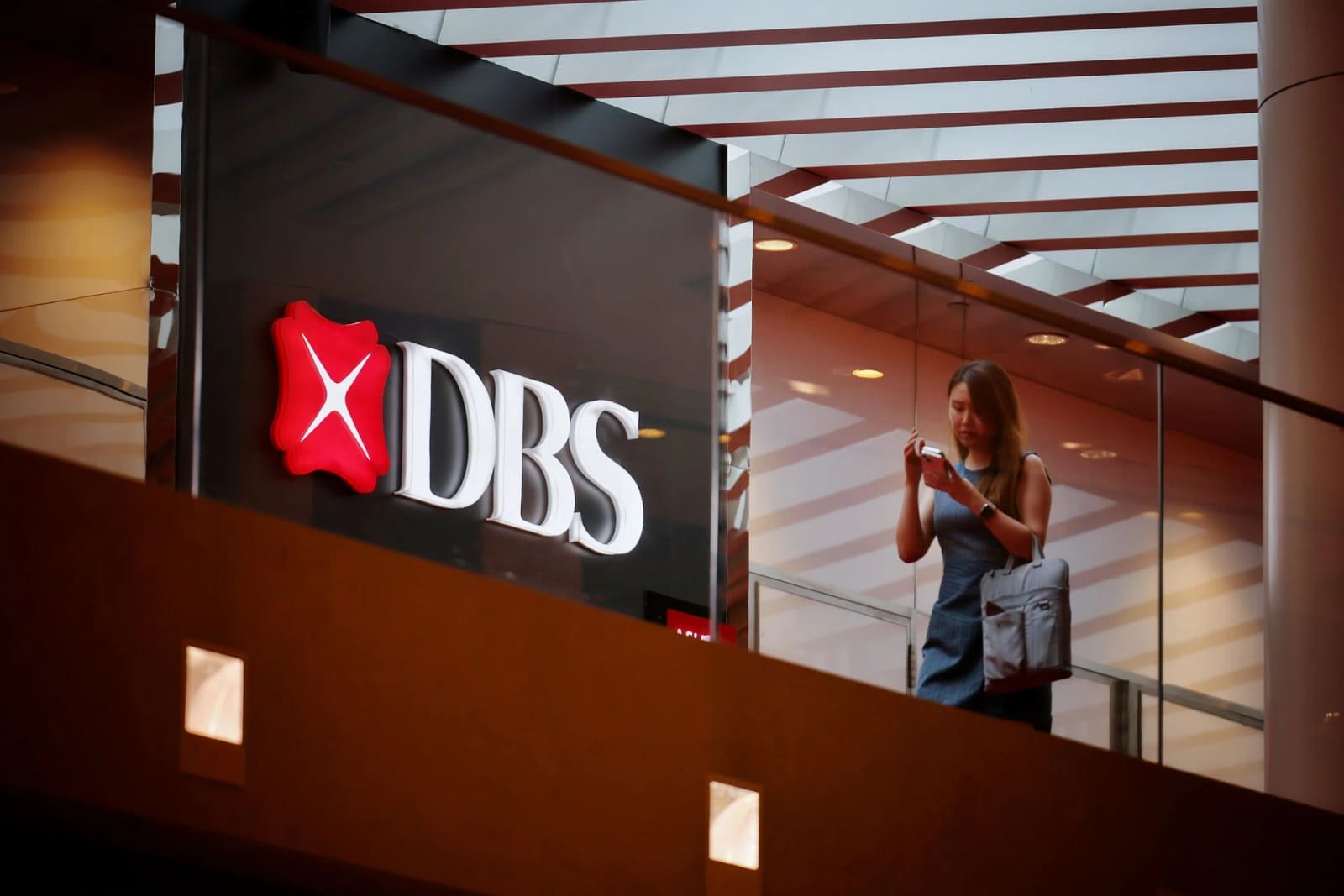
Southeast Asia's largest bank by assets delivered a 9% earnings jump, propelling shares to S$75.80 before settling at S$75.08 in heavy trading
KEY TAKEAWAYS
- ·DBS reported quarterly net profit of S$3.08 billion for the three months ended June 30, surpassing the S$2.88 billion analyst consensus and marking a 9% year-on-year increase.
- ·The bank raised its total dividend to S$0.81 per share, up from S$0.75 in the prior year period, with the payout including a S$0.15 capital return component.
- ·Shares climbed to an all-time high of S$75.80 before closing at S$75.08, reflecting investor confidence in Southeast Asia's largest lender by assets.
Market Response to Earnings Beat
DBS shares climbed to S$75.80 in Thursday morning trading, marking the highest level in the bank's history. The counter closed 2.1% higher at S$75.08, with approximately 7.5 million shares changing hands in transactions worth S$566.4 million.
The rally followed the bank's disclosure of second-quarter results that exceeded market forecasts. Net profit for the three months ending June 30 reached S$3.08 billion, representing a 9% increase from S$2.82 billion recorded in the corresponding period last year. The figure surpassed the S$2.88 billion consensus estimate compiled from five analysts surveyed by Bloomberg.
Dividend Increase Signals Confidence
DBS announced a total dividend of S$0.81 per share for the quarter, split between an ordinary dividend of S$0.66 and a capital return component of S$0.15. The combined payout represents an 8% increase from the S$0.75 per share distributed in the same quarter of 2025.
The capital return element reflects the bank's robust capital position and management's confidence in sustaining profitability while maintaining regulatory buffers. Singapore banks have increasingly used capital management tools to return excess capital to shareholders, a trend that has gained momentum as Basel III requirements stabilize across the region.
Regional Banking Landscape
The performance underscores DBS's position as Southeast Asia's largest lender by assets, a status built through decades of expansion across the region's fastest-growing economies. The bank operates significant franchises in Hong Kong, Indonesia, India, and mainland China, alongside its Singapore home base.
Regional peers have reported mixed results in recent quarters. OCBC and UOB, Singapore's other two banking giants, face similar operating environments but with different geographic weightings. DBS's heavier exposure to Hong Kong and Greater China markets has historically created both opportunities and volatility depending on economic cycles in those territories.
The broader Southeast Asian banking sector has benefited from rising interest rates over the past two years, which expanded net interest margins, the gap between what banks earn on loans and pay on deposits. However, signs of rate stabilization in major economies have prompted investors to scrutinize whether banks can maintain earnings momentum through fee income, wealth management, and treasury operations.
Earnings Drivers and Operating Environment
DBS has consistently emphasized diversification beyond traditional lending. Wealth management revenues have grown as Singapore cements its role as a private banking hub for Asian fortunes. The city-state's political stability, strong rule of law, and favorable tax treatment have attracted family offices and high-net-worth individuals from across the region.
Transaction banking, which includes cash management and trade finance, represents another pillar. Singapore's position as a regional logistics and trading hub naturally feeds this business line. The bank has invested heavily in digitizing these services, creating platforms that allow corporate clients to manage cross-border payments and supply chain financing with reduced friction.
Treasury and markets operations contribute to earnings through foreign exchange trading, interest rate products, and structured solutions for corporate hedgers. Volatility in currency markets and shifting central bank policies create both risks and opportunities in this segment.
The Singapore banking sector operates under one of the world's most stringent regulatory frameworks, overseen by the Monetary Authority of Singapore. Capital requirements, liquidity standards, and stress testing protocols exceed many international benchmarks. This conservatism has historically limited return on equity compared to peers in less regulated markets but has also insulated Singapore banks from the kind of crises that periodically shake other financial centers.
Valuation and Investor Positioning
The share price advance pushes DBS to a premium valuation relative to book value, a metric closely watched for financial institutions. Banks trading above book value signal investor confidence that future returns will exceed the cost of capital, a vote of confidence in management's ability to deploy assets profitably.
Foreign institutional investors hold significant stakes in Singapore's banking sector, viewing the three major lenders as proxies for regional growth and stability. Index funds tracking Asian financial indices must maintain positions in DBS, creating a structural bid for the shares.
Retail investors in Singapore also favor the stock, drawn by consistent dividends and the bank's ubiquity in daily life. DBS operates the most extensive branch and ATM network in the city-state, and its PayLah mobile wallet has achieved widespread adoption.
Outlook and Sector Dynamics
The earnings beat and dividend increase arrive as Singapore's economy navigates global uncertainties. Export-dependent sectors face headwinds from uneven growth in major trading partners, while domestic consumption remains relatively resilient supported by low unemployment and rising wages.
Credit quality metrics will draw attention in coming quarters. Loan loss provisions, the funds banks set aside to cover potential defaults, have remained benign across Singapore's banking sector. However, pockets of stress in commercial real estate, particularly in Hong Kong and mainland China, warrant monitoring. DBS's exposure to these markets means any deterioration in property fundamentals could pressure asset quality.
Competition for deposits has intensified as banks seek to fund loan growth without eroding margins. Fixed deposit rates in Singapore have risen, and banks have rolled out promotional campaigns to attract savers. The balance between growing the deposit base and maintaining profitability will test treasury management skills.
Technology investments represent both opportunity and cost. DBS has branded itself as a technology company that happens to hold a banking license, investing hundreds of millions in cloud infrastructure, artificial intelligence, and cybersecurity. These expenditures pressure near-term efficiency ratios but aim to position the bank for a digital-first future where branch networks matter less and platform economics dominate.
The regulatory environment continues to evolve. Singapore authorities have signaled intentions to maintain high standards while supporting innovation through fintech licensing regimes and digital banking frameworks. DBS must navigate this landscape while defending market share against nimble challengers unencumbered by legacy systems.
RELATED STORIES
OCBC Lifts Dividend as Wealth Management Drives 22% Profit Jump
Priyanka V. Rao · 2 min
UOB Raises Quarterly Profit 10% on Record Wealth Fees
Cheng Wei-Lun · 2 min
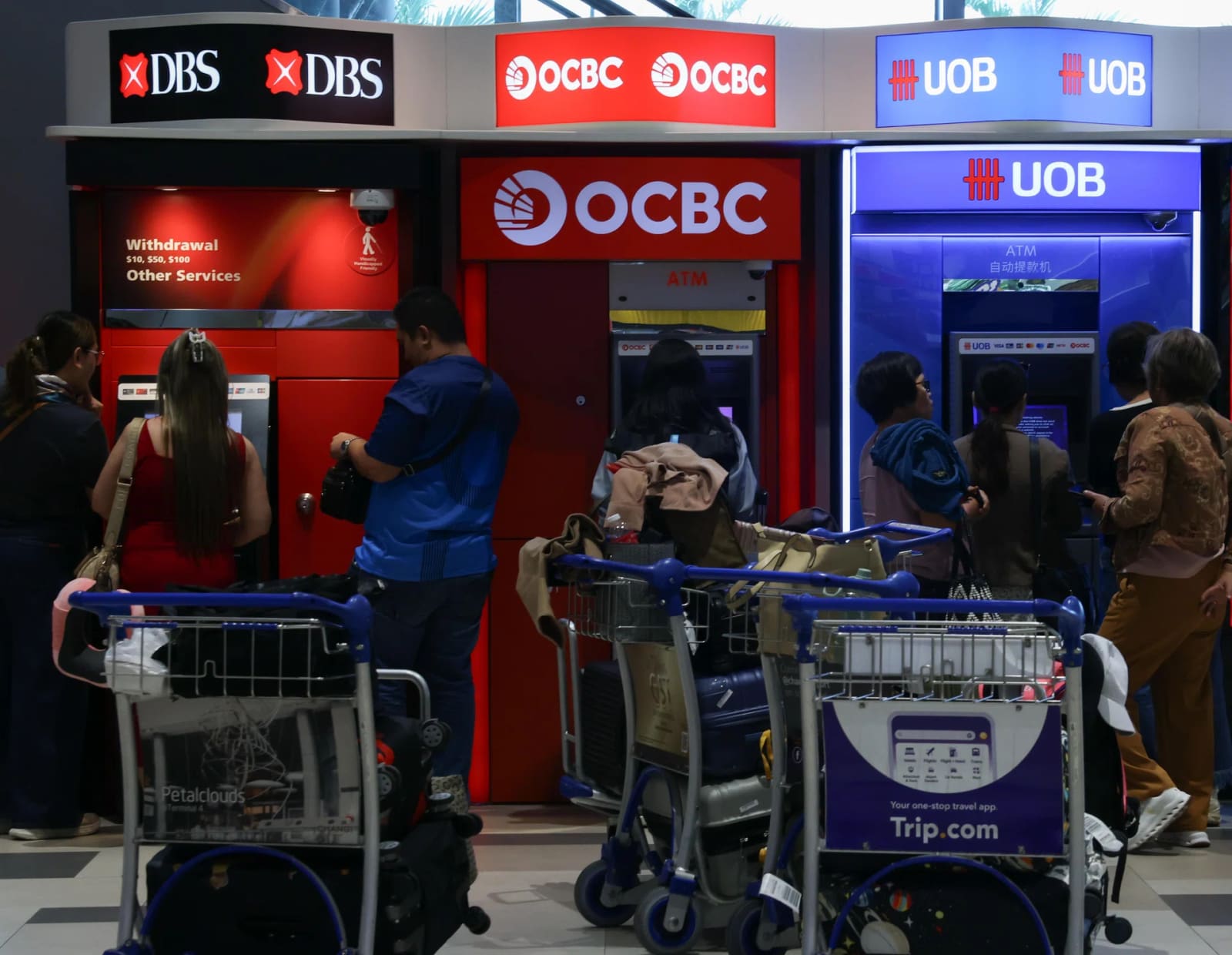
Singapore's Big Three Banks Post Solid First-Half Gains as Wealth Offsets Margin Pressure
Priyanka V. Rao · 3 min
Singapore Banks Hit Record Highs on Wealth Management Surge
Priyanka V. Rao · 2 min
Spot something wrong? Email editor@briefasia.com. We log every correction publicly.