Technology · Dev
Daeduck Electronics Plans $350 Million Chip Facility Investment Through 2027
Second major expansion this year signals growing pressure on Korea's semiconductor supply chain as Samsung and SK Hynix scale production
KEY TAKEAWAYS
- ·Daeduck Electronics filed plans to invest KRW497 billion in semiconductor production facilities through 2027, its second major expansion this year.
- ·The investment aligns with aggressive capacity buildouts by Samsung and SK Hynix, creating pressure on substrate and component suppliers to scale in parallel.
- ·Korea's concentrated memory supply chain faces execution risk from labor shortages, rising costs, and the strategic challenge of serving domestic champions versus pursuing Chinese market opportunities.
Supply Chain Under Strain
Daeduck Electronics has committed KRW497 billion ($349.50 million) to expand its semiconductor production facilities through 2027, according to a regulatory filing with South Korea's Financial Supervisory Service. The investment represents the company's second major capacity announcement this year, underscoring mounting pressure on Korea's chip supply chain as leading manufacturers ramp production.
The Seoul-based firm specializes in chip packaging substrates and printed circuit boards that serve as foundational components for memory and logic semiconductors. Its expansion comes as Samsung Electronics and SK Hynix push aggressive buildouts in high-bandwidth memory and advanced logic chips, creating ripple effects across the entire supply ecosystem.
Korea's semiconductor supply chain has historically concentrated around a handful of dominant players, with Samsung and SK Hynix commanding roughly 70 percent of global DRAM production and significant shares of NAND flash. That concentration creates bottlenecks when both giants expand simultaneously. Substrate makers, chemical suppliers, and equipment vendors must scale in lockstep or risk becoming choke points.
Capital Allocation Signals
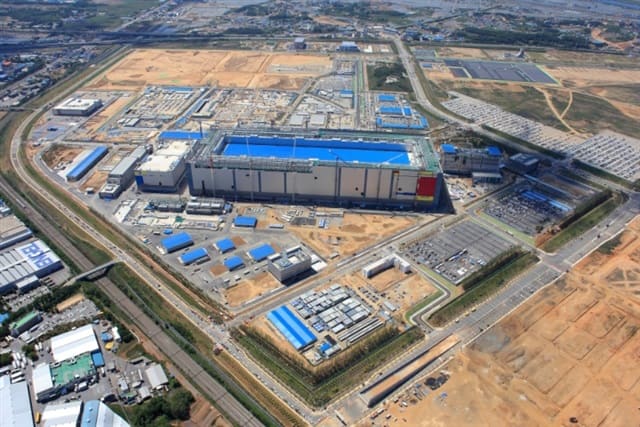
Daeduck's two-year investment timeline aligns with the peak construction phase of Samsung's new fabrication facilities in Pyeongtaek and SK Hynix's capacity additions in Icheon. Both memory makers have announced multi-billion-dollar capital expenditure programs for 2026 and 2027, driven by demand for AI accelerators, data center infrastructure, and next-generation mobile devices.
The company's willingness to commit nearly $350 million suggests confidence in sustained order volumes. Substrate demand typically leads chip production by six to nine months, meaning Daeduck's board sees visibility into customer roadmaps extending into late 2027. That visibility is not universal across the supply chain. Smaller chemical and gas suppliers have reported more cautious expansion plans, citing uncertainty around the pace of memory price recovery.
Korea's Ministry of Trade, Industry and Energy has identified supply chain resilience as a strategic priority, offering tax incentives and accelerated permitting for semiconductor-related infrastructure. Daeduck's filing did not specify whether the investment qualifies for these programs, but the scale and timeline make it a likely candidate.
Regional Dynamics
The expansion also reflects broader shifts in semiconductor manufacturing geography. While Taiwan and the United States attract headlines for new foundry investments, Korea's memory ecosystem remains the world's most concentrated. No other region combines Samsung's and SK Hynix's production scale with the dense network of suppliers, research institutes, and skilled labor that surrounds them.
That density creates competitive advantages but also vulnerabilities. A single disruption in substrate supply, for instance, can cascade across multiple fabrication lines. Daeduck's expansion reduces that risk marginally, but Korea's supply chain remains tightly coupled. Japan's export controls on photoresist and etching gases in 2019 exposed how quickly external shocks can propagate through the system.
China's push for semiconductor self-sufficiency adds another layer of complexity. Korean suppliers face a strategic choice: invest in capacity that serves domestic champions, or pursue opportunities in China's subsidized but politically fraught market. Daeduck's domestic focus, evidenced by this investment, suggests a bet on Korea's incumbents rather than diversification into Chinese partnerships.
Execution Risk
Announcing capital investment and delivering operational capacity are distinct challenges. Korea's construction sector faces labor shortages and rising material costs, factors that have delayed several semiconductor projects over the past two years. Daeduck's timeline extends through 2027, providing some buffer, but cost overruns could pressure margins if memory prices soften before new lines reach full utilization.
The company's financial health will also be tested. Debt-financed expansion during a period of elevated interest rates increases fixed costs and reduces flexibility. If the memory cycle turns before the new facilities contribute revenue, Daeduck could find itself squeezed between debt service obligations and weaker customer demand.
Still, the alternative of not expanding carries its own risks. Samsung and SK Hynix have both signaled they will prioritize suppliers who can scale with them. Falling behind on capacity could mean lost market share that takes years to recover, particularly as substrate technology grows more complex with each chip generation.
Korea's semiconductor supply chain is being stress-tested in real time. Daeduck's $350 million commitment is one data point in a larger pattern of investment, risk-taking, and strategic positioning that will shape the industry's center of gravity through the end of the decade.
RELATED STORIES
SK Hynix Eyes Deeper Collaboration With Japan's Chip Sector
Cheng Wei-Lun · 4 min
Memory Makers Gain Leverage as AI Server Costs Climb
Cheng Wei-Lun · 3 min
Samsung and SK Hynix Turn Down KEPCO's Multibillion-Dollar Prepayment Demand
Cheng Wei-Lun · 4 min
SK Hynix May Fast-Track Gwangju Fab Investment Alongside Yongin Expansion
Jun-ho Seo · 3 min
Spot something wrong? Email editor@briefasia.com. We log every correction publicly.