Technology · AI
Copper Supply Crunch Threatens Asia's Data Center Buildout
Inefficient power grids across the region demand more of the metal than Western counterparts, exposing developers to price volatility and procurement delays
KEY TAKEAWAYS
- ·Asia-Pacific data centers require 30 to 40 percent more copper than Western peers due to less efficient power grids and older transmission infrastructure.
- ·Lead times for high-grade copper cable have stretched from twelve weeks to six months in some markets, delaying construction schedules by a quarter or more.
- ·China refines roughly 60 percent of global copper, creating structural price exposure for North-east Asian developers that Western counterparts can partly avoid.
The Metal Behind the Machine
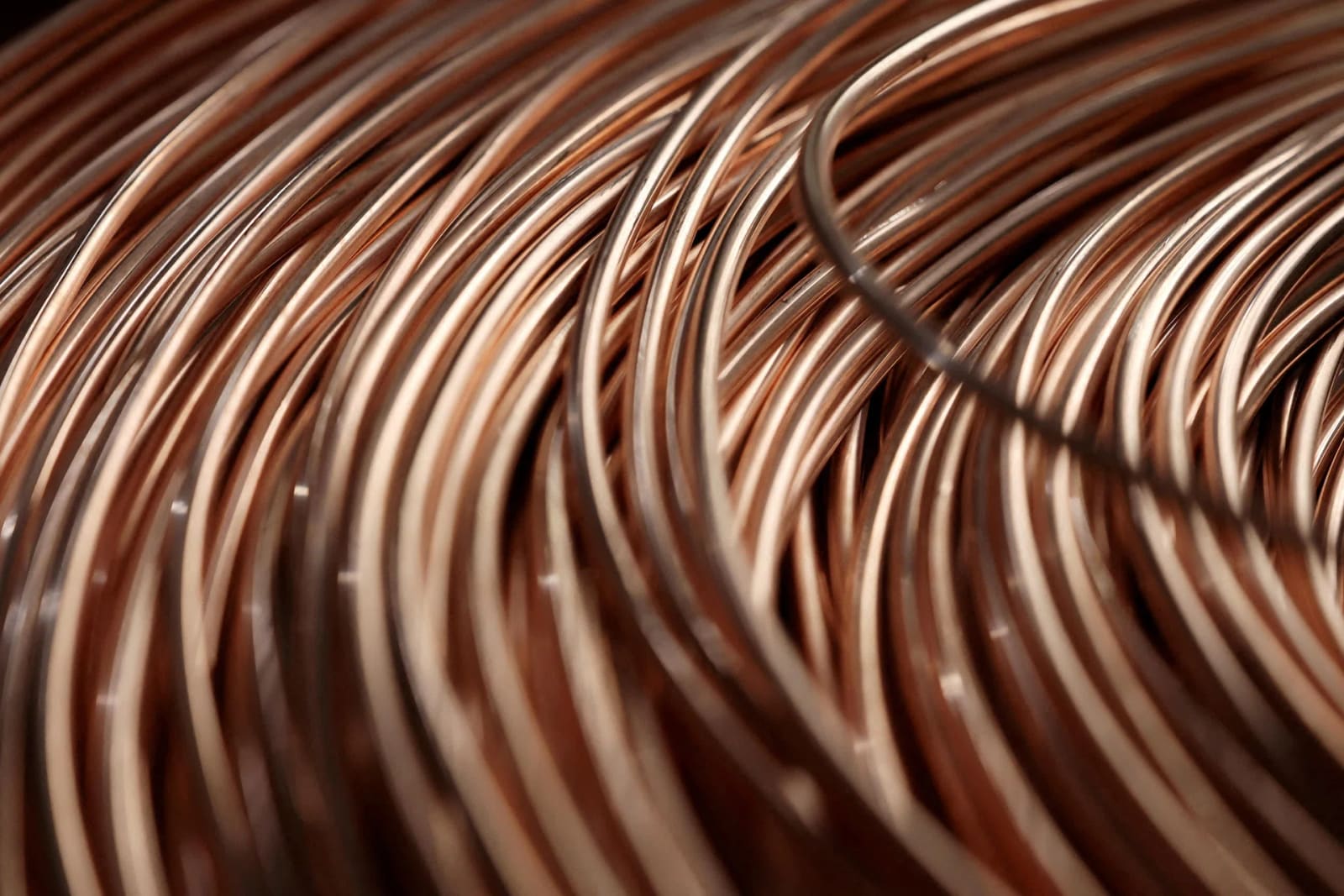
While chips and electricity dominate conversations about AI infrastructure, a less glamorous material is quietly emerging as a constraint: copper. Across Asia-Pacific, data center developers are discovering that building hyperscale facilities requires securing vast quantities of the red metal, and the region's power grid architecture makes that challenge uniquely acute.
The issue stems from efficiency gaps in electrical distribution. Older, less efficient grids across much of Asia-Pacific lose more power in transmission, which engineers compensate for by specifying thicker copper cabling and more robust electrical systems. The result is that a data center in Jakarta or Manila can require 30 to 40 percent more copper than a comparable facility in Frankfurt or Northern Virginia.
That structural disadvantage is colliding with a global copper market already stretched thin by electrification trends. China refines roughly 60 percent of the world's copper, according to BMI, a financial research firm. Alexander Kheder, who covers technology and telecommunications for BMI, notes that North-east Asia's heavy reliance on refined copper from domestic sources creates exposure to price swings that Western developers can partly sidestep through more diversified supply chains.
Price Swings and Procurement Queues
Copper prices have whipsawed over the past eighteen months, climbing past USD 10,000 per metric ton in early 2025 before retreating, then spiking again in mid-2026 as mine output disappointed and demand from electric vehicle and renewable energy projects accelerated. For data center operators working on thin margins, those swings translate directly into budget overruns or, more commonly, deferred construction starts.
Analysts say the price volatility alone is unlikely to stop projects outright. Hyperscalers and colocation providers have deep enough pockets to absorb cost increases in the low double digits. The bigger worry is availability. Lead times for high-grade copper cable and busbar systems have stretched from twelve weeks to six months in some markets, according to procurement managers in Singapore and Hong Kong.
When copper shipments are delayed, entire construction schedules slip. Electrical rough-in cannot proceed, which holds up mechanical systems, which delays commissioning. A two-month copper delay can push a data center's launch by a quarter or more, postponing revenue and leaving capacity-hungry AI workloads waiting.
Regional Divergence
Not all of Asia faces the same copper crunch. Singapore, with its compact grid and high power quality, uses copper more efficiently than regional peers. Japan and South Korea benefit from modern transmission infrastructure and established relationships with smelters. But fast-growing markets in Southeast Asia and India are more exposed.
In India, data center construction has accelerated sharply since 2024, driven by domestic AI ambitions and multinational interest in diversifying away from China. Yet the country's grid remains patchy, and copper procurement often requires navigating import tariffs, customs delays, and quality variability. Developers report that sourcing certified cable for critical power systems can take twice as long in Mumbai as in Tokyo.
Indonesia and the Philippines face similar bottlenecks. Both countries have ambitious data center pipelines, but their electrical grids were designed for lighter industrial loads decades ago. Retrofitting or building new substations to support megawatt-hungry AI clusters demands copper in quantities that local supply chains struggle to deliver on schedule.
The Aluminum Temptation
Some developers are exploring substitutes. Aluminum can replace copper in certain non-critical applications, and it costs roughly a third as much per kilogram. But aluminum conducts electricity less efficiently, requiring thicker cables and larger conduit runs. In space-constrained data centers, where every rack and cable tray is optimized for density, switching to aluminum often proves impractical.
Engineers also worry about long-term reliability. Aluminum oxidizes more readily than copper, and connections can degrade over time if not properly maintained. For mission-critical AI infrastructure expected to run at high utilization for a decade or more, most operators prefer to pay the premium for copper rather than accept aluminum's trade-offs.
What Comes Next
The copper constraint is not going away. Global mine supply is growing slowly, and new smelting capacity takes years to bring online. Meanwhile, AI data centers are only one source of demand. Electric vehicles, offshore wind farms, and grid modernization projects worldwide are all competing for the same metal.
For Asia-Pacific, the path forward likely involves a mix of demand management and supply chain diversification. Some developers are pre-purchasing copper months in advance and holding inventory, a costly hedge but one that insulates them from spot-market volatility. Others are working with engineering firms to design more power-efficient facilities that require less copper per megawatt.
Governments are beginning to take notice. Singapore's Economic Development Board has held discussions with regional smelters about long-term supply agreements. India is considering tariff adjustments to ease imports of high-purity copper products. But policy moves slowly, and the data center industry is moving fast.
In the near term, copper will remain a quiet but persistent bottleneck. It will not halt Asia's AI ambitions, but it will shape the pace at which new capacity comes online and where developers choose to build. In a region already wrestling with power availability and cooling costs, copper is one more variable that can tip a project from feasible to delayed.
RELATED STORIES
China's Battery Dominance Faces Quality Test as CALB Defect Spreads
Anand Sundaram · 3 min
China Targets 84% Share of AR-HUD Production by 2031
Cheng Wei-Lun · 3 min

Li Auto Expands Battery Roster with CALB as Third Supplier
Siti Nuraini · 2 min

China's Auto Chip Race Shifts to Volume as Horizon Robotics Crosses 15 Million Units
Jun-ho Seo · 3 min
Spot something wrong? Email editor@briefasia.com. We log every correction publicly.