Asia · Business
ComfortDelGro Shifts Strategy Beyond Taxis as First-Half Profit Falls 20%
Singapore's largest taxi operator expands private-hire fleet and enterprise contracts while targeting Middle East public transport opportunities worth $17 billion

KEY TAKEAWAYS
- ·ComfortDelGro's private-hire driver network grew 27.9% to over 4,000 in H1 2026 while its Singapore taxi fleet shrank 5% to 7,600 vehicles.
- ·Net profit fell 19.7% to $85.1 million in H1 2026 as the company absorbed fuel cost increases and faced intensified competition in point-to-point services.
- ·The operator targets 10% autonomous vehicle adoption in its global fleet by 2030 and sees $17 billion in Middle East public transport opportunities.
Fleet Transformation Underway
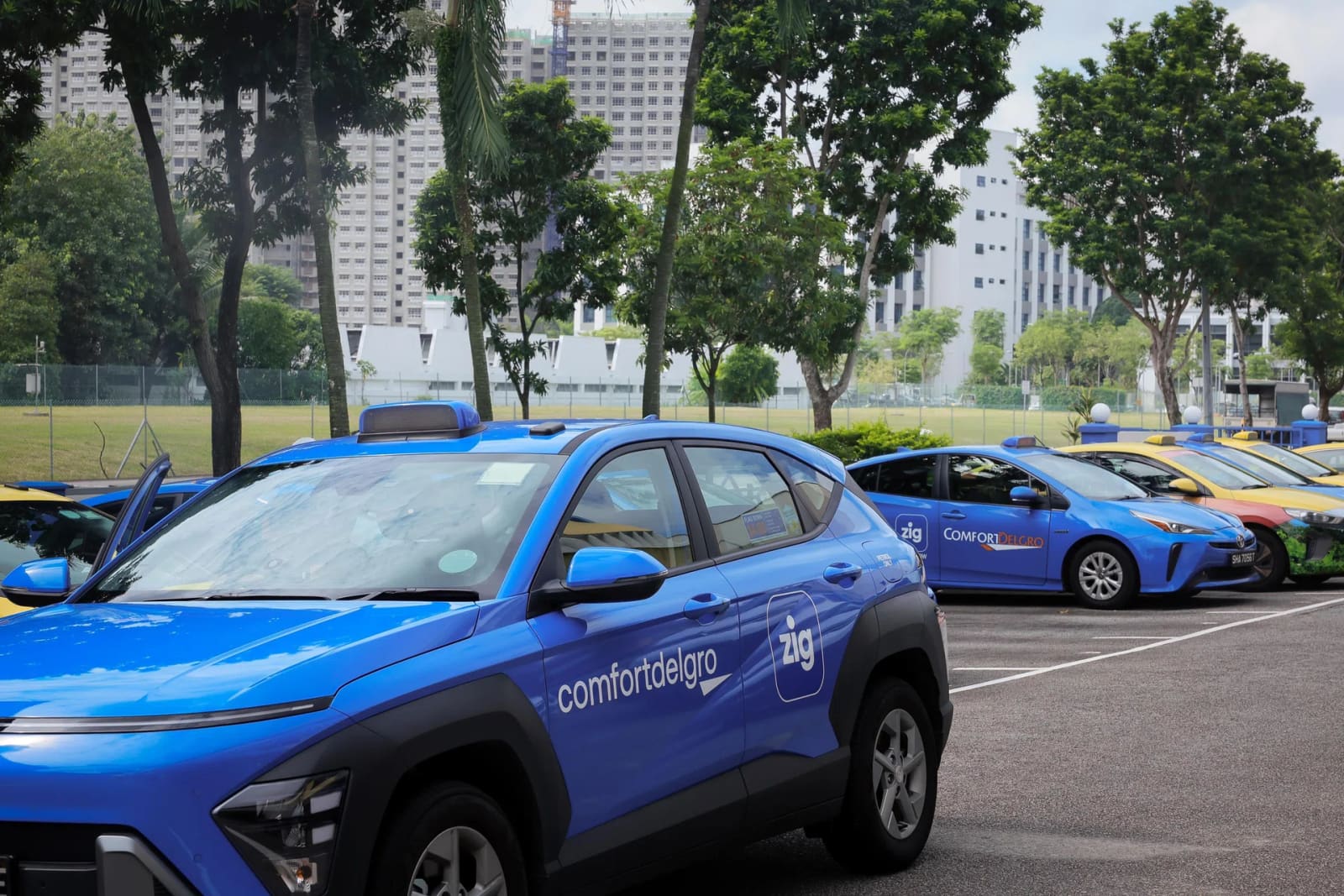
ComfortDelGro is reshaping its identity in Singapore's mobility market. The company's taxi fleet contracted 5% to 7,600 vehicles in the first half of 2026, while its private-hire driver network expanded 27.9% to over 4,000 during the same period, reflecting a deliberate strategic pivot.
CEO Cheng Siak Kian, who took the helm in January 2023, said the shift responds to driver preferences and peak-hour demand. Drivers increasingly favor private-hire leases over traditional taxi arrangements, and the company is meeting that preference to expand supply on its Zig app.
The operator introduced larger vehicles, including Toyota Noah Hybrid six-seaters, and enhanced pricing algorithms to balance driver earnings with customer affordability. Enterprise contracts now form a growing revenue stream, with long-term agreements for medical transport and school runs providing stable income for drivers and volume discounts for clients.
Profit Pressures Mount
ComfortDelGro reported net profit of $85.1 million for the first half of 2026, down 19.7% year-on-year, according to the company. Earnings pressure in point-to-point businesses stemmed from competitive market conditions at home and abroad, compounded by the firm's decision to absorb part of fuel cost increases at in-house pumps for local taxi drivers.
Revenue climbed 5.7% to $2.6 billion, driven primarily by public transport contracts in the United Kingdom, Europe, Australia, New Zealand, and Singapore. Those operations account for more than two-thirds of total revenue and benefit from automatic cost-adjustment clauses that compensate for wage and fuel inflation.
The company maintained its interim dividend at 3.91 cents per share, citing confidence in its contract portfolio's resilience.
Middle East Expansion Plans
ComfortDelGro identified $17 billion in public transport opportunities over the next 18 months, with significant prospects in Dubai and Riyadh. Cheng acknowledged that regional conflict has disrupted business-to-business demand in the UK, where the company owns premium operator Addison Lee, but emphasized a two-to-three-year investment horizon.
Infrastructure spending across the Middle East remains robust despite geopolitical volatility, the CEO noted. Multi-year construction timelines align with ComfortDelGro's long-term positioning in the region.
Autonomous Vehicle Target
The company set a goal to convert 10% of its global point-to-point fleet to autonomous vehicles by 2030. ComfortDelGro launched its first robotaxi service in Guangzhou in March 2025, partnering with Nasdaq-listed Pony AI, and will open a regional AV center of excellence in Shenzhen in coming months.
In Singapore, driverless shuttle services began operating in Punggol earlier this year. Cheng said China represents the next frontier for commercial driverless deployment, with the potential for fully autonomous operations ahead of other markets where the company operates.
Human roles will persist even as AV adoption accelerates, he added, including safety operator positions.
Turnaround Timeline
Cheng characterized the current period as transitional. The UK conflict's impact on demand exceeded expectations, but he views the disruption as temporary. The company expects transformation efforts to drive demand growth and revenue gains in the quarters ahead, supported by diversification into non-emergency ambulances, buses, and trains as part of a multi-modal transport network.
RELATED STORIES
ComfortDelGro Pivots to Premium Transport as Taxi Profits Slide 40 Percent
Priyanka V. Rao · 3 min
Hao Mart Chairman's Company Sues OG Over Taste Orchard Eviction
Priyanka V. Rao · 3 min
Washington Names Singapore in Tariff Circumvention Probe
Priyanka V. Rao · 3 min
Singapore Tightens Transshipment Rules Amid US Tariff Scrutiny
Lim Hui Ying · 4 min
Spot something wrong? Email editor@briefasia.com. We log every correction publicly.