Asia · Trade
Chinese Automakers Capture 15 Percent of UK Market as Rivals Slash Prices
Britain's automotive trade body warns established manufacturers face mounting pressure from competitively priced electric and hybrid imports, with no tariff barriers in sight
KEY TAKEAWAYS
- ·Chinese-owned brands now account for 15 percent of UK new car registrations, led by MG, BYD, JAECOO, and OMODA.
- ·Traditional manufacturers are offering aggressive discounts to compete with lower-cost Chinese electric and hybrid imports, according to SMMT.
- ·British vehicle production fell 7.5 percent in the first half of 2026 amid competition, trade uncertainty, and weak investment.
Discount Wars Intensify
Traditional automakers operating in Britain are cutting prices aggressively to fend off a surge of Chinese competitors that have claimed 15 percent of the country's new car registrations, the Society of Motor Manufacturers and Traders disclosed Thursday.
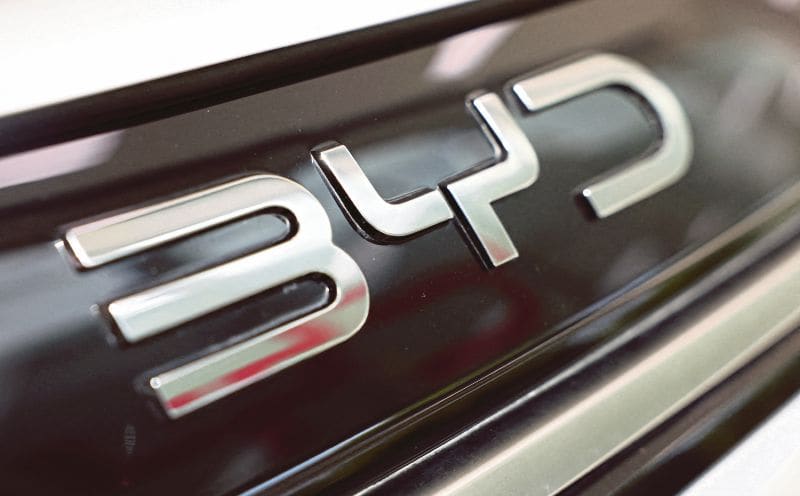
Mike Hawes, chief executive of the industry body, said manufacturers are locked in a discounting battle driven by cost advantages Chinese producers enjoy in building electric and plug-in hybrid vehicles. SAIC Motor's MG brand leads the charge, followed by BYD and Chery's JAECOO and OMODA marques, all offering competitively priced models that undercut established nameplates.
"In terms of the volume, they're under extraordinary pressure because the Chinese can produce good vehicles at a cheaper cost," Hawes told reporters. The price gap has forced incumbents to offer deeper rebates simply to hold ground in a market where Chinese brands have expanded rapidly over the past three years.
Production Slump Reflects Broader Strains
British vehicle manufacturing contracted 7.5 percent in the first half of 2026, according to SMMT data, with intensified competition sitting alongside trade uncertainty and weak investment as headwinds. The production decline underscores the challenge facing UK-based plants as they navigate both global overcapacity and shifting consumer preferences toward electrified powertrains.
Hawes identified Chinese competition as one element in a cluster of pressures weighing on the sector, including elevated energy costs, subdued capital inflows, and regulatory complexity. The convergence of these factors has eroded margins and forced manufacturers to reassess production footprints across the country.
No Tariff Shield in Place
Unlike the European Union, which imposed duties on Chinese-built electric vehicles in 2024 after concluding they benefited from state subsidies, Britain has not introduced similar trade barriers since exiting the bloc in 2020. Hawes noted that any investigation into Chinese imports would require complaints from UK manufacturers, adding that none have been lodged to date.
The absence of tariffs leaves British-market players exposed to the full force of Chinese pricing strategies, a stark contrast to continental Europe where import duties have added cost to vehicles shipped from China. Germany's Volkswagen announced deeper cost reductions last week, citing the need to remain competitive against Chinese rivals even with tariff protection in place.
Regional Implications
The UK's experience mirrors dynamics unfolding across Asia and Europe, where Chinese electric vehicle makers are leveraging scale, supply-chain integration, and government support to penetrate established markets. In Southeast Asia, BYD and Chery have opened assembly plants to serve ASEAN buyers, while in Europe, brands like Nio and Xpeng are expanding dealer networks despite trade friction.
For Britain, the competitive pressure arrives at a moment when the automotive sector is already grappling with post-Brexit trade rules, slower investment, and the capital-intensive shift to battery-electric platforms. Hawes's remarks suggest the industry is caught between the need to invest in electrification and the immediate challenge of defending market share against lower-cost imports.
The 15 percent market share figure represents a significant milestone for Chinese brands, signaling their transition from niche players to mainstream contenders in one of Europe's largest automotive markets. Whether traditional manufacturers can stem further erosion through product innovation, localized production, or policy intervention remains an open question as the discount cycle deepens.
RELATED STORIES
China Imposes Anti-Dumping Measures on Japanese Semiconductor Chemical Imports
Jun-ho Seo · 3 min
India's Chinese Import Bill Climbs Despite Self-Reliance Push
Priyanka V. Rao · 3 min
China's August Inflation Accelerates on Energy and Typhoon Disruption
Tran Quoc Bao · 2 min
Malaysia's Rare Earth Deposits Draw Foreign Interest Ahead of China Export Controls
Priyanka V. Rao · 3 min
Spot something wrong? Email editor@briefasia.com. We log every correction publicly.