Sustainability · Energy
China's Solar Industry Faces Third Consecutive Year of Losses
Overcapacity and weak demand trap manufacturers in prolonged downturn, raising questions about spillover to energy storage and EV sectors
KEY TAKEAWAYS
- ·China's solar manufacturers reported losses through the first half of 2026, marking the third consecutive year of downturn driven by overcapacity exceeding 600 gigawatts against global installations below 400 gigawatts.
- ·Module spot prices have fallen to approximately 0.08 USD per watt, below break-even for most producers, while export markets face mounting tariff and anti-dumping measures.
- ·Investors are monitoring whether similar overcapacity dynamics will emerge in energy storage and electric vehicle sectors, where China has built dominant manufacturing positions with utilization rates below 60 percent at many plants.
Three Years of Red Ink
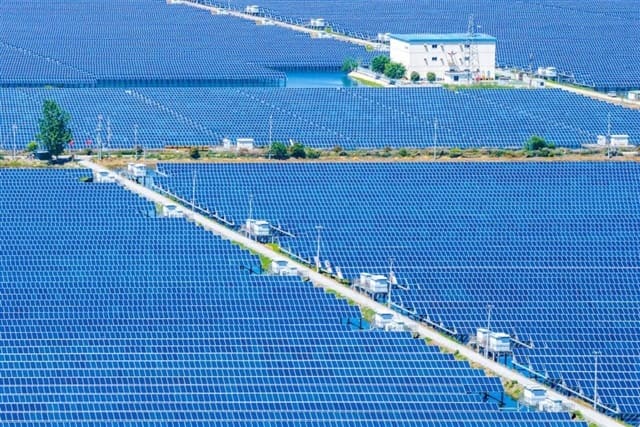
China's solar manufacturing sector remains deep in a multi-year contraction, with first-half financial reports from major producers revealing persistent losses across the supply chain. The slump, now in its third consecutive year, stems from structural overcapacity that continues to exceed downstream demand even as global renewable energy installations expand.
Leading Chinese solar companies reported negative margins or sharply reduced profitability in their interim statements. The downturn has affected manufacturers at every stage, from polysilicon feedstock producers to module assemblers, with price erosion outpacing cost reductions throughout the production chain.
Industry analysts note that aggressive capacity expansion during the 2020-2022 period created manufacturing capability far beyond what domestic and export markets can absorb. Annual production capacity in China now exceeds 600 gigawatts for solar modules, while global installations remain below 400 gigawatts, creating a persistent supply-demand mismatch that has driven spot prices below production costs for many manufacturers.
Demand Weakness and Trade Headwinds
Downstream demand has failed to recover as expected. While utility-scale solar projects in China continue, distributed generation growth has slowed as grid connection bottlenecks and financing constraints limit new installations. Export markets, once a relief valve for excess production, have become more challenging as Europe, the United States, and Southeast Asian nations implement trade measures targeting Chinese solar products.
Recent tariff adjustments and anti-dumping investigations in key export destinations have compressed margins further. Several mid-sized manufacturers have announced production halts or bankruptcy proceedings in recent months, yet overall capacity remains stubbornly high as larger, better-capitalized firms maintain operations despite negative cash flow, betting on eventual market consolidation.
The pricing environment shows little sign of stabilization. Polysilicon prices have fallen more than 70 percent from their 2022 peaks, while module prices have declined by similar margins. Industry participants report that current spot prices for standard modules sit at approximately 0.08 USD per watt, below the break-even point for most producers when depreciation and financing costs are included.
Spillover Concerns
Investor attention has turned to whether parallel dynamics might emerge in adjacent clean energy sectors where China has built dominant manufacturing positions. Energy storage systems and electric vehicle supply chains share similar characteristics: massive state-supported capacity expansion, intense domestic competition, and growing export dependence as local demand growth moderates.
Battery cell production capacity in China already exceeds near-term demand projections for both EVs and stationary storage. Several major battery manufacturers have reported margin compression in recent quarters, though losses have not yet reached the scale seen in solar. EV production capacity similarly outstrips current sales, with utilization rates below 60 percent at many assembly plants.
Industry observers note that the solar sector's experience offers a cautionary template. Rapid capacity buildout driven by policy incentives and cheap capital, followed by demand shortfalls and trade friction, created a self-reinforcing cycle of price deflation and financial distress that proved difficult to escape even as weaker players exited.
Government intervention has been limited. Beijing has resisted large-scale bailouts or forced capacity closures, preferring to allow market forces to drive consolidation. Some provincial authorities have provided bridge financing to prevent factory closures and job losses, but no comprehensive restructuring program has emerged.
Path Forward Remains Unclear
The solar industry's trajectory offers few signs of near-term recovery. Analysts expect further capacity exits and potential mergers among distressed manufacturers, but the pace of consolidation has been slower than many anticipated. Large state-linked enterprises retain access to financing that allows them to sustain operations despite negative returns, delaying the market clearing process.
Downstream demand would need to accelerate significantly to absorb existing capacity, yet near-term prospects remain modest. Domestic grid constraints limit the speed at which new solar capacity can be connected, while export growth faces structural barriers as major markets pursue supply chain diversification.
The persistence of losses across three years marks an unusually extended downturn for a strategic industry with strong policy support. Whether similar pressures emerge in batteries and EVs will depend partly on demand trajectories in those sectors, but the structural parallels suggest vulnerability to comparable dynamics if growth disappoints or trade barriers rise.
RELATED STORIES
Indonesia Seeks 100GW Solar Build From China, But Not Chinese Ownership
Priyanka V. Rao · 3 min
Solar Overtakes Coal in China's Power Grid for the First Time
Cheng Wei-Lun · 4 min
Malaysia's Rare Earth Deposits Draw Foreign Interest Ahead of China Export Controls
Priyanka V. Rao · 3 min

Beijing Warns Domestic EV Makers Against Overseas Price Wars
Cheng Wei-Lun · 3 min
Spot something wrong? Email editor@briefasia.com. We log every correction publicly.