Sustainability · Energy
Solar Overtakes Coal in China's Power Grid for the First Time
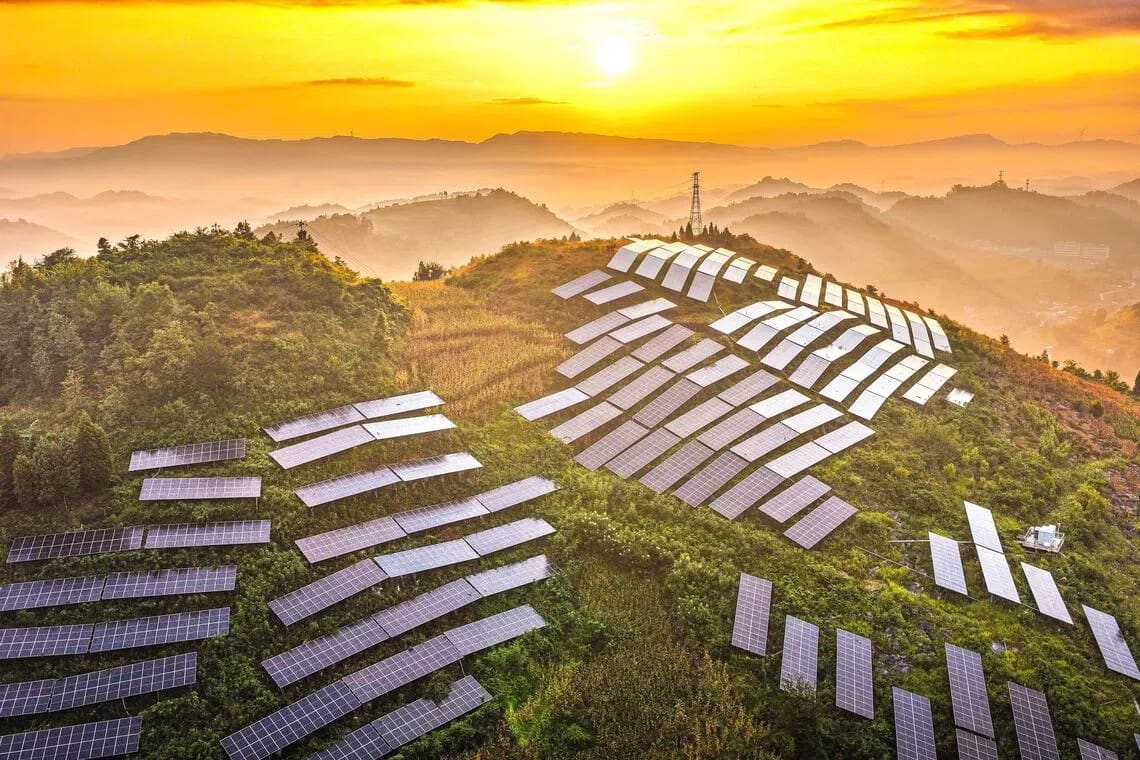
With 1,286 gigawatts of installed capacity by July, solar now commands nearly a third of the nation's power infrastructure, marking a turning point in the world's largest energy transition.
KEY TAKEAWAYS
- ·Solar capacity in China hit 1,286 gigawatts by July 2026, surpassing coal and accounting for 31.5 percent of total installed power capacity.
- ·New solar installations slowed to 86 gigawatts in the first seven months of 2026, down sharply after policy changes ended guaranteed revenue for renewable projects.
- ·China is expected to invest over two trillion yuan in solar over the next five years, reinforcing its dominance in the global supply chain.
A Milestone in the World's Largest Grid
China crossed a threshold in July that energy analysts have been tracking for months: solar panels now represent the single largest source of installed power capacity in the country, edging past coal for the first time. Solar reached 1,286 gigawatts by the end of July, representing 31.5 percent of total installed generation capacity, according to the National Energy Administration.
The shift is more symbolic than operational. Coal plants still generate far more electricity on any given day, since solar panels produce power only when the sun shines. But installed capacity is the metric that reveals where capital and policy momentum are heading, and in China that momentum has been pointing toward solar at a scale unmatched anywhere else.
The China Electricity Council had signaled in June that the gap was closing fast, with solar trailing coal by just one gigawatt. A month later, solar pulled ahead. The milestone arrives at a moment when the global energy transition is under intense scrutiny, with questions about pace, cost, and whether renewables can reliably displace fossil fuels in large industrial economies.
The Numbers Behind the Surge
Solar generation in China rose 15.5 percent year-on-year in the first seven months of 2026, reaching 802.4 billion kilowatt-hours. That volume now accounts for roughly one-eighth of the country's total electricity output, a share that has been climbing steadily as gigawatts of new panels come online each quarter.
China dominates the global solar supply chain, from polysilicon production to module assembly. Investment in the sector is projected to exceed two trillion yuan over the next five years, according to figures cited by the National Energy Administration. That capital flow underpins not just domestic installations but also the price declines that have made solar the cheapest source of new electricity in most markets worldwide.
A Sharp Deceleration in 2026
Yet the pace of new installations has slowed sharply this year. China added 86 gigawatts of solar capacity in the first seven months of 2026, a significant drop from the 93 gigawatts installed in May 2025 alone. That single month represented a rush to complete projects before a policy overhaul took effect in June 2025, ending guaranteed revenue for wind and solar projects.
The policy shift removed feed-in tariffs and other subsidies that had provided developers with predictable returns. Under the new framework, renewable projects must compete directly in wholesale power markets, exposing them to price volatility and grid curtailment risk. The change was designed to push the sector toward commercial viability without state support, but it has also introduced uncertainty that has dampened the breakneck pace of 2025.
Industry observers note that the slowdown was anticipated. The subsidy-driven boom of recent years had led to concerns about grid integration, oversupply, and financial strain on state-owned utilities tasked with purchasing renewable power at fixed rates. The policy recalibration is an attempt to align capacity growth with grid stability and market fundamentals.
What This Means for Coal
Coal remains the backbone of China's electricity system in operational terms. While solar has overtaken coal in installed capacity, coal-fired plants continue to run at higher utilization rates, providing baseload power and grid stability. The country still relies on coal for a majority of its actual electricity generation, particularly during peak demand periods and in regions where renewable penetration is lower.
The installed capacity milestone does, however, signal a long-term trajectory. As solar capacity continues to grow and battery storage becomes more economically viable, the operational dominance of coal will face increasing pressure. China has not set a firm timeline for phasing out coal, but the trajectory of capital allocation and capacity additions suggests that renewables will command a larger share of both capacity and generation in the years ahead.
Regional Context and Export Implications
The shift has implications beyond China's borders. As the dominant manufacturer of solar panels, inverters, and other components, China's domestic build-out drives scale economies that lower costs globally. Southeast Asian nations, India, and markets across the Middle East and Africa are benefiting from cheaper solar equipment, much of it produced in China's industrial heartland.
At the same time, the scale of China's solar capacity is reshaping trade flows and industrial policy. The United States and Europe have imposed tariffs and local content requirements in response to concerns about overcapacity and market distortion. Those measures reflect anxiety about dependence on a single supplier for critical energy infrastructure, even as they raise costs for domestic renewable projects.
China's solar milestone is a data point in a larger story about energy transition speed, industrial policy, and the geopolitics of clean technology. The country's ability to deploy renewables at scale offers a model for rapid decarbonization, but it also raises questions about market structure, grid reliability, and the political economy of energy systems in transition.
RELATED STORIES
China Shifts Pharma Strategy From Manufacturing to Drug Ownership
Priyanka V. Rao · 3 min

China Builds AI Infrastructure in Rural West to Power Coastal Tech Ambitions
Cheng Wei-Lun · 3 min
China Drafts National Liquid-Cooling Standard as AI Racks Near 1MW Power Draw
Cheng Wei-Lun · 2 min

China Pushes Data Centers Into Rural Provinces to Meet AI Demand
Cheng Wei-Lun · 3 min
Spot something wrong? Email editor@briefasia.com. We log every correction publicly.