Real Estate · Homes
China's Property Slump Worsens as Court-Ordered Auctions Surge
Distressed home sales at steep discounts flood the market, compounding downward pressure on prices and buyer confidence in the world's second-largest economy.
KEY TAKEAWAYS
- ·Court-ordered property auctions in China have surged, with homes selling at discounts of 20 to 40 percent below market rates.
- ·The flood of distressed inventory is undermining conventional sales and delaying any recovery in residential prices.
- ·Tier-two and tier-three cities with high household leverage are experiencing the sharpest increases in judicial auction volumes.
A Wave of Distressed Sales
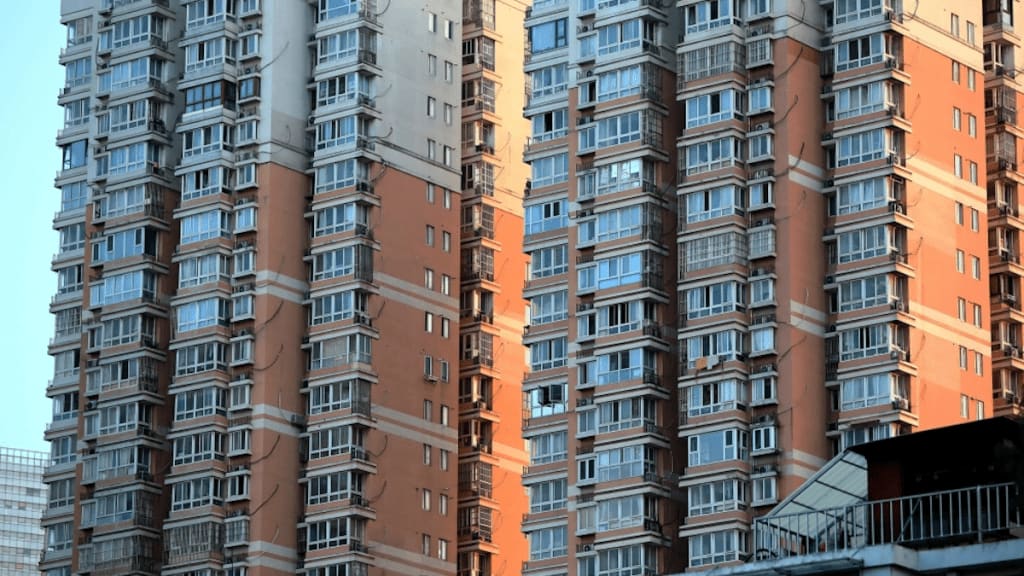
Residential property values in China continued their descent this year, weighed down by a flood of court-ordered auction homes entering the market at significant discounts. The surge in forced sales reflects mounting financial distress among homeowners and developers, adding fresh downward pressure to an already fragile sector.
According to China Index Academy, a property research institute, the volume of homes listed for judicial auction across the country has climbed sharply. These distressed sales, often priced 20 to 40 percent below prevailing market rates, are undercutting conventional listings and pulling down benchmark prices in key urban centers.
The phenomenon marks a new phase in China's three-year property correction. While earlier declines stemmed from developer liquidity crises and weakened demand, the current wave is driven by household financial stress. Mortgage defaults have risen as employment uncertainty persists and income growth slows, forcing courts to liquidate collateral at whatever price the market will bear.
Cascading Effects on Buyer Sentiment
The proliferation of auction inventory is compounding an already difficult environment for recovery. Prospective buyers, aware of the discounts available through judicial channels, are delaying purchases of standard listings. This wait-and-see behavior has widened the gap between seller expectations and transaction prices, prolonging the adjustment period.
In cities such as Hangzhou, Chengdu, and Wuhan, auction platforms now feature thousands of residential units, ranging from suburban apartments to luxury villas. The sheer volume has created a parallel market that traditional brokers struggle to compete with. Agents report that clients routinely compare conventional offerings to auction prices, using the latter as a benchmark for negotiations.
The dynamic creates a feedback loop. As auction volumes rise, they validate lower price points, which in turn discourage sellers from listing at higher levels. The result is a gradual repricing of the entire stock, with no clear floor in sight.
Regional Variation in Distress
The intensity of auction activity varies by region. Tier-two and tier-three cities, where speculative buying was more pronounced during the boom years, are seeing the heaviest flows. In contrast, tier-one markets like Beijing and Shanghai have experienced more modest increases, reflecting tighter credit standards and a more conservative buyer base during the expansion.
Data from judicial auction platforms indicate that provinces with high leverage ratios among households are bearing the brunt. Zhejiang, Jiangsu, and Guangdong, all regions with robust private-sector economies, have recorded some of the steepest upticks in distressed listings. The correlation suggests that even relatively affluent areas are not immune when macro conditions deteriorate.
Local governments, already grappling with fiscal pressures from reduced land sales, face an additional challenge. Falling property values erode the collateral base for household wealth, dampening consumption and tax receipts. Several municipal authorities have attempted to stem the tide by easing purchase restrictions and lowering down-payment requirements, but these measures have yet to generate sustained traction.
Implications for the Broader Economy
The residential property sector accounts for roughly one-quarter of China's GDP when construction, materials, and related services are included. A prolonged slump carries systemic risks, affecting banks, local government finances, and household balance sheets.
Financial institutions holding mortgage portfolios are monitoring non-performing loan ratios closely. While major banks have so far managed the rise in defaults without breaching regulatory thresholds, smaller lenders in affected regions report tighter liquidity and reduced appetite for new mortgage origination.
The overhang of auction inventory also complicates efforts by policymakers to stabilize the sector. Traditional stimulus tools, such as interest-rate cuts or relaxed lending standards, have limited impact when distressed supply continuously undercuts market pricing. Some analysts argue that a more direct approach, such as state purchases of excess inventory or conversion of unsold units to social housing, may be necessary to clear the backlog.
What Comes Next
The trajectory of auction volumes in the coming quarters will serve as a key indicator of whether the downturn is stabilizing or deepening. If defaults continue to rise, the pressure on prices will intensify, potentially triggering a new round of developer distress and further eroding consumer confidence.
For now, the market remains in a holding pattern. Buyers are reluctant to commit without clearer signals that prices have bottomed, while sellers, both voluntary and forced, face limited options. The auction channel, once a niche outlet for distressed assets, has become a central feature of China's property landscape, and its influence shows no sign of waning.
RELATED STORIES
China's Luxury Home Sales Surge While Broader Property Market Stagnates
Cheng Wei-Lun · 2 min

Hebei and Vietnam Target Deeper Agricultural Supply Chain Integration
Cheng Wei-Lun · 3 min

State Funds Exit Kweichow Moutai as Baijiu Giant Faces 40% Stock Decline
Cheng Wei-Lun · 4 min

Early Unitree Backer Sees Consolidation Ahead in China Robotics
Cheng Wei-Lun · 4 min
Spot something wrong? Email editor@briefasia.com. We log every correction publicly.