Technology · Dev
China's PCB Industry Commits Over $10 Billion to Meet AI Server Demand
Edge computing and high-speed optical modules drive the largest printed circuit board investment cycle in years across mainland manufacturing hubs
KEY TAKEAWAYS
- ·Chinese PCB manufacturers are committing over CNY70 billion, roughly $10.3 billion, in new capacity investments during 2026, led by Zhen Ding Technology and mainland producers.
- ·AI server requirements for high-speed interconnects and thermal management, plus demand from 800 Gbps optical modules and edge devices, are driving the expansion.
- ·Capacity is spreading from Shenzhen to inland provinces like Jiangxi, balancing design proximity with cost efficiencies and supply chain resilience goals.
Largest Investment Wave in Years
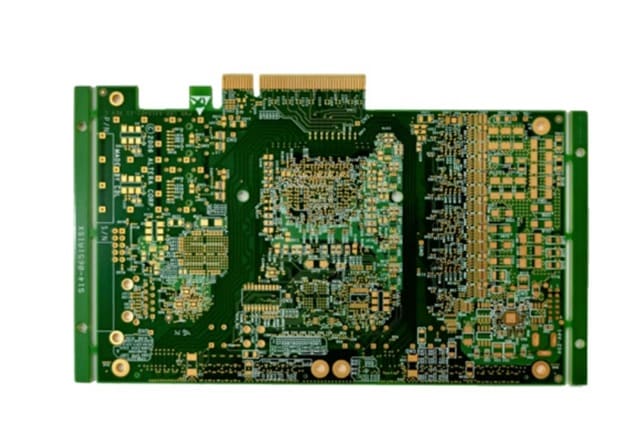
China's printed circuit board sector is deploying more than CNY70 billion - approximately $10.3 billion - in new capacity this year, marking the industry's most aggressive expansion cycle in recent memory. The investment push comes as artificial intelligence infrastructure creates sustained demand for advanced boards capable of handling high-speed data transmission and thermal management.
Zhen Ding Technology (ZDT), a major player in the sector, is leading the expansion alongside domestic manufacturers across Shenzhen, Jiangxi, and other mainland production centers. The capital commitments target production lines optimized for multi-layer boards, high-frequency materials, and substrates required by next-generation server architectures.
AI Servers Reshape Requirements
The shift toward AI workloads has fundamentally altered PCB specifications. Training clusters and inference servers require boards with denser interconnects, improved signal integrity at higher frequencies, and thermal solutions that can dissipate heat from power-hungry accelerators. These technical demands translate into higher average selling prices and longer production cycles, making capacity expansions economically viable even as traditional consumer electronics remain soft.
High-speed optical modules, essential for interconnecting GPU clusters in data centers, represent another growth vector. Transceivers operating at 800 Gbps and beyond require PCBs with tighter impedance control and lower insertion loss - capabilities that older fabrication lines cannot reliably deliver at scale.
Edge Computing Adds Volume
Beyond hyperscale data centers, edge AI deployments are creating demand for boards tailored to compact form factors and ruggedized environments. Industrial automation, autonomous vehicles, and smart city infrastructure all require locally processed inference, driving orders for specialized PCBs that combine processing, connectivity, and sensor integration on smaller footprints.
This edge segment offers Chinese manufacturers an opportunity to diversify beyond server-centric customers. While unit volumes per design may be smaller than cloud deployments, the variety of applications and longer product lifecycles provide steadier revenue streams less exposed to the cyclical nature of hyperscaler capital expenditure.
Regional Capacity Distribution
Investment is concentrated in provinces with established electronics manufacturing ecosystems. Shenzhen continues to attract high-mix, low-volume facilities serving prototyping and specialized applications. Jiangxi and Hubei are seeing larger-scale investments focused on volume production, leveraging lower labor costs and provincial incentives aimed at building semiconductor and electronics supply chains.
The geographic spread reflects a deliberate strategy to balance proximity to design centers in coastal cities with cost efficiencies available inland. It also hedges against localized disruptions, a consideration that gained prominence after pandemic-era supply chain shocks.
Supply Chain Implications
The capacity buildout positions China to capture a larger share of global PCB production value, particularly in advanced categories where Taiwan and South Korea have traditionally held advantages. However, success depends on more than fabrication capacity - materials suppliers, equipment vendors, and design service providers must scale in parallel.
Domestic substitution remains a priority for Chinese manufacturers, especially for specialty resins, copper foil, and drilling equipment currently sourced from Japan and Europe. Several of the announced investments include partnerships with materials companies to co-develop supply chains less vulnerable to export restrictions.
Market Outlook
The 2026 investment wave reflects confidence that AI infrastructure spending will remain elevated through the decade. Unlike previous cycles driven by smartphones or PCs, AI demand is supported by structural shifts in how computation is deployed - from centralized cloud to distributed edge - rather than replacement cycles for consumer devices.
Still, risks remain. Overcapacity could emerge if hyperscaler capital expenditure slows or if yield challenges delay ramps. Geopolitical factors also loom large, as export controls on advanced semiconductors could indirectly constrain the server platforms that drive high-end PCB demand.
For now, Chinese manufacturers are betting that the technical requirements of AI workloads will sustain premium pricing and utilization rates high enough to justify the capital outlay. Whether that calculus holds will become clear as new lines come online over the next 18 months.
RELATED STORIES
China's Battery Dominance Faces Quality Test as CALB Defect Spreads
Anand Sundaram · 3 min

China's Auto Chip Race Shifts to Volume as Horizon Robotics Crosses 15 Million Units
Jun-ho Seo · 3 min

Li Auto Expands Battery Roster with CALB as Third Supplier
Siti Nuraini · 2 min
China Imposes Anti-Dumping Measures on Japanese Semiconductor Chemical Imports
Jun-ho Seo · 3 min
Spot something wrong? Email editor@briefasia.com. We log every correction publicly.