Asia · Trade
China's Push for Food Independence Puts ASEAN Exporters on Notice
Beijing's 2026-2030 agricultural blueprint aims to cut import reliance, threatening billions in trade flows from Southeast Asia's most exposed economies.
KEY TAKEAWAYS
- ·China's 2026-2030 agricultural framework prioritizes self-sufficiency in wheat, maize, and poultry, with imports expected to decline as domestic production scales through biotechnology and precision agriculture.
- ·Laos, Cambodia, Thailand, and Myanmar face high exposure, with 30 to 80 percent of agricultural exports flowing to China; reduced import growth will compress revenues unless exporters diversify buyer markets.
- ·Soybeans, beef, and premium dairy will remain import-dependent through 2030, sustaining demand channels, while poultry and aquaculture production may shift China into net exporter status by decade's end.
A Structural Shift in the World's Largest Food Market
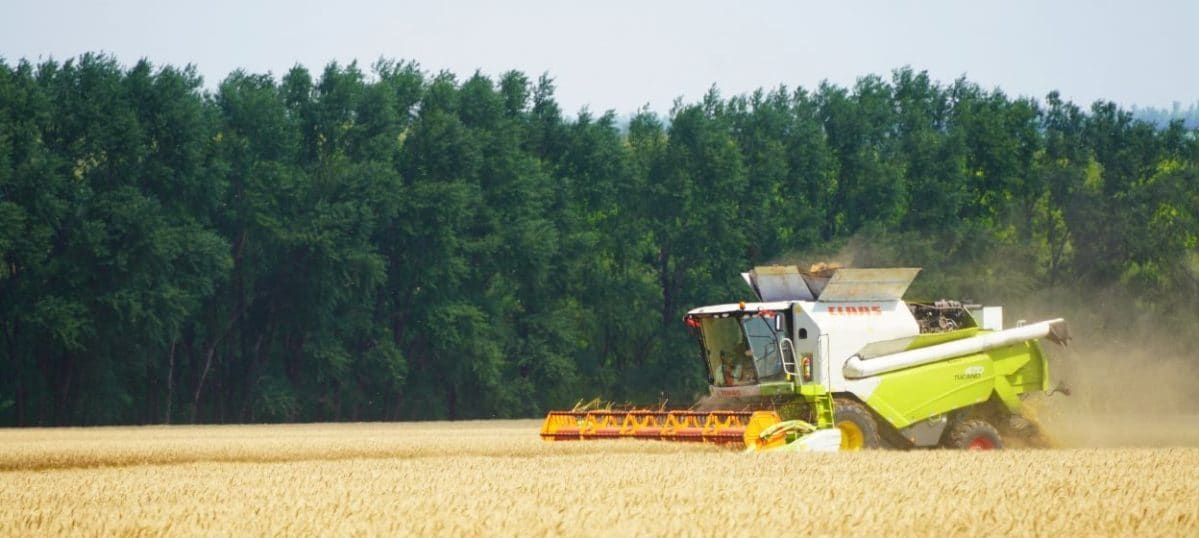
China unveiled plans in early 2026 to reduce dependence on agricultural imports through its No. 1 Document and the agricultural framework within the 14th Five-Year Plan (2026-2030). The measures prioritize domestic production gains in wheat, maize, poultry, and aquaculture while maintaining import channels for soybeans, beef, and dairy products that remain beyond China's resource capacity.
Beijing's approach centers on productivity rather than land expansion. The country feeds nearly 20 percent of global population using less than 10 percent of the world's arable land, according to official data. Investments now flow into biotechnology, precision agriculture, digital farming platforms, and alternative protein development, mirroring the industrial policy framework that built China's dominance in solar panels, batteries, and electric vehicles.
Current import volumes underscore the stakes. China brought in 111.8 million metric tons of soybeans in 2025, along with 6.8 million tons of vegetable oils, 4.9 million tons of seafood, and 3.9 million tons of wheat, according to China's General Administration of Customs. Rice imports reached 3.1 million tons, while beef stood at 2.8 million tons and maize at 2.7 million tons.
The ASEAN Exposure Matrix
Several Southeast Asian economies derive 30 to 80 percent of their agricultural export revenue from China. Laos faces the highest concentration, with 60 to 80 percent of its agricultural exports flowing to Chinese buyers, primarily rubber, bananas, cassava, and maize. Cambodia follows at 35 to 45 percent, driven by rice, cassava, and tropical fruit shipments.
Thailand and Myanmar each send 30 to 40 percent of agricultural exports to China. Thailand's exposure centers on durians, mangosteens, longans, cassava, and poultry; Myanmar's on rice, maize, pulses, and fruit. Vietnam's share ranges from 25 to 35 percent, concentrated in durians, dragonfruits, coffee, seafood, pepper, and rice.
Lower-tier exposure characterizes Malaysia, Indonesia, and the Philippines, where China accounts for 10 to 20 percent of agricultural export value. Palm oil dominates Malaysian and Indonesian shipments, while Philippine exports consist of bananas, coconut products, and pineapple. Singapore, Brunei, and Timor-Leste maintain minimal agricultural trade with China.
Commodity Trajectories Through 2030
China already approaches self-sufficiency in rice, poultry, eggs, and pork. Domestic wheat and maize production is expected to expand substantially over the next four years, reducing the growth trajectory for feed grain imports. Poultry production is projected to shift China from net importer to net exporter by 2030, introducing a new competitor in regional markets.
Conversely, soybeans, beef, dairy products, and non-palm vegetable oils will remain heavily import-dependent due to land and water constraints. Soybean imports are expected to hold near current levels, sustaining demand from Southeast Asian transshipment hubs and South American suppliers. Beef imports will continue at scale, and premium dairy demand is forecast to grow as middle-class consumption patterns evolve.
Aquaculture expansion within China is likely to reduce low-value fish imports, affecting Vietnam and Thailand's seafood processors. Vegetable oil imports will persist, though palm oil faces competition from rapeseed and sunflower oil as Chinese consumers diversify.
Trade Adjustment and Regional Resilience
Reduced Chinese import growth in specific categories will soften global prices and compress export margins for ASEAN suppliers. Countries dependent on a narrow product mix face revenue volatility unless they diversify buyer portfolios. South Asia, particularly India, and emerging African markets represent future demand centers, while Japan, South Korea, and the European Union offer premium product channels.
Value-chain upgrades provide another buffer. Processed foods, specialty coffee and cocoa, halal-certified products, and sustainably certified seafood command higher margins and face less direct competition from Chinese domestic production. Cold-chain infrastructure, digital traceability systems, and food safety certification will increasingly determine market access, particularly as Chinese import standards tighten.
Regional cooperation mechanisms remain underdeveloped. ASEAN lacks a real-time monitoring system for Chinese agricultural policy shifts, production forecasts, or import demand signals. Intra-ASEAN food trade flows remain constrained by fragmented standards and customs inefficiencies, limiting the bloc's ability to absorb supply displaced from the Chinese market.
China's agricultural technology sector is expanding rapidly, exporting improved seeds, digital farming platforms, irrigation systems, and food-processing equipment across Southeast Asia. These flows present opportunities for productivity gains and climate resilience, though they also deepen technological dependencies.
Watching the Parallel
The trajectory mirrors China's industrial policy in renewable energy and electric vehicles: state-backed R&D, subsidized scale-up, and eventual export competitiveness. Agricultural technology may follow a similar path, with Chinese firms capturing regional market share in farm automation, genetic research, and food processing over the next decade.
For ASEAN exporters, the adjustment window is narrowing. Governments will need to support farmers and agribusinesses in shifting toward diversified markets, value-added production, and regenerative practices. Long-term transformation assistance will prove more effective than short-term trade protection as Chinese import patterns evolve.
China will remain one of the world's largest food importers through 2030, but the composition and selectivity of that demand are shifting. Southeast Asian economies that recalibrate export strategies now will be better positioned to capture demand growth elsewhere; those that delay face mounting commercial risk as Chinese production scales and import requirements tighten.
RELATED STORIES
Vietnam's Manufacturing Surge Raises Questions About Industrial Independence
Cheng Wei-Lun · 4 min

China's EV Makers Ship One Out of Every Three Cars Overseas as Domestic Demand Cools
Cheng Wei-Lun · 3 min
Malaysia Faces Compliance Squeeze After US Flags Transshipment Risk
Priyanka V. Rao · 3 min

Geely Auto Appoints New Chairman as Founder Steps Back from Listed Unit
Cheng Wei-Lun · 2 min
Spot something wrong? Email editor@briefasia.com. We log every correction publicly.