Asia · Business
China's Factory Output Contracts as Weak Demand Drags July PMI Below 50
Manufacturing activity slipped into contraction for the first time in five months, driven by falling new orders and export weakness, adding pressure on Beijing to boost stimulus.
KEY TAKEAWAYS
- ·China's manufacturing PMI fell to 49.2 in July from 50.3 in June, marking the first contraction in five months as new orders dropped to 48.5.
- ·The decline deepens concerns over slowing growth after second-quarter GDP came in at 4.3 percent, below the government's annual target of 4.5 to 5.0 percent.
- ·Beijing's Politburo pledged timely policy support but stopped short of announcing specific stimulus measures, leaving markets watching for concrete action.
Factory Floor Cools After Brief Recovery
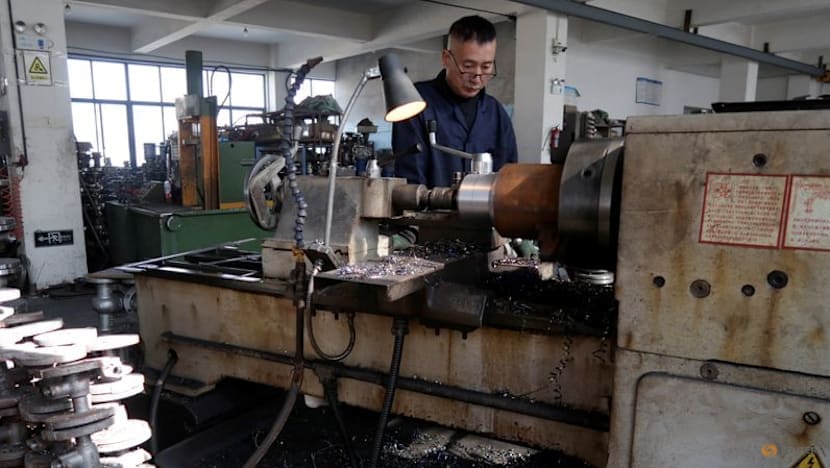
China's manufacturing sector contracted unexpectedly in July, snapping a fragile recovery and reigniting concerns about the world's second-largest economy. The official manufacturing purchasing managers' index dropped to 49.2, down from 50.3 in June and below the 50-point threshold that separates expansion from contraction, according to the National Bureau of Statistics. The reading marked a five-month low and missed analyst expectations of 50.
The retreat was driven by a sharp decline in new orders, which fell to 48.5 from 51.2 the previous month. New export orders also slipped into contraction at 49.6, down from 50.1 in June. The drop signals that both domestic and external demand are losing momentum, a troubling combination for an economy already struggling with structural imbalances.
Non-manufacturing activity, which covers services and construction, also weakened. The non-manufacturing PMI slid to 49 from 50.2 in June, while the composite PMI, which blends both sectors, came in at 49.3 compared with 50.6 the month before.
Growth Pressures Mount
The contraction comes on the heels of weaker-than-expected GDP growth in the second quarter. The economy expanded 4.3 percent year-on-year in the April-to-June period, down from 5.0 percent in the first quarter and below the government's annual target range of 4.5 to 5.0 percent.
Strong exports in the first half of the year had provided some cushion, helping offset persistent weakness in the property market and labor market. But the latest PMI data suggests that export momentum is fading, leaving fewer sources of support for overall growth.
Production costs remain elevated, adding another layer of difficulty for manufacturers. The combination of weak demand and high input costs squeezes margins, particularly for smaller firms that lack pricing power.
Policy Response Under Scrutiny
China's Politburo met last week and acknowledged the difficulties facing the economy, pledging to "attach great importance" to the challenges ahead. The top decision-making body reiterated its commitment to expanding domestic demand and said the government would leverage existing policies while rolling out new measures in a timely manner.
However, the statement stopped short of announcing specific stimulus steps, leaving market participants uncertain about the scale and timing of any intervention. Policymakers have been reluctant to deploy large-scale stimulus, wary of adding to debt levels and creating asset bubbles, but the latest data may force a reassessment.
The pressure is now on Beijing to deliver targeted support measures that can revive consumer spending and business investment without stoking financial risks. Options on the table include further interest-rate cuts, fiscal transfers to households, and infrastructure spending, though each carries trade-offs.
Regional Implications
The slowdown in Chinese manufacturing has ripple effects across Asia. Economies that supply intermediate goods and components to Chinese factories, including South Korea, Taiwan, and Vietnam, are sensitive to changes in Chinese production activity. A sustained contraction would dampen demand for semiconductors, machinery, and industrial materials sourced from regional partners.
For commodity exporters in Southeast Asia and Australia, weaker Chinese industrial activity translates into softer demand for iron ore, copper, and energy products. The decline in new export orders also suggests that China's role as a driver of global trade growth may be diminishing, at least in the near term.
Financial markets in the region have taken note. Equity indexes in Hong Kong, Seoul, and Taipei have shown increased volatility in recent weeks, with investors reassessing exposure to China-linked sectors. Currency markets have also reacted, with the yuan under renewed pressure despite central bank intervention to stabilize the exchange rate.
What Comes Next
The question now is whether July's contraction represents a temporary dip or the start of a more prolonged downturn. Much depends on the government's willingness to act decisively and the effectiveness of any measures introduced. If domestic demand continues to weaken and external demand fails to pick up, the risk of missing the full-year growth target increases.
Upcoming data releases, including industrial production, retail sales, and fixed-asset investment figures, will provide further clues about the economy's trajectory. Analysts will also watch for signals from the central bank and finance ministry regarding policy adjustments.
For now, the factory floor is cooling, and the pressure on Beijing to respond is rising.
RELATED STORIES
India's Chinese Import Bill Climbs Despite Self-Reliance Push
Priyanka V. Rao · 3 min
China's August Inflation Accelerates on Energy and Typhoon Disruption
Tran Quoc Bao · 2 min

GAC and FAW Explore Merger of Toyota Joint Ventures in China
Cheng Wei-Lun · 3 min
China Imposes Anti-Dumping Measures on Japanese Semiconductor Chemical Imports
Jun-ho Seo · 3 min
Spot something wrong? Email editor@briefasia.com. We log every correction publicly.