Asia · Trending
China's Factory Output Contracts as Domestic Demand Falters
Manufacturing PMI slipped to 49.2 in July, missing forecasts and signaling fresh pressure on Beijing to accelerate fiscal spending
KEY TAKEAWAYS
- ·China's manufacturing PMI fell to 49.2 in July, below the 50-point expansion threshold and missing the 50.1 forecast, while non-manufacturing PMI dropped to 49.0.
- ·Domestic consumption weakness and a prolonged property-sector slump are driving the contraction, despite relatively strong export orders for electronics and AI hardware.
- ·The Politburo has called on local governments to accelerate fiscal spending in the second half of 2026 to support growth and unlock domestic demand.
Industrial Slowdown Deepens
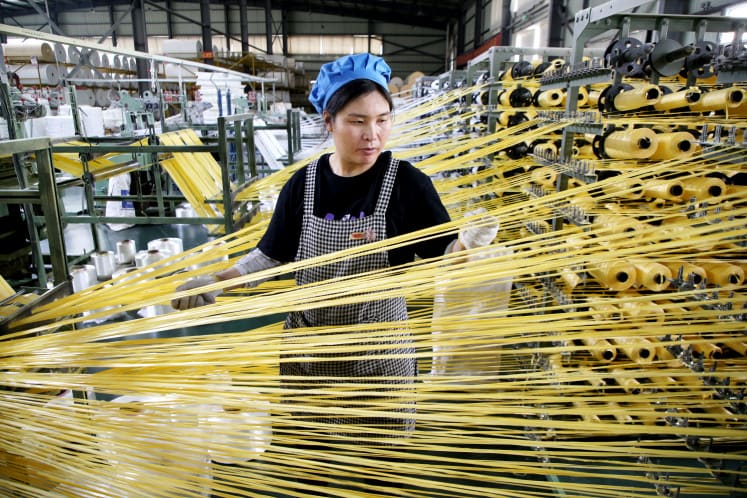
Factory activity in China contracted unexpectedly last month, extending a pattern of uneven recovery across the world's second-largest economy. The manufacturing purchasing managers' index dropped to 49.2 in July, according to the National Bureau of Statistics, falling below the 50-point threshold that separates expansion from contraction. Economists surveyed had anticipated a reading of 50.1, following June's 50.3.
The decline underscores the difficulty Beijing faces in sustaining industrial momentum while domestic consumption remains sluggish. Although export orders for electronics and artificial-intelligence hardware have provided a cushion, internal demand has yet to rebound meaningfully. Middle East conflict has added volatility to energy costs and shipping lanes this year, complicating the picture for manufacturers.
The non-manufacturing PMI, covering services and construction, fell more sharply to 49.0, its steepest contraction in more than three years. NBS statistician Huo Lihui attributed the drop to declines in wholesale trade, monetary financial services, and real-estate activity. The property sector, mired in a multi-year downturn, continues to weigh on broader economic sentiment.
Politburo Signals Shift
President Xi Jinping acknowledged economic headwinds in remarks to senior leaders this week, calling for enhanced macroeconomic policy effectiveness and a focus on unlocking domestic demand in the second half of 2026. The Politburo, a top decision-making body, urged local governments to accelerate spending, a signal that central authorities recognize the limits of export-led growth.
China's economy expanded 4.3 percent year-on-year in the second quarter, the slowest pace in more than three years. Beijing has set a growth target of 4.5 to 5.0 percent for the full year, the lowest such band in decades. Achieving that range will require a turnaround in household spending and property investment, neither of which has materialized despite incremental policy support.
Capital Economics analyst Julian Evans-Pritchard noted that export orders, while softening slightly, remain relatively robust compared to recent years. "Domestic weakness appears largely to blame," he wrote, adding that the latest data will intensify pressure on local authorities to follow through on the Politburo's spending directive.
Policy Focus on New Technology
Zhiwei Zhang, president and chief economist at Pinpoint Asset Management, said the Politburo's messaging suggests policy makers prioritize growth quality over speed. He expects fiscal spending to accelerate in the third quarter, with particular emphasis on new technology sectors. "Development of the new technology sector is on the top of the policy agenda," Zhang wrote.
The contrast between export strength and domestic fragility highlights a structural imbalance that has persisted for years. Overseas demand for Chinese electronics and AI components has surged, driven by data-center buildouts and consumer appetite in North America and Europe. Yet households at home remain cautious, chastened by falling property values and uncertain job prospects.
Beijing's challenge is to redirect capital and policy support toward consumption without triggering inflation or financial instability. Local governments, many of which carry heavy debt burdens, face their own constraints in ramping up infrastructure and social spending. The Politburo's call for action suggests central authorities are willing to tolerate higher deficits to stabilize growth, but the pace and scale of that shift remain unclear.
Regional Implications
Asia's manufacturing hubs are watching closely. A sustained slowdown in Chinese factory output would ripple through supply chains in Vietnam, Thailand, and Malaysia, where intermediate goods flow to Chinese assembly plants. Conversely, if Beijing succeeds in boosting domestic consumption, regional exporters of consumer goods and raw materials stand to benefit.
The July PMI readings arrive as regional central banks weigh their own policy stances. Slower Chinese growth could ease commodity prices and inflationary pressure across Southeast Asia, giving monetary authorities more room to support domestic activity. Yet weaker Chinese import demand would also dent export revenues, complicating fiscal planning in capitals from Jakarta to Manila.
For now, the trajectory hinges on whether local governments can deploy fiscal resources quickly and effectively. The Politburo has issued the directive; execution will determine whether China's industrial engine regains traction or slips further into contraction.
RELATED STORIES
India's Chinese Import Bill Climbs Despite Self-Reliance Push
Priyanka V. Rao · 3 min
China's August Inflation Accelerates on Energy and Typhoon Disruption
Tran Quoc Bao · 2 min
China Imposes Anti-Dumping Measures on Japanese Semiconductor Chemical Imports
Jun-ho Seo · 3 min
Malaysia's Rare Earth Deposits Draw Foreign Interest Ahead of China Export Controls
Priyanka V. Rao · 3 min
Spot something wrong? Email editor@briefasia.com. We log every correction publicly.